




In many tribal and rural areas, parents and especially mothers work long hours in fields, forests, or daily wage labour. During this time, young children are often left at home with older siblings or grandparents, with limited supervision and irregular meals.
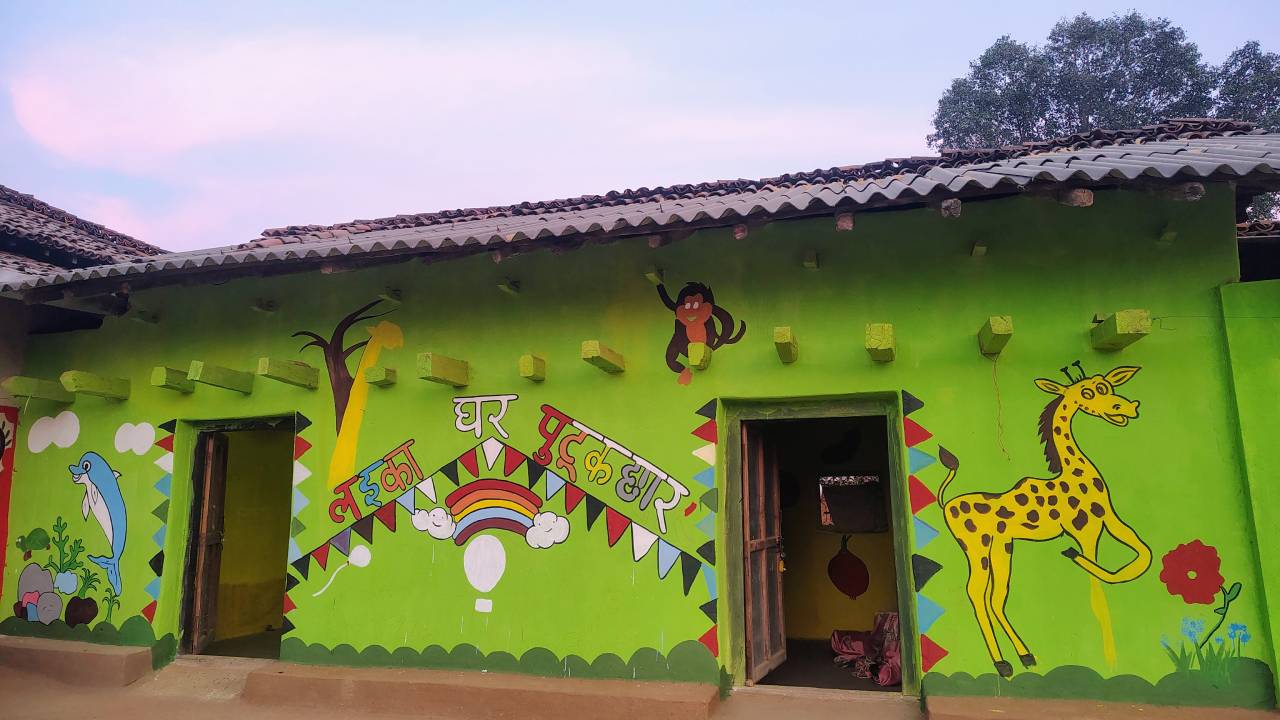
We at Azim Premji Foundation started our creche work in partnership with grassroots level NGOs to provide safe, and nurturing spaces for children aged 7 months to 3 years. These creches provide a community-based space where children can stay during the day, receive nutritious meals, and engage in play activities.
Beyond childcare, the creches also serve as an important platform for monitoring children’s growth, identifying early signs of malnutrition, and supporting families with guidance on feeding and health practices. Over time, these spaces have become more than just childcare centres, they have become trusted community institutions where families feel supported and children receive the attention and care they need to grow healthy and strong. In Chhattisgarh we call our creches Laika Ghar.
In this setting, creches are more than childcare spaces. They are places of safety, nutrition, and regular growth monitoring. Children are weighed, served hot cooked meals, and observed carefully.
In our creche work, we often speak in numbers. We talk about how many centres are running, how many children are enrolled, how many are underweight, and how many have been referred for treatment. Numbers are important. They help us understand scale and progress. But sometimes numbers hide the real story.
Behind every number is a child—a child who laughs while playing with friends, cries when hungry, and waits for someone to notice when something is wrong. Behind that child is a family trying their best with the resources they have and the knowledge they possess.
This realization became very clear to us while working with crèches in the Dharamjaigarh block of Chhattisgarh.
In the tribal villages of Dharamjaigarh, located in Raigarh district, childhood unfolds in simple yet challenging circumstances. Families depend largely on agriculture and forest produce such as mahua and tendu leaves. Villages are scattered, roads are uneven, and although health centres exist, reaching them is not always easy.
In this setting, creches are more than childcare spaces. They are places of safety, nutrition, and regular growth monitoring. Children are weighed, served hot cooked meals, and observed carefully. For many families, the creche is the first place where they learn about their child’s growth and nutritional status.
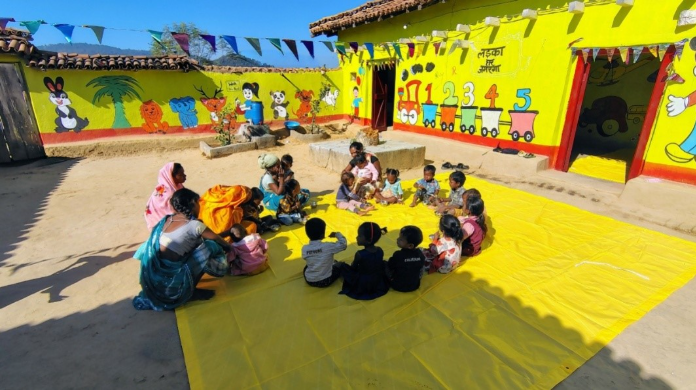
For some time, we had been regularly measuring children’s height and weight at these crèches. Growth charts were carefully maintained. When a child’s weight did not increase as expected, it became visible on the chart. We could identify children who were severely underweight or at risk of serious malnutrition.
While analysing this data, we began asking ourselves a difficult question:
What happens after we identify a child as malnourished or sick?
When we say a child needs medical attention, does the family actually reach the hospital? If they do, do they receive appropriate care? Do they understand the medicines prescribed? Do they return for follow-up visits?
Or does the referral quietly end as advice that was given but never acted upon?
We realised that we did not truly know the answers.
So we decided to learn. Instead of assuming that the process and the system was working, we chose to observe it more closely. We began a small pilot in a few crèches located in remote parts of the Dharamjaigarh block. The aim was not only to send children for medical consultations but to understand the entire journey that families experience—from identification to treatment and follow-up.
The First Step: Talking with Parents
The process began with conversations.
Crèche supervisors sat with mothers and fathers and showed them their child’s growth chart. Instead of using technical terms like Z-score or severe malnutrition, they spoke in simple language. They explained that the child’s weight had not increased as expected and that low weight can make children weaker and more prone to illness. They suggested that a hospital visit could help understand the child’s health better.
Parents were not ignoring the problem. They simply needed someone to help them understand it and walk with them through the next steps.
These were not rushed conversations. They were patient discussions.
ASHAs and Anganwadi workers also joined these meetings. Their presence mattered because families already trusted them.
Something interesting happened during these conversations. Parents listened carefully. They asked questions. Some looked worried, others thoughtful. But almost all of them agreed that they wanted to take their child for a medical check-up.
That moment revealed something important:
Parents were not ignoring the problem. They simply needed someone to help them understand it and walk with them through the next steps.
Understanding the Parents’ World
It is easy to assume that if families do not visit hospitals, it is because they are careless or uninterested. But when we listened to parents, a different picture emerged.
For many families in remote villages, visiting a health facility is not a simple decision.
The barrier was not unwillingness. The barrier was difficulty. And when that difficulty was reduced, parents responded immediately.
It may mean losing a day’s wages.
It may require arranging transport that costs money they do not have.
It may involve walking long distances or waiting for unreliable public transport.
It may also mean entering a hospital where they feel unsure about what will happen or what to do.
Some parents shared that they feel nervous because they may not fully understand prescriptions or medical instructions.
These fears are rarely spoken openly, but they strongly influence decisions.
When we recognised this, we understood something crucial:
The barrier was not unwillingness. The barrier was difficulty. And when that difficulty was reduced, parents responded immediately.
The Power of Trust
Another powerful lesson from this experience was about trust.
Over time, crèche supervisors had built relationships with families. They met parents regularly during crèche activities and community visits. They spoke about food, illness, hygiene, and childcare. Sometimes they visited homes when a child was sick.
These everyday interactions created familiarity.
Trust is often described as a soft concept. But in community work, it is one of the strongest foundations of success.
So when supervisors suggested visiting the hospital, parents did not feel that the advice came from strangers. It came from someone who already knew their child.
This trust became even more visible during hospital visits. Health staff mentioned that parents often hesitate when blood tests are suggested for young children. But in this instance, most parents agreed without much resistance.
The reason was simple—they trusted the people who had brought them there.
Trust is often described as a soft concept. But in community work, it is one of the strongest foundations of success. Without trust, even the best programmes struggle. With trust, even difficult processes become possible.
Discovering Cooperation in the Health System
Another encouraging aspect of the pilot was the cooperation from the public health facility.
When community programmes communicate clearly and prepare in advance, health facilities are better able to respond effectively.
Doctors examined the children patiently. They asked about feeding practices, illnesses, and vaccination history. They recommended tests where necessary and provided medicines where available. When certain medicines were not immediately available, the issue was discussed openly and solutions were found.
This experience reminded us that the public health system is not inherently distant or uncaring. Often, the challenge lies in weak coordination.
When community programmes communicate clearly and prepare in advance, health facilities are better able to respond effectively. In this case, both sides worked together with a shared goal: that of helping the child.
Realising That Referral Is a Process
Before this pilot, referral was often seen as a single step. Once a child was identified, the family was advised to visit the hospital. After that, the process largely depended on the family.
Through this experience, we learned that referral is not a single action. It is a journey.
It begins with identifying the child.
It continues with explaining the situation to the family.
It includes ensuring access to medical care.
It involves helping families understand the treatment.
And it requires follow-up to see whether the child is improving.
If any one of these steps is weak, the entire system becomes fragile.
Looking Beyond the Pilot
Although the pilot involved only a small number of families, the lessons are far larger.
When systems listen, when communities trust, and when people work together with patience, even the most remote child can receive the care they need.
It showed us that improving child health is not only about measuring weight or providing nutrition. It is about building relationships, reducing barriers, and ensuring that systems work together.
Crèches can play an important role in this process. They are places where children are seen regularly, where growth can be monitored early, and where families can receive guidance before problems become severe.
When community platforms connect effectively with health services, the chances of early intervention increase significantly.
When I look back at this experience, I do not just remember the planning meetings or the referral lists. I remember moments:
- A supervisor patiently explaining a growth chart to a worried mother.
- An ASHA reassuring a hesitant parent.
- A doctor carefully examining a child.
These moments remind me that development work is not only about programmes. It is about people.
Every child deserves the chance to grow healthy and strong. Every parent deserves the support needed to protect that child’s future.
Sometimes the changes required are not large or complicated. They are small actions carried out with consistency and care.
When systems listen, when communities trust, and when people work together with patience, even the most remote child can receive the care they need.
And perhaps that is the most important lesson this journey has given us.