




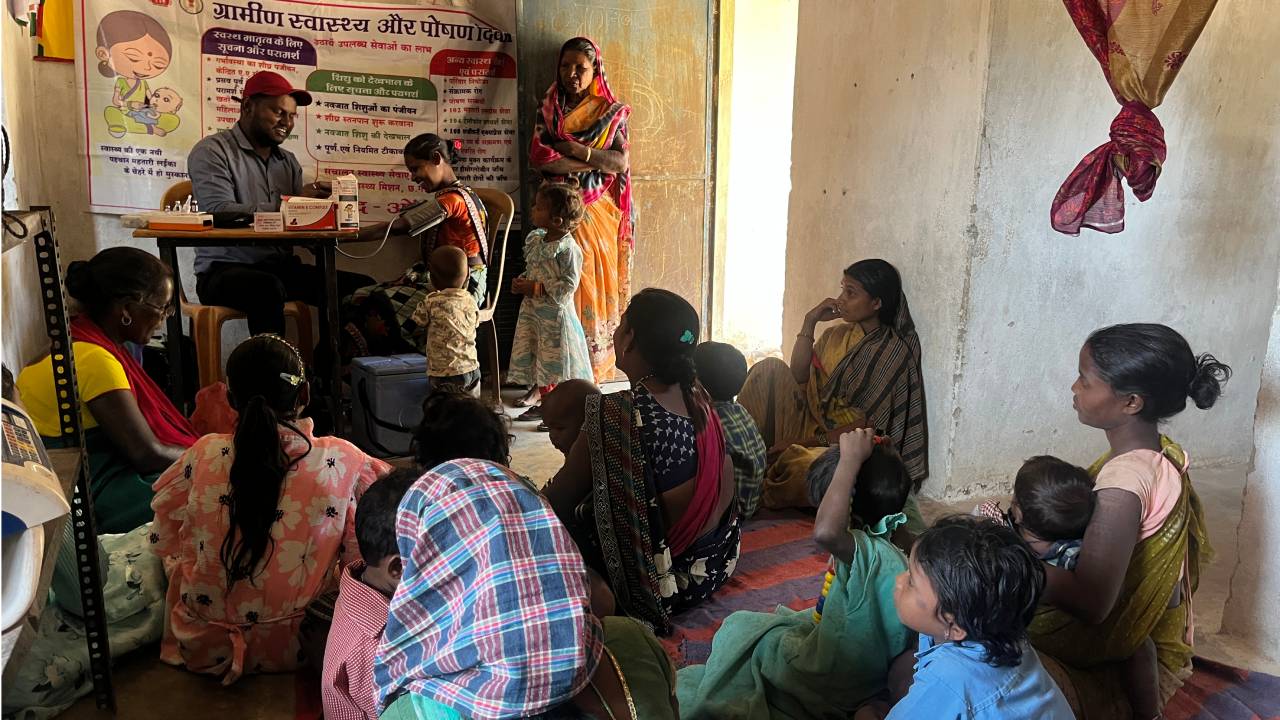
In the first week of February 2026, I spent time in remote tribal villages of Dharamjaigarh block in the Raigarh District, Chhattisgarh. What I saw in those few days has shaken up and reshaped my understanding of public health work more than any lecture or textbook ever has.
I went in knowing the theory: social determinants of health, the compounding effects of poverty, geography, and education. I had read the frameworks, drawn the diagrams, and discussed the models in the classrooms of my University in Bhopal. I came out understanding that behind every statistic is a life tangled, stubborn, and far more complicated than any framework can hold.
These are not extraordinary places. They are ordinary villages that happen to sit outside the reach of systems most of us take for granted — like reliable roads, mobile signals, accessible hospitals, and functioning institutions. The distance is not always measured in kilometres. Sometimes it is measured in years of neglect, in the accumulated weight of being consistently last on every list that matters.
We speak often about “community-based approaches.” But it is only when you leave behind the laptop, step off the paved road, and walk through dense forest to reach a village that no ambulance has visited since the last monsoon that you truly understand what those words mean.
A Mother’s Tragedy in Ongna Village
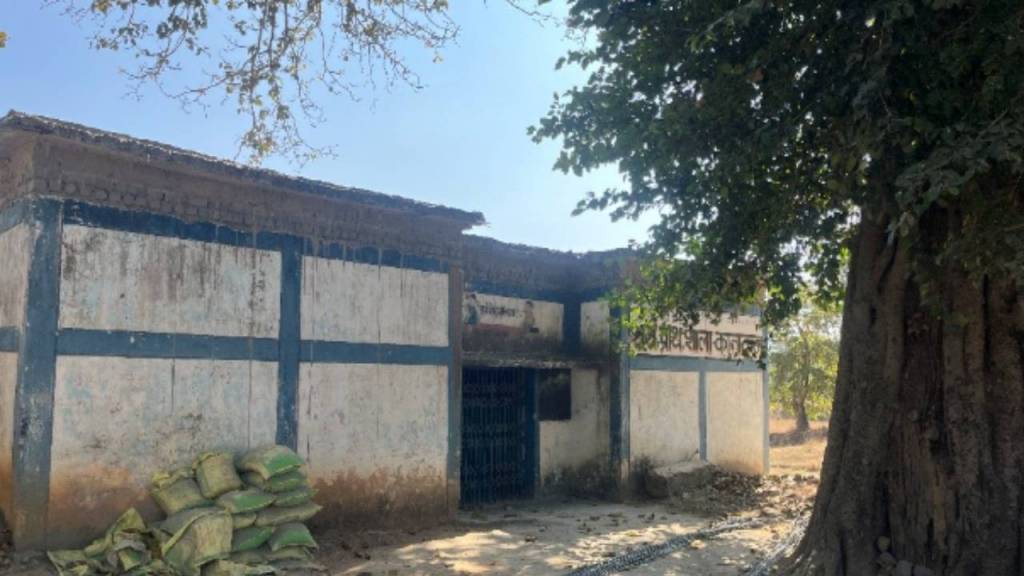
Ongna is a village of about 1,200 people — a mix of Birhor (a Particularly Vulnerable Tribal Group), Oraon, and Kanwar communities. It has three Anganwadi centres and a total of 59 registered children between the ages of three and six. On each of my four visits, I found five or six children present across all three centres. Barely ten percent of the registered number.
The system has become used to this absence. The explanation offered is always the same: tribal families take children to the fields, to the forests, to where the day’s work demands. It has become a settled fact — a data point absorbed into program reports without further inquiry. No one seems to ask what it means that the centres exist, the registers are maintained, and the children are simply not there. No one seems troubled enough to find out.
While helping the local ASHA prepare for a Village Health, Sanitation and Nutrition Day (VHSND), I met a woman. She was 31 years old, four months pregnant, and on her seventh pregnancy. Of the six children before this one, four were alive. She had not registered for antenatal care. She had also lost her Aadhaar card, which in India is a major administrative inconvenience. Having the card unlocks nearly every government benefit she is entitled to including nutrition support, cash transfers and delivery at a facility. Without it, she is invisible to the system, even when the system is standing a few hundred meters away.
Speaking with the Mitanin (ASHA in Chhattisgarh) and neighbours, I began to understand her situation better. She and her husband struggled with alcohol addiction. The poverty and the drinking had become so intertwined that it was impossible to say which had caused which. Addiction in these communities is rarely discussed beyond moral judgment — but in Ongna, it is everywhere, and has become normalized across years, woven into daily life in ways that public health interventions have barely touched. And then came the detail I was not prepared for: her sixth child, a nine-month-old, had drowned in a water tub. The mother, intoxicated, had been trying to feed water to the baby. She had dropped the child in and did not know until hours later, when her older son pointed at the tub and asked why the baby wasn’t moving.
My first reaction was judgment. I will not pretend otherwise. It was the instinct of someone trained to think in terms of prevention, of responsibility, of what should have been done differently. That instinct came quickly and felt righteous. It took longer to see what was actually in front of me: a woman surviving soul-crushing circumstances that most of us cannot imagine, with no safety net, no sober partner, no support, carrying her seventh child in a body that has already lost two.
The next morning, when she did not appear at the health post, I visited her home with a male Mitanin Trainer. We arrived to find her husband drunk, even before the day had properly begun, wielding a broken piece of wood, threatening to beat her. He claimed she had refused to attend the VHSND. In his state, there was no way to know the truth. We managed to calm him down. I took the woman to the health post where the Rural Health Organizer (or RHOs as the Auxiliary Nurse and Midwifery / Multi-Purpose Worker cadre are referred to in Chhattisgarh) registered her pregnancy and conducted the necessary screenings. It took almost two hours. For her, this made the difference between this pregnancy being seen by the health system or disappearing into the same silence as the ones before it.
What strikes me most, looking back, is how close it came to not happening at all. If she had not been on the Mitanin’s list. If we had not noticed her absence. If I had let my initial judgment be the final word and decided this was a family beyond reach.
The intervention was small, but it required overcoming of so many IFs.
Sometimes, public health work means reaching specific families that society has given up on — families who have no voice, whose struggles go unnoticed, whose very existence seems to matter to no one.
When Geography Dictates Health: Communication Gaps in Kanakula
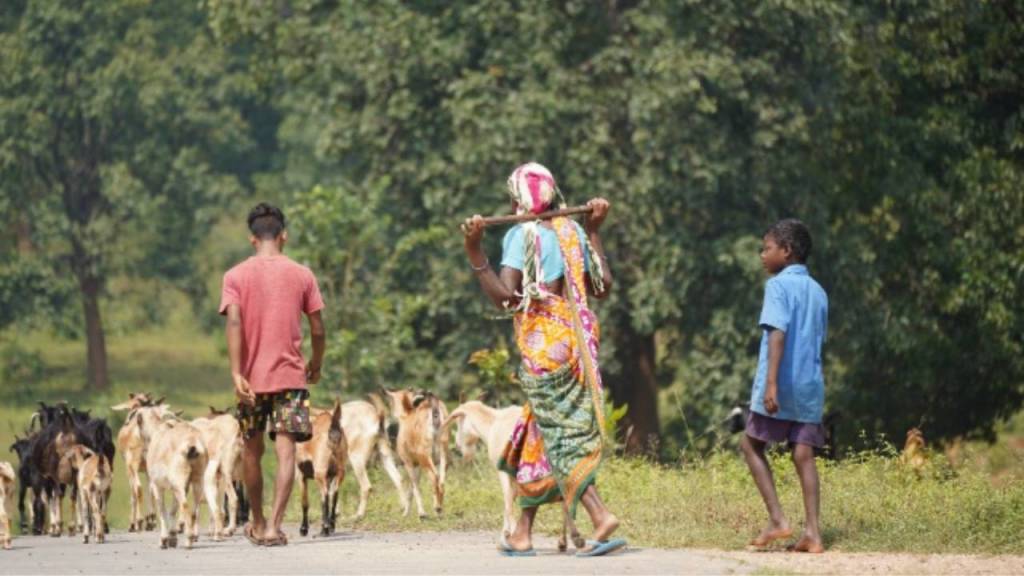
Kanakula is about 28 kilometres from Dharamjaigarh. Mobile network does not reach here. The road to get there, if it can be called that, winds through dense forest, across dry riverbeds and loose sand, the kind of terrain that swallows motorbikes. The village has 61 households and a population of 217 people. During the monsoon, it disappears from the health map entirely: the routes flood, and no health worker is able to reach for weeks at a stretch.
I had read about geographic isolation as a determinant of health. Standing in Kanakula, I understood it differently. Isolation is not simply distance — it is the compounding effect of every message that never arrived, every outreach that stopped at the edge of the accessible zone, every program designed for people who live closer to the road.
When I arrived with the Anganwadi worker for a household visit for mobilizing people for immunization, I watched her knock-on the doors, hear a “no,” and move on. No explanation, no persuasion. When I asked why she didn’t push further, she said simply: “They won’t come.” There was no bitterness in it. Just resignation — the kind that builds up after years of knocking on the same doors, and receiving the same answers. She had stopped believing the door would open. I could not blame her.
I asked permission to speak with the families myself. The reason for their refusal turned out to be direct and, in its own logic, perfectly reasonable: “Children get fever after injection. We don’t want to get immunization.”
This was not ignorance. This was an observation. These families had watched children receive vaccines and develop mild fevers. No one had explained to them that this is exactly what is supposed to happen. That the fever is a process by which the immune system is learning, practising, preparing to protect. In the absence of that explanation, they had constructed their own, and it was coherent. The information had passed from one mother to the next, until it became a shared truth in the village, as reliable and unquestioned as any fact passed down through experience. You cannot simply dismiss this as a “myth to be busted.” It is the product of a community thinking carefully with the evidence it had available to it.
This is what social constructivism looks like in a public health context. Our beliefs about illness, treatment, and the body are not formed in isolation. They are built through shared experience, community conversations, and the stories people pass to one another over time. In Kanakula, the “vaccines cause fever” belief was not a misunderstanding to be corrected; it was a socially constructed truth, reinforced across generations in a village where no outside health information had ever reliably arrived. Understanding this changes how you approach the work. You do not walk in to debunk. You walk in to listen, to understand what people have observed and why it makes sense to them, and then to build something new alongside of what already exists. Dismissing community knowledge as ignorance does not make it disappear. It just closes the door.
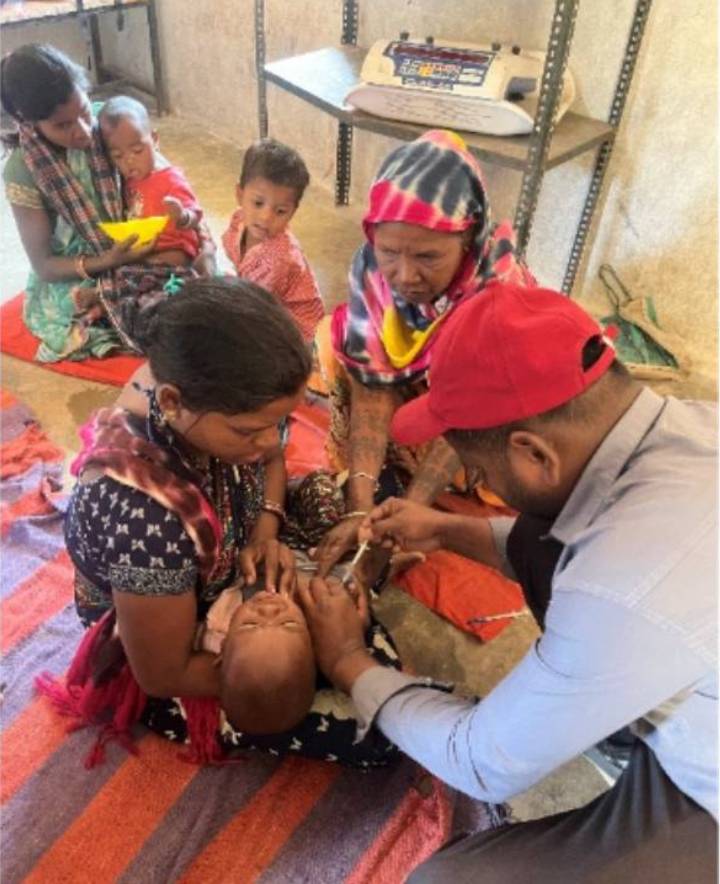
I spent time with the men first. Listening, building ease through conversation, even laughing about things unrelated to health. I then explained what vaccines do. I explained the fever. Three families who had been planning to go to the forest that morning came for vaccination instead.
The male RHO told me afterward that these same families had been running away on vaccination days for years. Not out of hostility. Not out of stubborn opposition. Simply because no one had ever sat down and talked with them long enough, honestly enough, to give them a reason to stay.
The distance between these communities and the rest of the health system is not only geographical. It is built from years of being overlooked, from information that never arrived, from institutions that could not be navigated, from programs designed for people who look different and live differently. Closing that distance is slow, unglamorous work. It rarely appears in reports. It does not generate headlines. But it is, I think, where public health actually lives in the conversations that happen at the door, on the hill, at the edge of the dry riverbed, in the places the road does not reach.
What the Field Actually Teaches
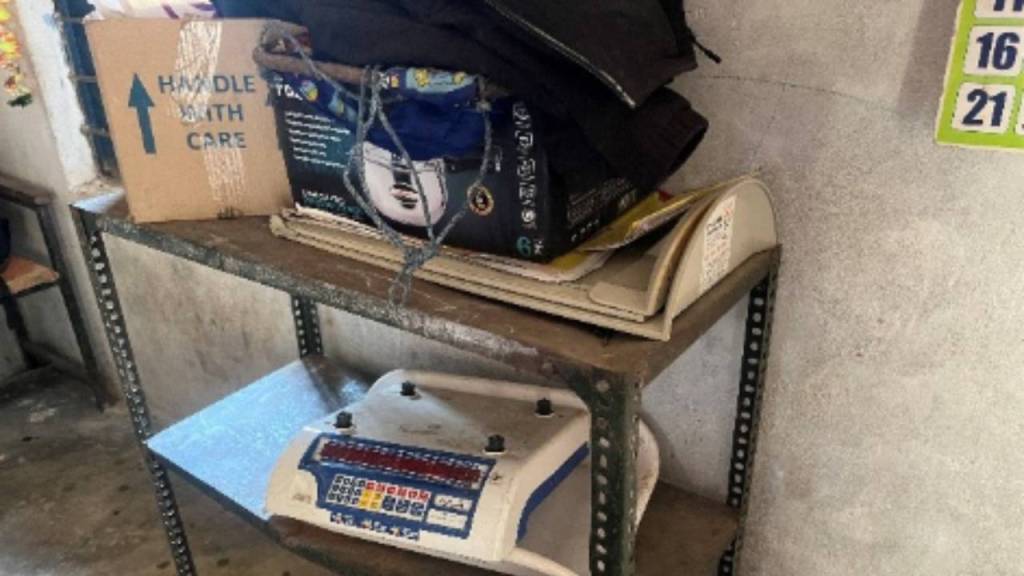
Classroom discussions of social determinants poverty, geography, literacy, access, are not wrong. But they remain abstract until you see them embodied in a specific person in a specific home on a specific morning. The drunk husband with the broken piece of wood. The broken growth-monitoring device sitting unused in the Anganwadi Centre, making it impossible to accurately track whether the children who do come are growing appropriate to their age. These are not edge cases. They are the texture of the work.
What I keep returning to is how much depends on presence — physical, unhurried, unglamorous presence. The families in Kanakula did not need a campaign. They needed one honest conversation. The woman in Ongna did not need a new policy. She needed someone to suspend judgment and show up at her door on an ordinary Tuesday morning and decide that her pregnancy mattered enough to act on.
Field-based public health workers carry knowledge that no dashboard captures. They know which families have stopped answering the door and why. They know which roads become rivers in July. They know whose husband drinks, which child hasn’t been weighed in three months, which household will respond to a visit, and which ones need something more. That knowledge is the foundation of any intervention that actually works. When we strip it away either because of burnout, or by stopping to ask what workers see, we lose important intelligence that the health system has acquired and works with over time.