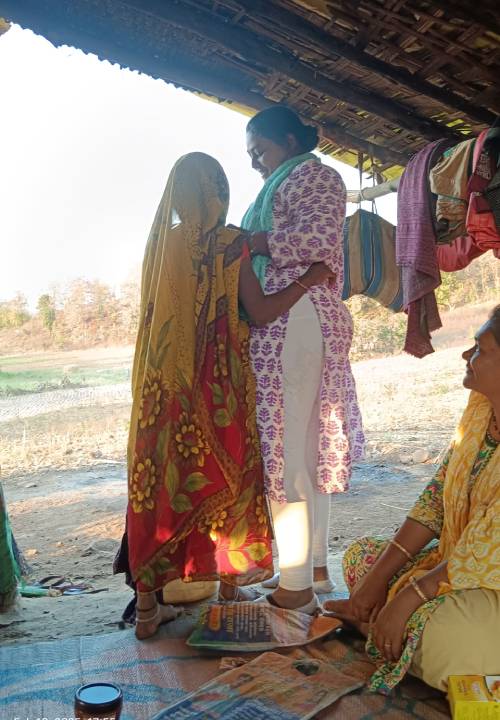


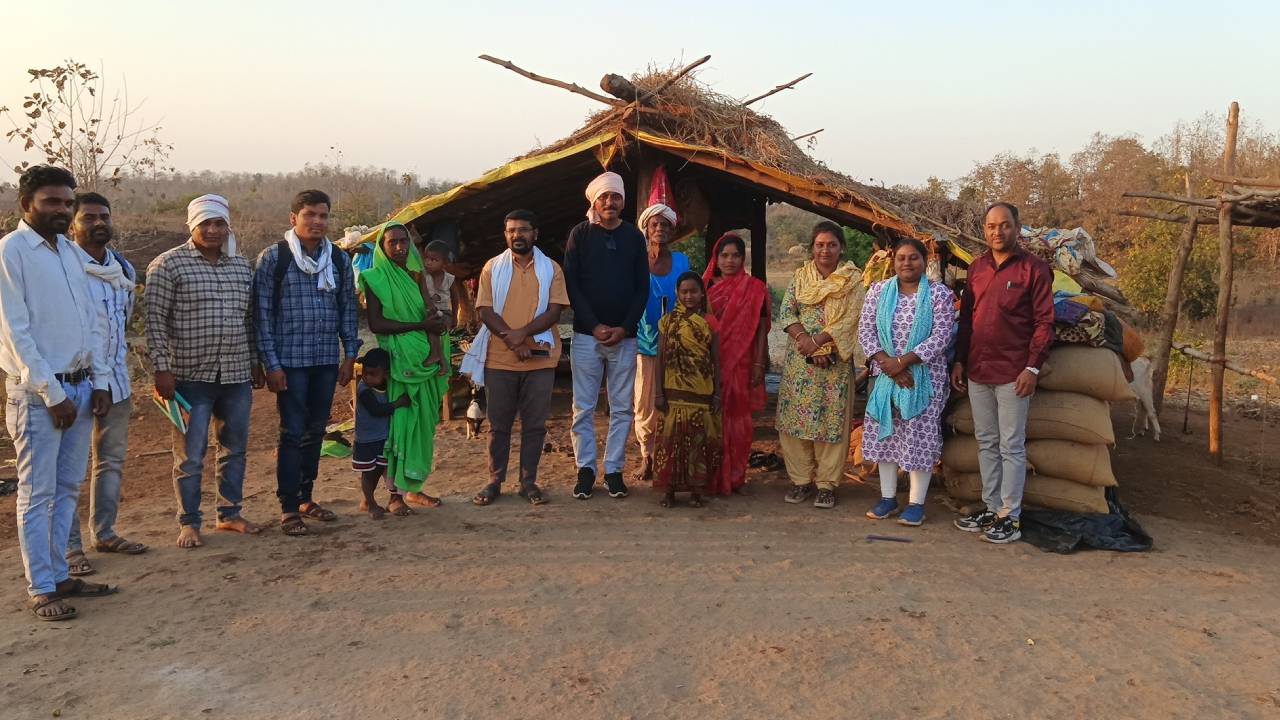
“Two years ago, medicines for blood pressure and diabetes were often unavailable at our government clinic. Today, they are provided regularly. Health camps for blood pressure and blood sugar screening are also conducted on a regular basis.”
— Smt. Lakshmibai Bhile, patient, Shinoli Health and Wellness Centre (HWC-SC)
Background
Under Ayushman Bharat, the Government of India’s flagship health programme, Sub-Centres (SCs) and Primary Health Centres (PHCs) are being transformed into Health and Wellness Centres (HWCs) to provide comprehensive primary healthcare services.
Community participation is a key pillar of this initiative. At the PHC level, Rogi Kalyan Samitis (RKS) provide community oversight, while at the village level, community action is expected through structures such as Village Health Sanitation and Nutrition Committees (VHSNCs), Jan Arogya Samitis (JAS), ASHAs, and Mahila Arogya Samitis in urban areas.
Each HWC receives an annual untied fund of ₹50,000 to support local health initiatives and address essential operational needs. To ensure effective utilisation of these resources and strengthen community participation, every HWC is expected to have an active Jan Arogya Samiti (JAS).
Anusandhan Trust–SATHI has played a key role in forming and activating JASs in four rural and tribal blocks across Maharashtra: Ambegaon and Velhe in Pune district, Ghatanji in Yavatmal district, and Dharani in Amravati district.
Anusandhan Trust–SATHI, which has worked in the health sector since 1998 primarily in rural and tribal areas, expanded its engagement into urban communities during the pandemic after recognising the growing need for grassroots health support in cities.
The Situation Before Jan Arogya Samiti Activation
SATHI began working on JAS activation in June 2024. During the first year, the team reached 90 HWCs across the four blocks, ensuring the appointment of Community Health Officers (CHOs) and supporting the activation of JASs.
Although government records indicated that 96 JASs had already been formed, field visits revealed major gaps in their functioning. Most committees lacked even basic records such as member lists, meeting minutes, agendas, or documentation of decisions. In many cases, the only evidence of an “active” JAS was a bank account jointly operated by the Sarpanch, CHO, or ANM. Several committee members were unaware that they were members of a JAS or of the roles they were expected to play.
SATHI worked with local stakeholders to reconstitute committees, identify members, clarify responsibilities, and establish regular meeting processes. Despite several challenges, the organisation successfully reactivated 125 Jan Arogya Samitis by the end of the second year.
Who Are the Members of a Jan Arogya Samiti?
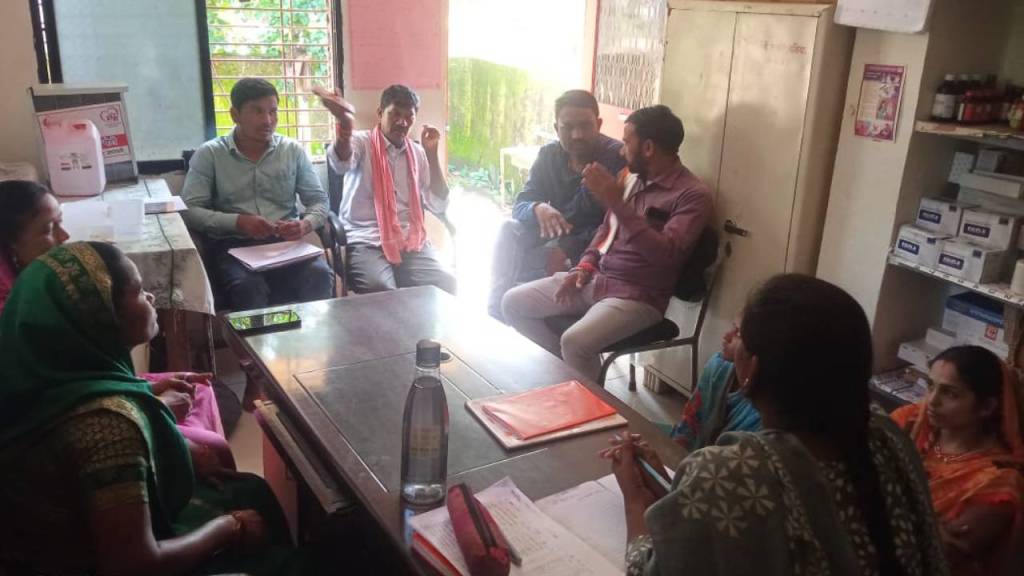
The Sarpanch serves as the President of the JAS, while the Community Health Officer (CHO) serves as the Secretary. If the CHO position is vacant, the ANM assumes this responsibility. The Medical Officer of the PHC acts as Co-President.
Other members include:
- ASHAs
- Anganwadi workers
- School representatives
- Local community leaders
- Representatives of patient groups
The Gram Sevak participates in meetings as required.
JAS meetings are typically held monthly or bi-monthly. Members review the functioning of the HWC, discuss gaps in service delivery, monitor key health indicators, and identify local solutions. Issues commonly discussed include high-risk pregnancies, malnourished children, non-communicable disease (NCD) screening, medicine availability, and infrastructure needs.
How Does an Active JAS Improve Health Services?
An active JAS serves as a bridge between the community, the health system, Gram Panchayats, and other government departments. By identifying local challenges and mobilising resources, JASs help improve:
- Maternal and child health services
- Nutrition outcomes
- Access to NCD screening and treatment
- Availability of medicines
- Infrastructure maintenance and repairs
- Community participation in health programmes
Impact of JAS Activation
Supporting High-Risk Pregnancies
Ranjana Aatram from Rajurwadi village in Ghatanji was unable to access antenatal services because her documents contained mismatched information. The JAS helped her enrol in the health system.
“No one had explained things properly to me earlier. Because of the support from the JAS, my check-up was completed and I received the care I needed,” She said.
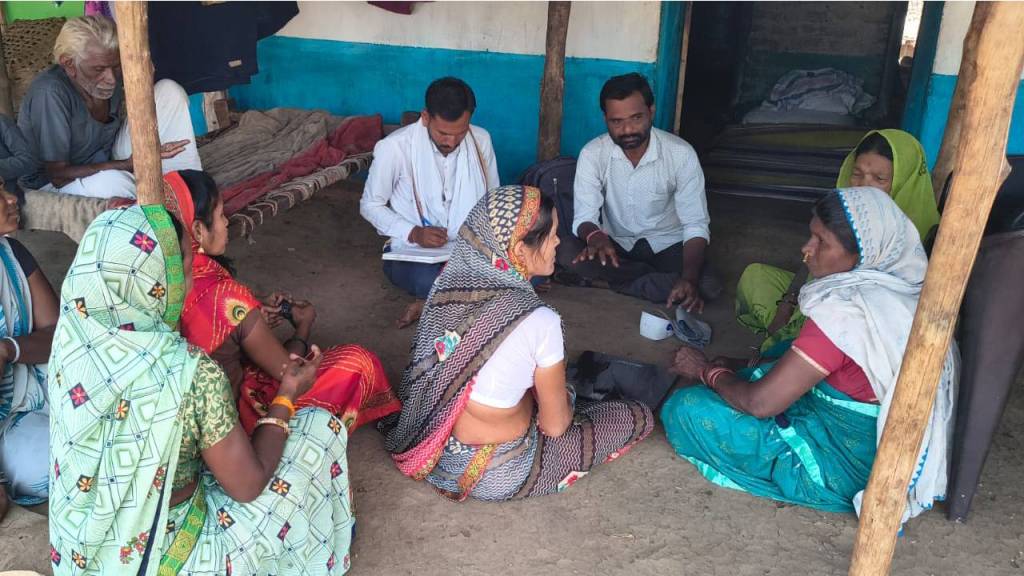
Being enrolled in the system enabled referrals to higher-level facilities. She later delivered safely and said: “For some time, I was very scared. But because of the doctors and your support, both my baby and I survived.”
Another example is Sarita, a six-month pregnant woman from Dharani who weighed only 32 kilograms and had a haemoglobin level of 6 g/dL. She also had a gutkha addiction and lived in a village without road connectivity to the HWC.
The ANM and JAS members counselled her family to move her to her mother’s house which was closer to an HWC At her mother’s place the Anganwadi workers provided her with Amrut Ahar and Iron tablets to improve her status. Through treatment, nutritional support, and regular follow-up, her haemoglobin increased to 9 g/dL. She later underwent a successful Caesarean section.
After delivery she told one of JAS member “Bhaiyya, because of your support, my health improved and the delivery became smooth. Thank you.”

Supporting Children with Severe Acute Malnutrition
Aarav, a two-year-old child from Sayat Kharda village in Yavatmal, was identified as suffering from severe acute malnutrition (SAM). He could barely sit or respond to others. His mother pregnant with her second child and the father was busy with his work as a construction worker. There was nobody at home to look after child.
“Now my child is active, responding to us, and has started walking. We are truly grateful. Our child is alive and healthy because of your support.” said his mother.
The case was discussed in a JAS meeting, following which members visited the family and persuaded the parents to admit him to a Nutrition Rehabilitation Centre (NRC).

Following treatment, Aarav’s health improved significantly.
“Now my child is active, responding to us, and has started walking. We are truly grateful. Our child is alive and healthy because of your support.” said his mother.
Improving Access to NCD Services
JAS members have actively encouraged HWCs to organise NCD screening camps in villages and hamlets that had previously received little or no healthcare outreach.
Overall, 562 village-level and HWC-level NCD camps have been organised through JAS efforts, enabling 6,566 patients to start receiving medicines through HWCs.
One such village was Kolwadi-Kotmadra in Pune district.

“We never imagined that a doctor would come to our hamlet for health check-ups. At our age, it is difficult to travel long distances for healthcare. Receiving services near our homes was a great relief.”
— Manabai Pardhi, resident of Kolwadi
As awareness increased, more people began seeking care at HWCs.
“Because of the Jan Arogya Samiti, awareness about health services has increased and more people are coming to the HWC for treatment.”
— Dr. Santosh Thokal, Community Health Officer, Shinoli
In Ghoti HWC, Yavatmal, JAS members identified patients who required combination medicines that were not available through routine government supply channels. After discussions with the Gram Panchayat, funds were mobilised to purchase medicines for poor patients.
As a result, seven patients began receiving the treatment they needed.
Overall, 562 village-level and HWC-level NCD camps have been organised through JAS efforts, enabling 6,566 patients to start receiving medicines through HWCs.
Strengthening Health Services Through Local Action
Many challenges faced by HWCs require modest financial investments that can often be addressed through local funds and collective action.
Of the 218 issues discussed by JASs that required financial resources, 127 (58%) have already been resolved through HWC-level funds or Gram Panchayat support. The remaining issues are under active follow-up.
“Before the JAS became active, we repeatedly raised issues but saw little action. Now, problems are addressed much more quickly and medicine shortages are resolved promptly.”
— Kamal Hilau, ASHA worker, Pune
“The Jan Arogya Samiti keeps a close watch on the Health and Wellness Centre. Whenever there are shortages of medicines or supplies, the committee follows up and ensures that issues are resolved.”
— Mangesh Pardhi, Sarpanch, Shinoli
Of the 218 issues discussed by JASs that required financial resources, 127 (58%) have already been resolved through HWC-level funds or Gram Panchayat support. The remaining issues are under active follow-up.
Funds have been used for:
- Electricity payments
- Inverter purchases
- Building repairs
- Medicine procurement
- Equipment and furniture purchases
- Cleaning and sanitation
- Diagnostic kits and testing strips
- Repairs to medical equipment and facilities
Subscribe to stay connected
We will send you a monthly newsletter listing all the articles that were published in the month.
Conclusion
An active Jan Arogya Samiti is a valuable asset for any Health and Wellness Centre. By bringing together community members, healthcare providers, local governments, and health officials, JASs strengthen accountability, improve service delivery, and ensure that local health needs are addressed promptly. The experience from these remote and tribal areas of Maharashtra demonstrates that when communities are empowered to participate in health governance, significant improvements in access, quality, and responsiveness of healthcare services can be achieved.