





What often gets lost in discussions about urban health in India is an important message. We tend to assume that health is something cities add on later through hospitals, insurance schemes, or specialised programmes once growth has already happened. In reality, a city’s health is largely determined much earlier by decisions that shape how people live, move, breathe, and sleep every day. This is why the most instructive examples for India are not small European towns, but large, pressured megacities that faced scale, density, and growth head-on and still chose a different path.
Take Tokyo. It is the largest metropolitan region in the world, vastly denser than any Indian city, yet it remains remarkably liveable and healthy. This did not happen just because Tokyo is wealthy, but as a result of the fact that urban growth was organised around a clear idea of how everyday life should function. Dense neighbourhoods were paired with strict building codes that ensured light, ventilation, fire safety, and noise control even at high densities. Mixed-use zoning meant homes, shops, schools, and workplaces were close together, reducing the need for long commutes. Rail systems were built early and expanded continuously, making public transport the default rather than the exception. As a result, walking is normal, noise is managed, air quality, while not perfect (AQI between 0 and 100) is controlled, and daily stress is far lower than the city’s scale would suggest.
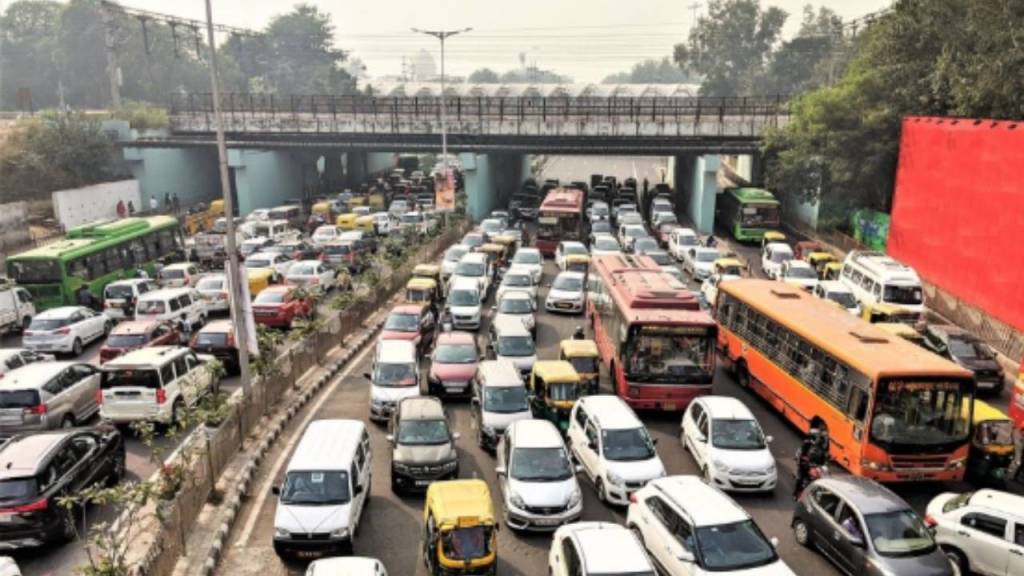
Look at the trajectory of Mumbai, Delhi, Bengaluru, Kolkata, and Chennai. These are cities of extraordinary energy and ambition, but they are increasingly shaped by an urban vision that equates modernity with flyovers, highways, and private vehicles.
Seoul tells a complementary story. Seoul urbanised at an extraordinary pace, marked by periods of authoritarian planning, social strain, and environmental neglect. It made serious mistakes, including prioritising highways through dense urban cores. But what matters is that the city later recognised these choices as harmful and deliberately reversed them. The removal of the Cheonggyecheon expressway was not just an aesthetic project; it reduced noise, lowered local temperatures, improved air quality, and reshaped how citizens related to public space. Over time, Seoul strengthened building standards, invested heavily in metro systems, regulated pollution sources, and treated environmental health as integral to economic competitiveness. The lesson here is not perfection, but course correction at scale.

Santiago sits even closer to India’s reality. A city of over seven million people in a middle-income country, Santiago faced rapid expansion, inequality, and fiscal constraints. Yet it anchored its growth around an extensive metro system, coherent land-use planning, and enforceable building norms. This helped contain sprawl, limit car dependence, and reduce exposure to air pollution and traffic-related injury. While social inequities remain, the city avoided many of the compounding health failures seen in cities that allowed uncontrolled peripheral growth.
Now look at the trajectory of Mumbai, Delhi, Bengaluru, Kolkata, and Chennai. These are cities of extraordinary energy and ambition, but they are increasingly shaped by an urban vision that equates modernity with flyovers, highways, and private vehicles. Building codes are unevenly enforced, leading to poor ventilation and rising indoor air pollution. Noise is treated as a nuisance rather than a health risk. Informal and low-income housing is pushed into flood-prone or polluted zones. Commutes stretch longer each year, cutting into sleep, family life, and mental well-being. Hospitals struggle under the weight of diseases that, in truth, are manufactured by the city itself.

The decisions made today about construction standards, noise control, air quality, drainage, transport, and neighbourhood design will shape health outcomes long after current governments are gone.
None of this is inevitable. Tokyo, Seoul, and Santiago demonstrate that very large cities can choose density with dignity, growth with regulation, and mobility with health in mind. The common thread is not wealth, culture, or population control, but a shared political vision of what the city is for, and the discipline to embed that vision into building codes, transport systems, environmental regulation, and land use, decade after decade.
India’s future cities are still being written. The decisions made today about construction standards, noise control, air quality, drainage, transport, and neighbourhood design will shape health outcomes long after current governments are gone. The real question for India is not whether megacities can be healthy. It is whether we are willing to imagine, and commit to, a version of urban modernity that quietly produces health every single day.