




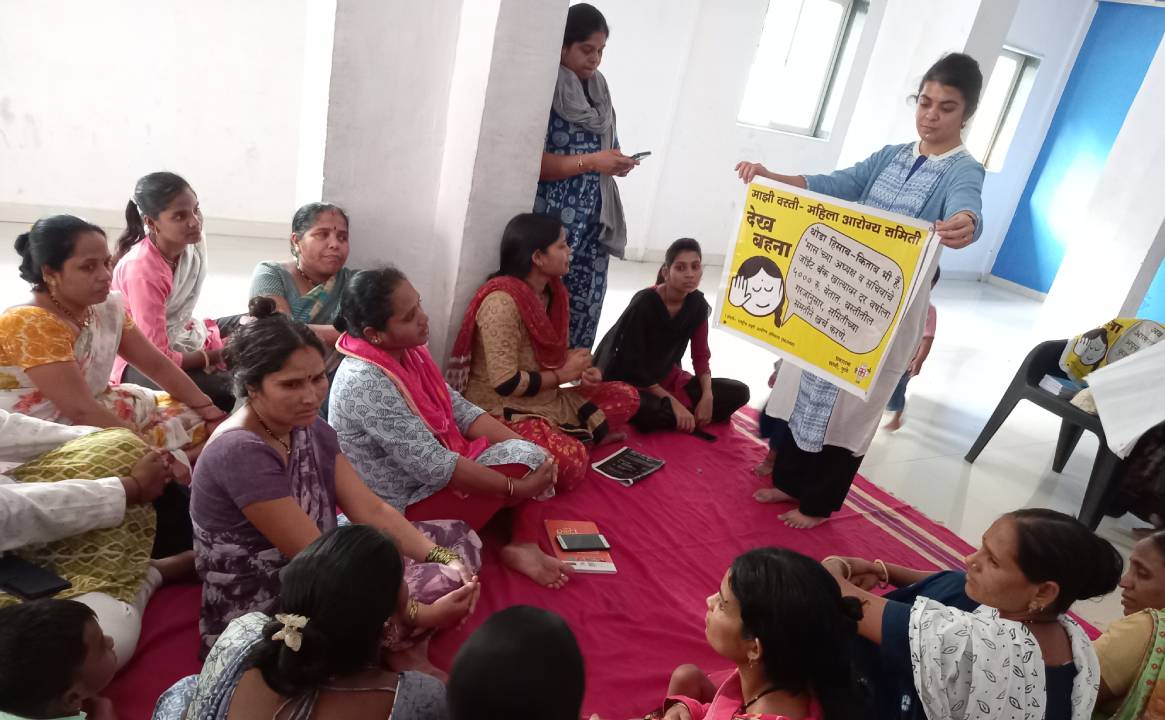
When communities take ownership of their health, meaningful and lasting improvements become possible. This has been evident in Laxminagar, a low-income settlement in Pune, where the formation of a Mahila Arogya Samiti (MAS), supported by an NGO, helped residents collectively address gaps in healthcare and other essential civic services.
Laxminagar developed between 1995 and 2000 on hilly terrain in Pune’s Kothrud ward. The settlement is home to nearly 2,500 people across around 750 households, many of whom work in the informal sector as construction workers, rag pickers, drivers, and domestic workers. Several families migrated there from drought-prone districts of Maharashtra and from neighbouring states such as Telangana and Andhra Pradesh. Most houses are semi-pucca structures, and average monthly household incomes range from ₹13,500 to ₹22,000.
During the COVID-19 pandemic, the Pune Municipal Corporation established an e-health centre ( a dispensary) in Laxminagar to improve access to primary healthcare services. Operating from a temporary tin structure, the facility later transitioned into a Health and Wellness Centre staffed by a doctor, nurse, pharmacist, and support personnel. Despite its importance, the centre faced several operational challenges over time.
Anusandhan Trust–SATHI, which has worked in the health sector since 1998 primarily in rural and tribal areas, expanded its engagement into urban communities during the pandemic after recognising the growing need for grassroots health support in cities.
SATHI initiated their urban work with community meetings in Laxminagar, attended largely by women residents. Discussions focused on local health services, gaps in care, and the community’s priorities. Many participants expressed concern about irregular staffing, inconsistent medicine availability, and poor functioning of the health centre.
To address these issues collectively, the women, together with SATHI, decided to form a Mahila Arogya Samiti.
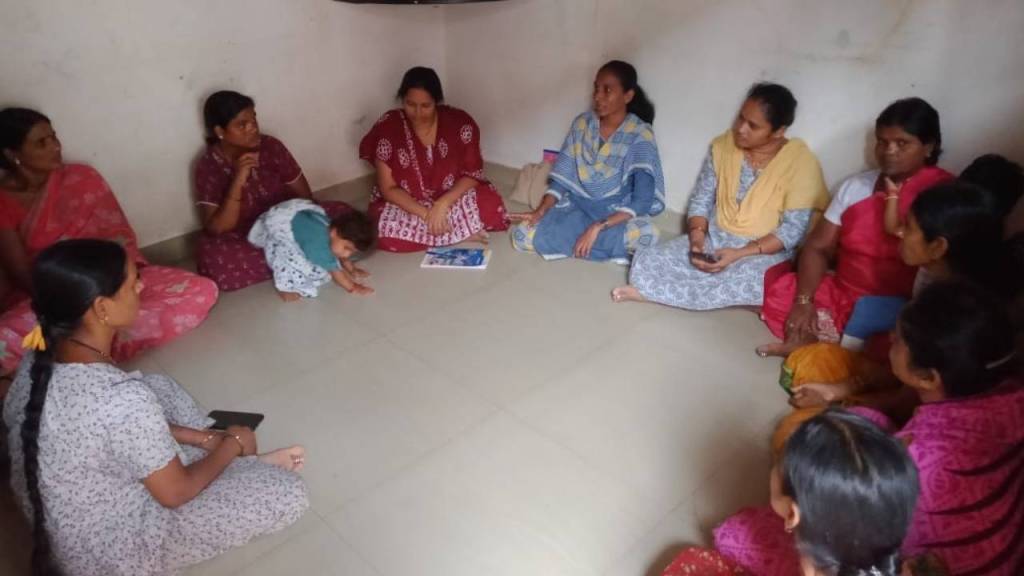
Mahila Arogya Samitis (MAS) are women-led community groups of 10-12 local members in urban slums, formed under the National Urban Health Mission (NUHM) to bridge the gap between residents and health services. They promote hygiene, nutrition, sanitation, and health awareness, while supporting Accredited Social Health Activists (ASHAs) in improving community health outcomes. The ASHA serves as the Member Secretary of the MAS, while one member is elected as the Chairperson.
The MAS is expected to increase the uptake of government health services by creating awareness among families in the settlement on health and related issues, and by referring community members to appropriate service providers in a timely manner. A well-functioning MAS can enable communities to take ownership of their health and related concerns by empowering women, thereby bridging the gap between people’s needs and service delivery.
The process began with small group discussions and gradually evolved into a formally functioning MAS in 2024. SATHI trained the members on public health services, sanitation systems, engagement with government departments, and drafting formal applications to local authorities. Equipped with this knowledge, the committee began systematically addressing issues within the settlement.
One of the MAS’s earliest successes was improving the condition of public toilets, which had previously been unhygienic and lacked basic infrastructure such as doors. Through sustained follow-up with ward officials, the facilities were repaired and made functional for residents.
As a result of these collective efforts, a doctor was appointed to the health centre within a week, and the position has remained consistently filled since then despite personnel changes.
Attention then shifted to the local health centre, where residents had increasingly begun seeking care from private providers because of irregular doctor attendance and inconvenient operating hours that overlapped with residents’ work schedules. The MAS organised a dialogue meeting with the Ward Medical Officer, Dr. Anjali Tilekar, during which women openly raised concerns regarding delayed opening hours, staff absenteeism, medicine shortages, and inadequate infrastructure, including lack of patient privacy.
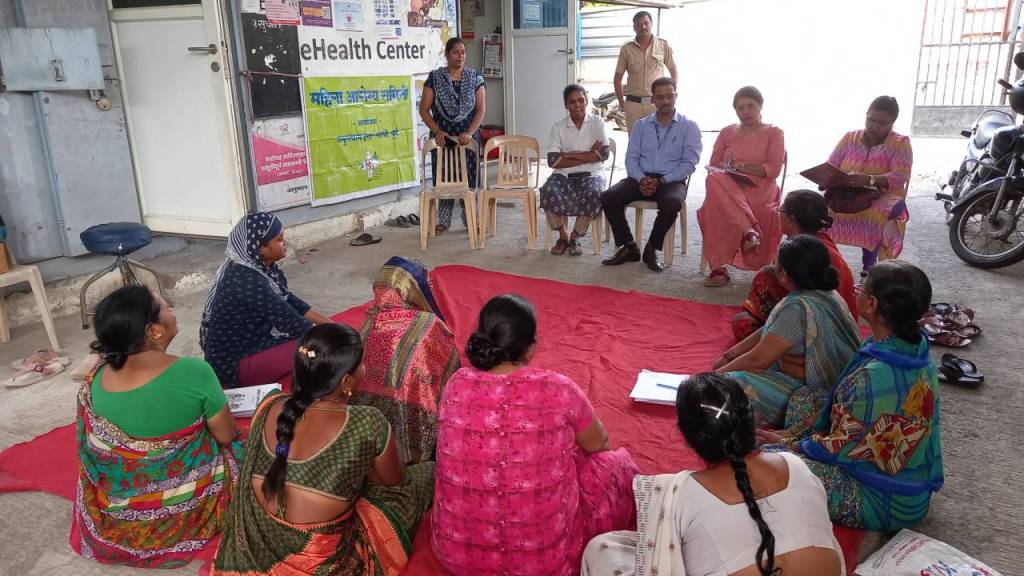
The meeting generated strong community participation, but it also led to resistance from some local political actors, who pressured SATHI staff and MAS members to stop raising complaints. In response, SATHI continued engaging constructively with health officials through formal administrative channels. The Ward Medical Officer acknowledged the legitimacy of the concerns and extended support to address them.
Today, the Laxminagar Health and Wellness Centre functions regularly, serving 20–30 patients each day. Over the past two years, services have reached 31 pregnant and lactating women, while 63 children have been fully immunised.
As a result of these collective efforts, a doctor was appointed to the health centre within a week, and the position has remained consistently filled since then despite personnel changes. On another occasion, when a doctor was regularly arriving late due to childcare responsibilities, MAS members responded not with confrontation but with empathy. During a monthly meeting, they discussed possible solutions and even offered to help arrange local childcare support. This collaborative approach strengthened trust between healthcare providers and the community, and attendance at the centre subsequently improved.
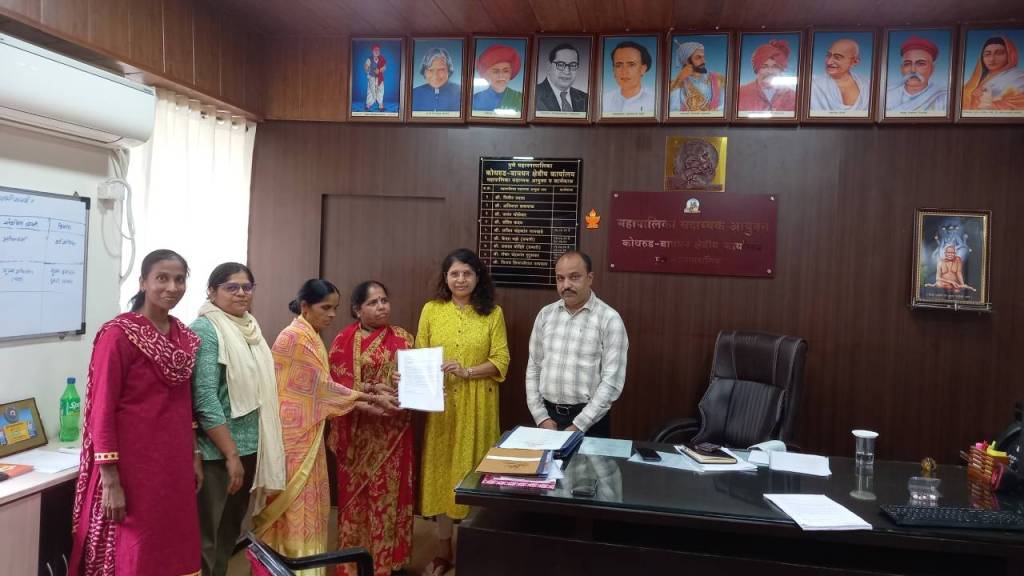
The MAS also played a role in facilitating the appointment of two ASHA workers for the settlement and launched a signature campaign demanding a permanent building for the Health and Wellness Centre. Residents submitted a memorandum to municipal authorities, and advocacy efforts continue.
Perhaps most importantly, these efforts have strengthened the confidence and collective agency of women in the settlement.
Today, the Laxminagar Health and Wellness Centre functions regularly, serving 20–30 patients each day. Over the past two years, services have reached 31 pregnant and lactating women, while 63 children have been fully immunised. Regular screening camps for non-communicable diseases are also conducted, with dozens of patients currently receiving treatment for diabetes and hypertension.
Beyond healthcare, the MAS has successfully advocated for improvements in drinking water pipelines, street lighting, and drainage systems through sustained engagement with local government officials.
Perhaps most importantly, these efforts have strengthened the confidence and collective agency of women in the settlement. The experience of Laxminagar demonstrates how organised community participation, supported by responsive public systems, can lead to practical and sustainable improvements in health and living conditions.