




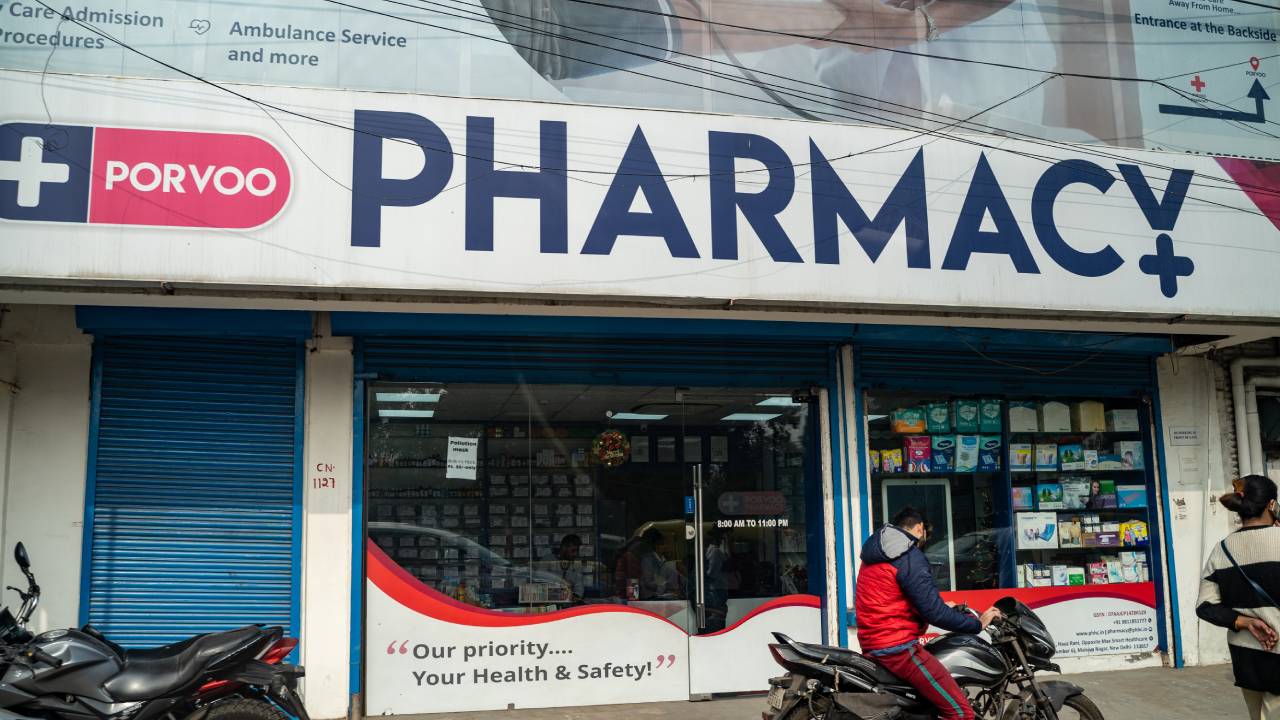
When people fall ill, they do not always go to a clinic or hospital first. Very often, they go to the neighbourhood pharmacy.
This is true across India. A parent may go there when a child has a fever. An older person may go there to ask about dizziness or weakness. A patient with diabetes or high blood pressure may go there to buy medicines and ask small questions. For many families, the pharmacist is nearby, known, affordable, and open for long hours.
This does not mean that pharmacists are doctors. They are not. It also does not mean that pharmacies should be allowed to treat every illness. That would be unsafe. Wrong medicines, overuse of antibiotics, and delayed referral to a doctor can all cause harm.
They are close to the community, and people trust them. But we also found clear gaps. Pharmacies need better training, clear rules, simple tools, and strong links to doctors and referral services if they are to play a safer role in primary care.
But we must also be honest about what is already happening. Pharmacies are already part of primary care in people’s lives. The question is whether we leave this activity informal and unsupervised, or whether we make it safer, better trained, and better connected to the health system.
A paper (https://doi.org/10.3389/fpubh.2023.1221439) examined pharmacy-linked health programmes in India and Bangladesh and found that pharmacies are often well-positioned as the first point of contact. They are close to the community, and people trust them. But we also found clear gaps. Pharmacies need better training, clear rules, simple tools, and strong links to doctors and referral services if they are to play a safer role in primary care.
This is not a strange or new idea. Many countries already use pharmacists in primary care. France gives pharmacists a wider role, including some protocol-based services. Brazil, Nigeria, South Africa, Indonesia, Britain, Argentina, and Iran also allow pharmacies to provide selected services such as blood pressure checks, blood sugar checks, medicine reviews, and disease monitoring. These countries have not made pharmacists a replacement for doctors. They have tried to define what pharmacists can safely do.
India needs a similar practical approach.
This platform has successfully worked with more than 1,500 pharmacies across 200+ districts, mainly in lower-income states such as Bihar, Uttar Pradesh, Madhya Pradesh, Chhattisgarh, Rajasthan, and Jharkhand.
A pharmacy could help with simple but important tasks. It could check blood pressure. It could help patients understand how to take their medicines. It could remind people with diabetes or hypertension to continue treatment. It could help identify danger signs and refer patients to a doctor. It could support teleconsultations where a doctor is not nearby.
This is where digital health can help (https://ssir.org/articles/entry/speciality-health-care-pharmacies-india). There is, for example, a platform that connects local pharmacies and other health partners with doctors and specialists. Patients do not have to find a specialist on their own. They can go to a familiar local provider who can help them connect with a doctor through the platform. This platform has successfully worked with more than 1,500 pharmacies across 200+ districts, mainly in lower-income states such as Bihar, Uttar Pradesh, Madhya Pradesh, Chhattisgarh, Rajasthan, and Jharkhand.

India must continue to strengthen public primary care clinics. But it should also work with the care channels people already use. The neighbourhood pharmacy is one of them.
But pharmacies should not stand alone. They should be part of a wider “Circle of Care” (https://doi.org/10.1007/978-3-031-96286-8_112). In this idea, different people support the patient in different ways. The community health worker helps guide and coordinate care. The pharmacist supports medicine access, basic checks, and follow-up. The doctor provides a diagnosis and treatment. Family members support daily care at home. Each has a role, but no one does everything.
Subscribe to stay connected
We will send you a monthly newsletter listing all the articles that were published in the month.

This matters especially for long-term illnesses. A person with diabetes, high blood pressure, asthma, depression, or an older person needing regular care cannot be helped by one visit to one doctor. They need repeated support close to home.
India must continue to strengthen public primary care clinics. But it should also work with the care channels people already use. The neighbourhood pharmacy is one of them.
The task is not to turn every pharmacy into a clinic. The task is to make pharmacies safer members of the primary care team. With training, protocols, digital links, and supervision, they can become an important part of India’s primary care circle.