




Introduction
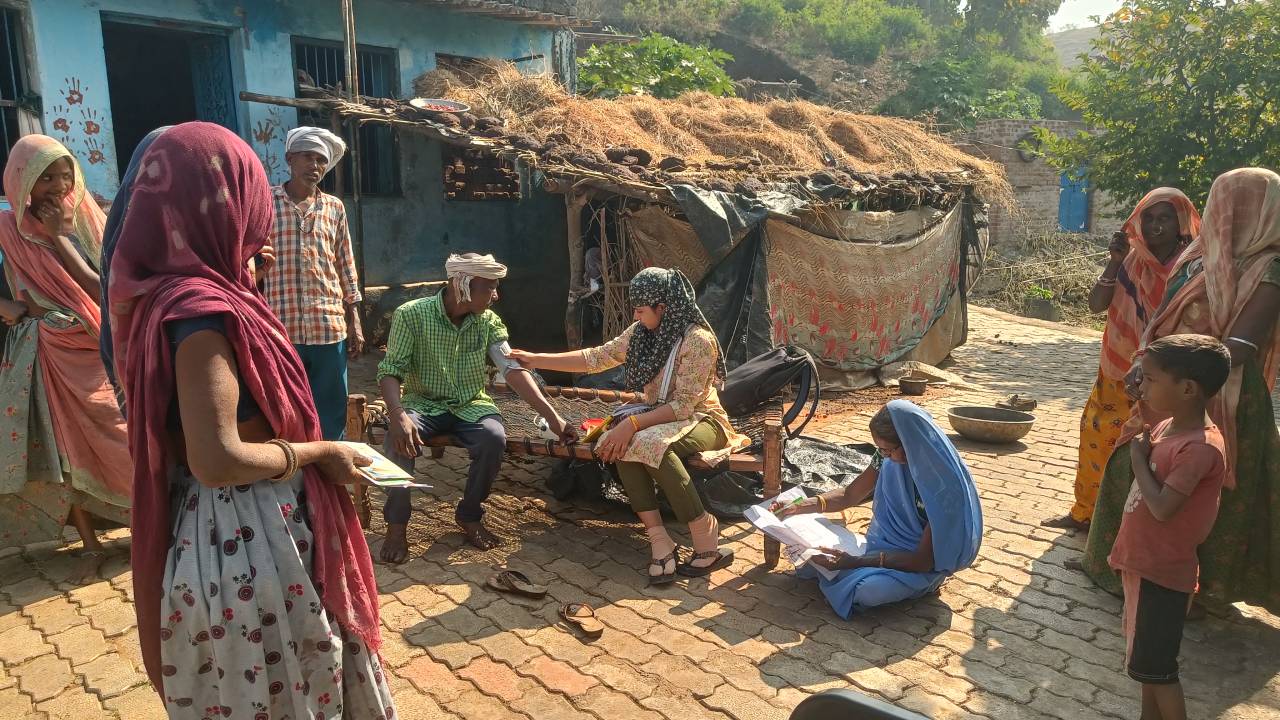
In the quiet hills of Ghate Ki Nal, where families live in scattered hamlets far from health facilities, an NCD camp became a moment of revelation. Mavji, a 65‑year‑old farmer who thought his tiredness was just age, and his son Devilal, only 36, who brushed off headaches as routine, both learned they were living with hypertension and diabetes. Neither had ever imagined they carried these silent burdens. With counseling and referral to the Primary Health Centre (PHC), they began treatment and embraced lifestyle changes. Their story is a reminder that in remote villages, chronic diseases often remain invisible until a chance screening uncovers them — and that awareness and access can change the course of a family’s future.
Stories like theirs reflect a larger reality in Banswara district, where Non-Communicable Diseases (NCDs) such as hypertension and diabetes are emerging as major public health concerns. As per the National NFHS-5, in Banswara district, among those over 15 years of age, 19.4% of men and 17.1% of women have elevated Blood Pressure levels or take medicine to control blood pressure, while 10.8% of men and 8.9% of women have elevated Blood Sugar levels or are taking medicine to control blood sugar levels. These figures highlight the growing burden of NCDs and the urgent need for early identification, regular screening, and community awareness.
Despite the increasing burden of these chronic diseases, awareness among the community remains low, and many people do not consider hypertension and diabetes as serious long-term health conditions. Due to limited awareness, delayed diagnosis, and poor health-seeking behavior, many individuals continue to live with uncontrolled blood pressure and blood sugar levels.
Community-based NCD screening has therefore become important. Community outreach through hamlet and village‑level camps helps detect undiagnosed cases and also raises awareness about the prevention and management of chronic diseases. This article shares the experience of planning and implementing community‑based NCD screening in PHC Bhungara, Banswara district, along with the challenges, strategies, and lessons learned.
What is NCD?
NCDs (Non-Communicable Diseases) are diseases that do not spread from one person to another. These mainly include hypertension, diabetes, cancer, heart diseases, stroke, etc.
At the community level, all Community Health Officers (CHOs) are required to carry out NCD screening for people aged 30 years and above. This makes it essential to know how many residents in a village fall into this age group. For this purpose, ASHA workers complete the CBAC (Community Based Assessment Checklist) form, which records health information for each individual. This helps identify those at higher risk and prioritize their screening. ASHA workers therefore play a crucial role in mobilizing the community and ensuring that high‑risk individuals are not missed.
Planning of NCD Screening
In many communities, faith in Bhopa (traditional singing priests) or gods often outweighs trust in the health system — and bridging that gap is as important as the screening itself.
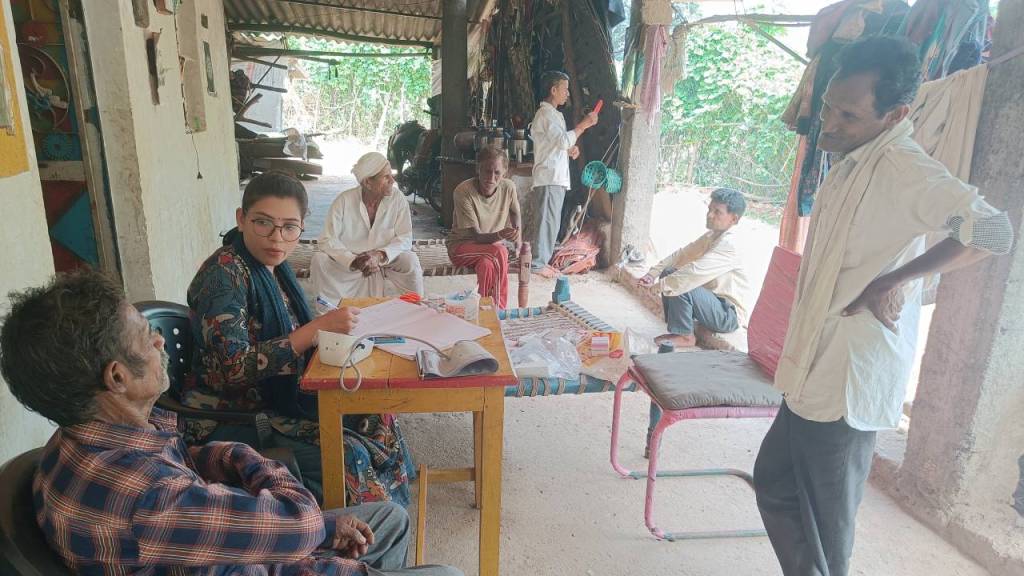
Being the CHO at the Health and Wellness Centre (HWC) Sompur, I have data on individuals aged above 30 years. We planned to conduct screening for blood pressure, diabetes, and cancer among as many people in this age group as possible. To carry out this plan, we realized that simply screening everyone who visits the HWC would not suffice, since many people live in remote hamlets and are unable to visit the center. Therefore, we decided to organize screening camps at the hamlet (mohalla) level.
That afternoon, I gathered 24 people, though convincing them to get screened was a challenge. Many insisted, “We are fit, we don’t need medicines or tests.”
With patient counseling and repeated conversations, most eventually agreed to check their BP and sugar. Four people remained firm in their belief that traditional healers or divine blessings were enough. This reflected a deeper truth: in many communities, faith in Bhopa (traditional singing priests) or gods often outweighs trust in the health system — and bridging that gap is as important as the screening itself.
After each camp, we held review meetings with the ASHA worker, to discuss who we missed and identify locations where people could be more easily reached. During these reviews, we discovered that many community members were engaged at MGNREGA worksites, so we extended our efforts by organizing NCD screening camps there as well.
Implementation Process
We began organizing NCD screening camps in small hamlets and in localities in the village. The most important step in this process was mobilization, in which the ASHA worker played a very crucial role. She went door‑to‑door a day before each camp, informing residents and encouraging them to attend. This preparation helped ensure community participation.
On the day of the camp, I arrived with the necessary equipment such as a BP machine, glucometer, weighing scale, and some basic medicines. People mobilized by the ASHA were already present. I set up my workspace and began the screening, while the ASHA ushered the individuals one by one. If someone on the list did not come for the screening, she went back to bring them, ensuring that most residents in the hamlet were covered.
Women were given special attention, with counseling on breast cancer and cervical cancer, including symptoms, risk factors, and guidance on self‑breast examination.

Screening Procedure
During the screening, I spoke with each individual, recorded their health history, and checked whether they were already on any medication. Their blood pressure and blood sugar levels were measured. Based on the results, I explained their condition to them and provided health education. If someone’s blood pressure was high, it was rechecked after a period of rest; those whose readings normalized were counseled, while those with persistently high levels were referred to the PHC. Similarly, individuals with high blood sugar were asked to return the next day for a fasting test at the HWC. If the fasting sugar was normal, they received counseling; if it remained high, they were referred to the PHC.
Women were given special attention, with counseling on breast cancer and cervical cancer, including symptoms, risk factors, and guidance on self‑breast examination. I later reflected on how attentively they listened, confirming that these conversations were perhaps new to them. I resolved to ask during my next visit whether they had tried self‑examination at home.
Those already on BP or diabetes medication who came for follow‑up were provided medicines along with counseling, while individuals screened for the first time and found to have normal reports were given health advice and sent home. In this way, the camp became not only a place for diagnosis and referral, but also an opportunity to build awareness and encourage preventive practices across the community.
I believe change will not happen overnight, but only through consistent effort. This was my first attempt to screen all people in the village. While I succeeded to an extent, I know that with persistence and repeated outreach, even those who resisted can eventually be reached.

Weekly Camps and Coverage
Through these efforts, we screened approximately 80% of the population aged 30 years and above in our area. Newly identified patients were registered on the online portal, and each was provided with a NCD card, mentioning the next follow-up date. This system helped ensure continuity of care and regular follow‑up.
Key Challenges and Solutions
A major challenge is to mobilize people — which we tried to address through repeated reviews after each NCD camp. We still struggled to reach those who left early for city work or had migrated, as migration is common in these areas. Alongside, lack of awareness, social beliefs, and misconceptions were silent battles we fought throughout the camps. I believe change will not happen overnight, but only through consistent effort. This was my first attempt to screen all people in the village. While I succeeded to an extent, I know that with persistence and repeated outreach, even those who resisted can eventually be reached.
Importance of Review and Replanning
After each camp, we reviewed performance with ASHA workers, assessing how many people had been screened, how many new patients were identified, who required follow‑up, and which areas had low coverage, and possible reasons for that. These reviews helped us refine our approach, identify missed groups, and adapt strategies for better outreach, such as extending screening to worksites and other community gathering points.
Results Achieved
My work area consists of scattered settlements. Conducting camps at hamlet level produced very good results. This strategy enabled us to reach more people, connect with them, and increase screening coverage. Continuous interaction raised awareness about NCDs. Newly identified patients began coming regularly for treatment, while others started voluntarily attending. Follow-up services improved significantly.
Subscribe to stay connected
We will send you a monthly newsletter listing all the articles that were published in the month.
Learnings and Way Forward
This experience demonstrated that with proper planning, a community‑based approach, ASHA support, regular review, and flexible working, NCD screening can be successfully implemented. To sustain effectiveness, it is important to rescreen individuals annually. At least one village‑wide screening camp should be held every year. Screening must also continue during field visits and community events. Patients diagnosed with NCDs need to be regularly followed up and monitored. In future, I will continue to engage with the community, reach new areas, spread awareness, and further improve NCD screening and follow-up services.
Every camp was not just about diagnosis; it was about fostering trust and shifting health‑seeking behavior. Over time, consistent outreach can transform silent struggles into narratives of strength.