




About This Article
Glorgio Winston Gouda holds a Master of Public Health (MPH) degree. This article is drawn from his four-month field internship with Ekjut, a public health organisation working in West Singhbhum, Jharkhand. The financial data cited is from the data collected by Ekjut to examine out-of-pocket expenditure among 50 families affected by severe mental illness in the region.
There is a particular kind of silence that fills a house when someone inside it is unwell in the mind. It is not peaceful. It is the silence of people not knowing what to say, of neighbours slowly stopping their visits, of a family learning to shrink itself around one person’s pain. I know that silence. I grew up near it.
My mother struggled with her mental health for quite a long time. I watched her carry something that had no name in our household, no language in our community, and certainly no clear path to help. What I remember most is not the hard moments themselves, but the loneliness that surrounded them. The way the world did not make room for what we were going through. The way we were expected to manage, quietly, on our own.
So when I arrived at Ekjut’s office which is in a small village call Ulidih-Ichinda near Chakradharpur town, West Singhbhum, as a public health intern, I was not coming as a neutral observer. I was coming as someone who already understood, in a very personal way, why this work matters.
The Cost Nobody Talks About
Before I ever sat in on a clinic session, or attended a peer support meeting—which the community themselves named as Dukhu Sukhu Baithak — I spent time going through the data collected from 50 families in the region who had a member living with severe mental illness. What those numbers revealed was not surprising to me emotionally, but it was still difficult to sit with.
The average family in this study earned around ₹5,732 a month. The average amount they had spent trying to get help for their loved one was ₹34,654. That is roughly six months of their entire income, gone. For the poorest families those earning under ₹2,000 a month the costs had swallowed up to 18 months of income. More than a year and a half of everything they earned, spent in desperation.
“For the poorest families, treatment costs consumed up to 18 months of their total income.”
And where did most of that money go? Not to psychiatrists or hospitals. It went to traditional healers. To rituals. To goats and chickens sacrificed in the hope that something, anything, would work. Ninety-two percent of families had performed animal sacrifices. All 50 families had tried traditional healing of some kind. Only 48% had ever accessed modern medicine.
Sixty percent of the families in this data collected said their children’s education had been affected. More than half had sold or mortgaged their property. Eighty-six percent had cut down on food.
I want to be careful here not to judge those choices. When you are watching someone you love deteriorate, and there is no doctor within reach, no one explaining what is happening, no system designed to help you, you do what your community tells you has worked before. You do what gives you the satisfaction of having taken some action when everything else feels helpless. I understand that impulse completely. My own family made similar choices, in different ways.
But here is what the data also showed: families who relied only on traditional methods spent an average of ₹29,780. Those who eventually combined it with modern medicine spent ₹42,650. The financial consequences of delayed diagnosis and treatment are not abstract they are the difference between keeping your land and losing it. Between your children staying in school and being pulled out.
Sixty percent of the families in this data collected said their children’s education had been affected. More than half had sold or mortgaged their property. Eighty-six percent had cut down on food. Mental illness, untreated, does not just affect the person who has it. It restructures an entire family’s future.
What I Saw At The Clinic
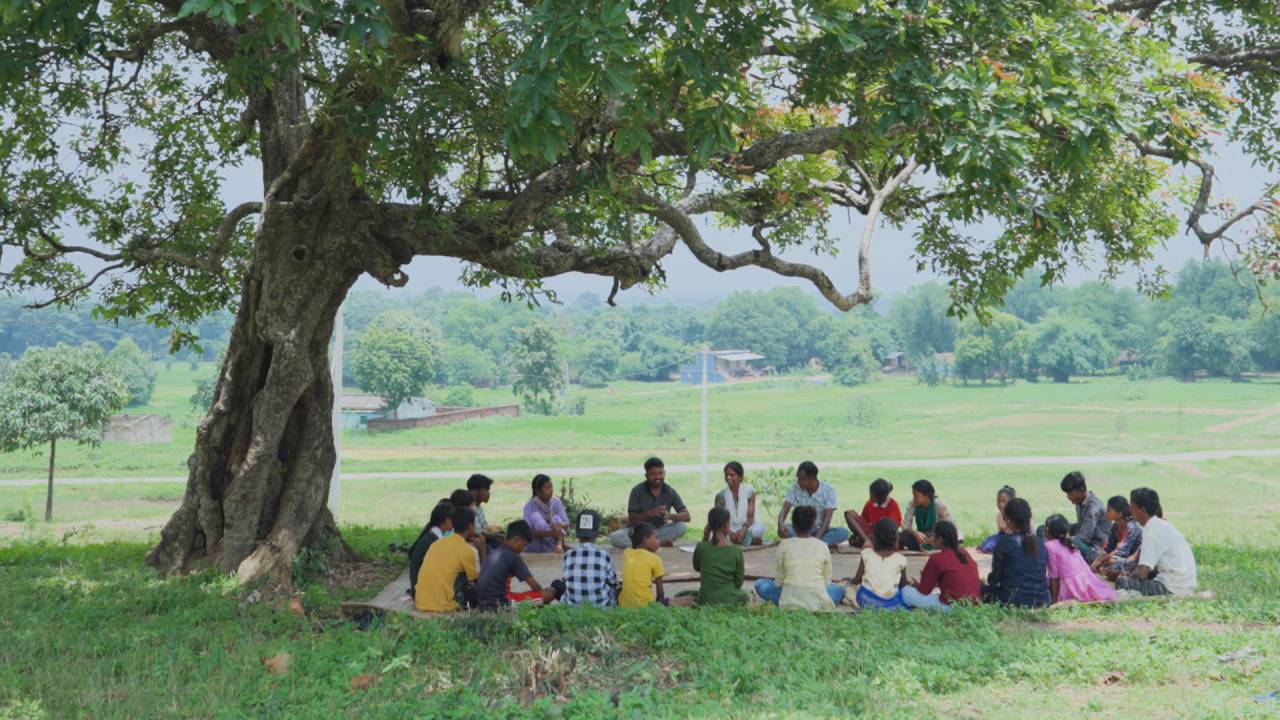
The Ekjut’s collaborative tele-psychiatric clinic with support from Central Institute of Psychiatry, Ranchi, runs on the third Thursday of every month. People travel from surrounding villages, sometimes hours, to reach the village clinic. When they arrive, they are registered, their blood pressure is checked, their history is recorded if it hasn’t been before. Then they sit with a mental health facilitator they already know and who they fondly call dukhu sukhu saathi, someone they trust, and through a laptop screen, they speak with a psychiatrist at the Central Institute of Psychiatry in Ranchi.

The first thing I noticed was how the staff was addressed. Not ‘sir’ or ‘doctor.’ Just ‘Bhaiya’ (brother). It sounds like a small thing but it is not. Not at all. The distance that formal titles create between a patient and a provider is not just about politeness. It is about whether someone who has already been made to feel like a burden, like a problem, like something shameful, feels safe enough to speak. Calling the doctor ‘Bhaiya’ was a deliberate choice to close that distance.
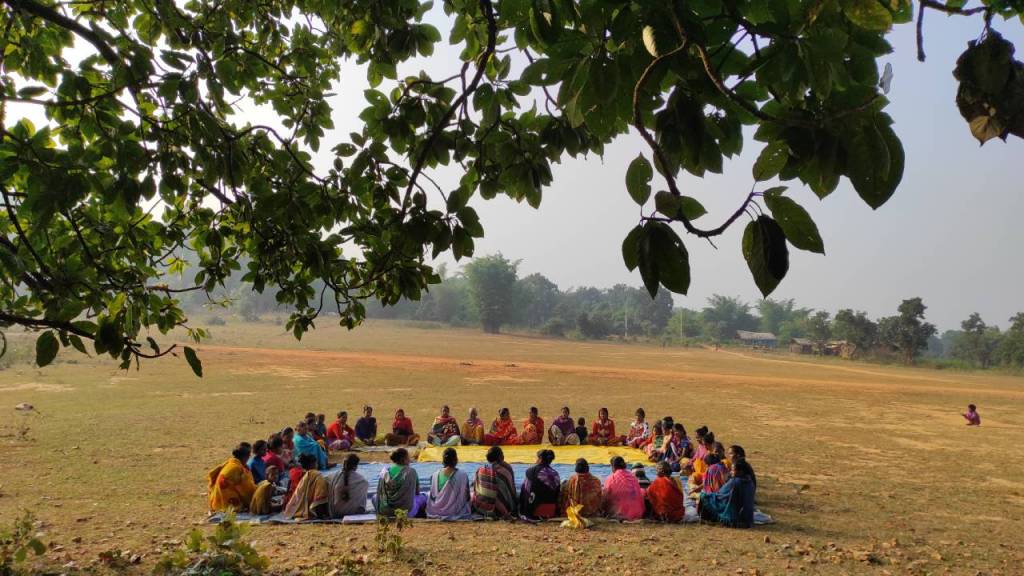
The second thing I noticed was the presence and role of the Sukhu-Dukhu Saathis — the peer support workers who had been meeting with these families in their villages for months before clinic day. They sat beside the patients during consultations. They already knew the stories. When a patient struggled to find words, the Saathis helped. When anxiety rose in the room, familiar faces kept it from overwhelming the moment.
“I thought about what it would have meant for my mother to have had someone like that. Someone who had been to our house. Someone who knew us not just our file.”
THE FACES BEHIND THE NUMBER
During field visits, I met a woman I will not forget. She was raising three children alone. Her eldest son had severe mental illness. He had gone through a period of violent episodes — disruptive to the village, and terrifying for her. The community had withdrawn. Her own family had distanced themselves. She told me there had been moments when she saw no way forward at all.
In my research, I found that this experience of caregiver despair reaching its darkest point was not rare. The literature puts depression and anxiety among caregivers of people with severe mental illness at anywhere between 20% and 50%. In resource-limited settings like this one, with no support system and compounding financial ruin, that figure feels if anything like an undercount.
But she was not defeated when I met her. Her son was walking around the compound. He was helping with chores. She pointed to him the way you point to something you thought you had lost.
When I think about the caregivers I met through the lens of the CHIME framework — Connectedness, Hope, Identity, Meaning, Empowerment — I see how systematically the caregiving experience strips each of these things away.
What changed? Not just for him, but for her. What made the difference? It was not one thing. It was the combination of regular medication (now free, and reliably available), the monthly clinic, and the Sukhu-Dukhu support group meetings where she sat with other caregivers and said the things she had never been able to say out loud before. It was being seen. Being heard. Not being alone in it anymore.

The Silence Around Caregivers
We talk a lot about people with mental illness their suffering, their recovery, their needs. We talk much less about the people taking care of them. In these communities, that burden falls almost entirely on women. Mothers, wives, sisters. Women who already carry enormous loads, who are often the last to eat and the first to be invisible.
When I think about the caregivers I met through the lens of the CHIME framework — Connectedness, Hope, Identity, Meaning, Empowerment — I see how systematically the caregiving experience strips each of these things away. Connectedness erodes when your community avoids you. Hope fractures when nothing works and resources run out. Identity collapses when you stop being a person with a name and become only ”Mad or pagal or dain,’ defined entirely by your proximity to illness.
Meaning becomes the only thread left, and even that hangs by duty and love alone, with nothing holding it up from the outside.
Ekjut’s mental health programme, without necessarily framing it this way, addresses all five. The peer support meetings rebuild connection. The visible recovery of patients restores hope. The Saathis treat caregivers as people, not just support structures. The education offered gently, over time gives language to experiences that had none, and that language returns agency.
Why This Model Works, And Why It Matters
India has roughly 0.3 psychiatrists for every 100,000 people. In tribal and rural areas, that number is effectively lower still. The Central Institute of Psychiatry in Ranchi is a world away from the villages of West Singhbhum geographically, economically, culturally. Telepsychiatry does not solve everything, but it closes a gap that would otherwise be unbridgeable.
What makes Ekjut’s approach distinct is that the technology is not the point. The technology is just a tool. The real infrastructure is human — the Saathis who walk to people’s homes, the peer meetings held in local languages, the Bhaiya who does not make patients feel small. The psychiatrist on the screen becomes accessible only because the ground has been carefully, patiently prepared.
One case from my research stayed with me particularly. A man named Budhan had been chained under a neem tree in his courtyard for years. Not out of cruelty out of desperation, by a community that did not know what else to do. Within three months of receiving medication through Ekjut’s programme, he was free of the chains. Three months.
“That single fact contains an entire argument for why this work must be expanded.”
What I Carry With Me
I came to this internship as a public health student. I left it as something harder to name. Closer to a witness, maybe. Someone who has seen the gap between what mental healthcare could be and what it currently is and who has also seen, in one small village clinic at Chakradharpur, what becomes possible when that gap is taken seriously.
Subscribe to stay connected
We will send you a monthly newsletter listing all the articles that were published in the month.
My mother’s struggles were different in context from the people I met in Jharkhand. But the core of it — the isolation, the not-knowing, the way mental illness sits at the intersection of every other kind of disadvantage — was familiar. And what I saw at Ekjut was the kind of care I wished had existed for her. The kind that does not ask you to come to it, perfectly prepared and already helped. The kind that walks toward you, meets you where you are, and stays.
Mental health care, at its best, is not a service. It is a relationship. Ekjut seems to understand this. The rest of us in policy, in practice, in health systems design, have a lot of catching up to do.