




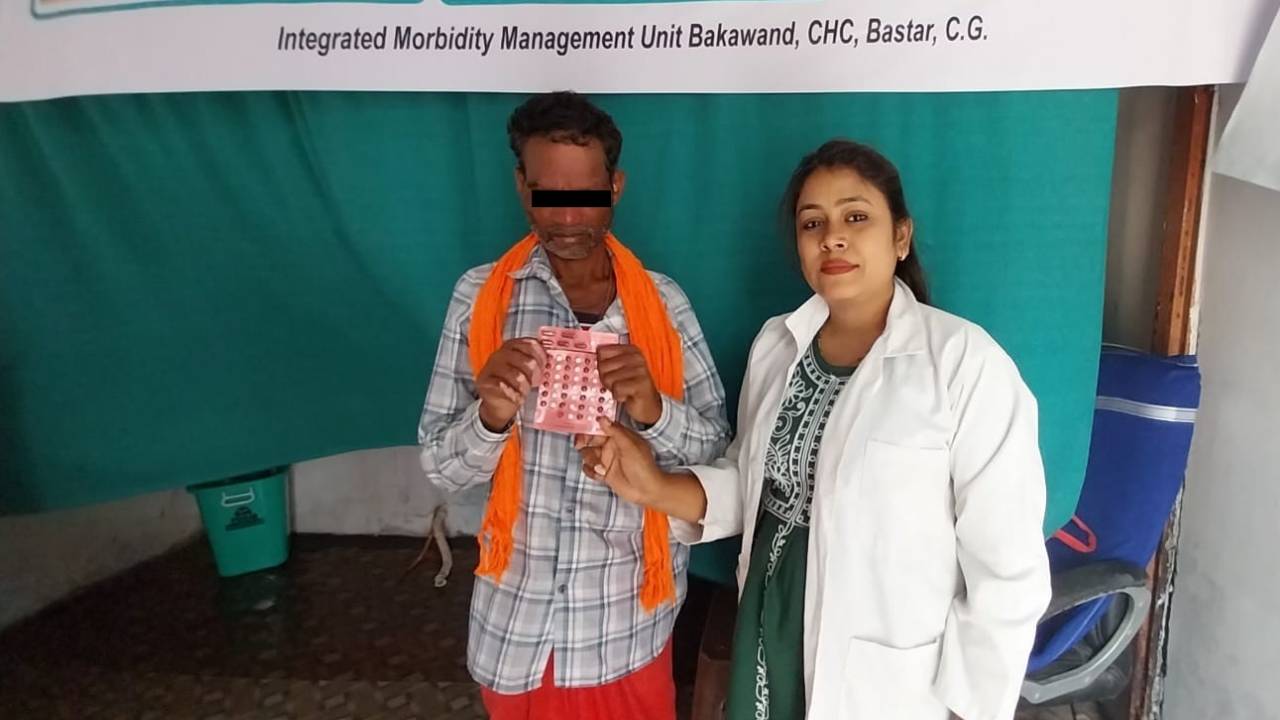
In Bakawand block of Bastar, neglected tropical diseases (NTDs)—like leprosy, lymphatic filariasis (LF), and scabies are part of everyday reality. They rarely begin as emergencies. A small patch on the skin. A painless swelling that develops gradually over months or years. persistent itching. Early symptoms are often overlooked, managed at home, or accepted as part of normal life rather than recognised as signs of disease.
“I felt afraid. I did not want to show my face. People kept asking what had happened,” he shared.
For many families, seeking care is not immediate. It evolves gradually—shaped by distance from health facilities, limited awareness of available services, competing daily priorities, and the belief that the condition is “not serious enough yet” to require medical attention.
As a result, disease is often lived with long before it is treated.
When early signs go unrecognised
Sona Singh, a 52-year-old man from Jonamani Para, had been living with repeated episodes of leprosy-related complications known as lepra reactions, which are risk factors for developing disabilities. These reactions caused swelling of his face and persistent watering of his eyes. Although the changes were visible, he avoided stepping out of his home.
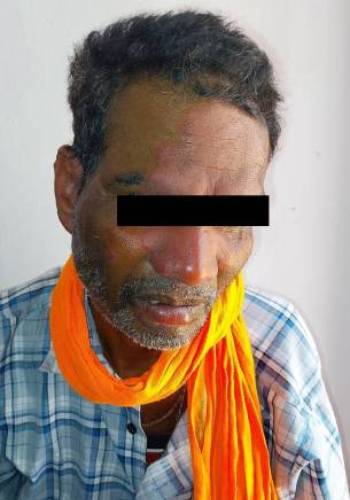
“I felt afraid. I did not want to show my face. People kept asking what had happened,” he shared.
At some point, a relative suggested that it could be leprosy. After this, subtle changes followed in his social interactions. People became distant. Conversations reduced. Without direct confrontation, he began to experience quiet isolation.
Despite this, he did not visit a health facility. He was not aware of available services, and the idea of seeking care did not feel immediate or necessary.
Community-based system strengthening under SHAKTHI
These barriers are being addressed through the SHAKTHI (Sustainable Health Approaches for Key Tribal Communities Health Interventions) programme implemented by LEPRA Society. The programme adopts a structured community-based health system strengthening approach focused on prevention, early detection, treatment, and long-term morbidity management of NTDs, along with other priority conditions such as Tuberculosis, Malaria, Japanese encephalitis, and Sickle cell disease.
LEPRA Society is an independent, non-profit organisation in India dedicated to improving the health and lives of people affected by leprosy and other neglected diseases. Established in 1989 in Hyderabad, it works closely with government health systems to support disease prevention, treatment, rehabilitation, and community-based care.
The organisation currently operates across 11 states focusing on vulnerable and marginalised communities, including women, children, tribal populations, and migrants. In addition to its work on leprosy, tuberculosis, lymphatic filariasis, and HIV/AIDS, LEPRA also implements eye care programmes to prevent blindness and improve access to affordable eye health services, particularly in underserved areas.
At the community level, trained Community Health Workers (CHWs), supported by ASHA workers, conduct routine household screening and follow-up. Supervisors play a critical role in ensuring quality of field activities by mentoring CHWs, validating suspected cases, reviewing screening outputs, and strengthening clinical decision-making for referrals. These cases are then linked to Primary Health Centres (PHCs), where Medical Officers confirm diagnosis and initiate treatment, with coordination from project staff nurses at PHCs.
In parallel, CHWs along with Supervisors conduct community awareness activities and engage with Gram Panchayats to promote preventive practices, including hygiene promotion, vector control, and awareness on communicable and genetic conditions.
From household engagement to treatment uptake
Through their field activities, CHWs visited Sona Singh at his home. The initial interactions were cautious, shaped by hesitation and uncertainty; however, the visits continued.
The experience remains difficult, but it reflects how ongoing care—when sustained—can gradually restore health and confidence.
Over time, they explained his condition, discussed treatment options, and introduced the Morbidity Management Unit (MMU) at the Bakawand Community Health Centre (CHC)—a dedicated service where people with conditions like leprosy and LF receive regular clinical assessment, management of complications, counselling, support for self-care, provision of aids and appliances, and referrals for advanced treatment when needed. Slowly, trust began to build.
Eventually, Sona agreed to be examined and started treatment. His condition has improved, but he is still under treatment and regular follow-up.
“Slowly I am getting better. I am continuing my medicines and check-ups,” he said.
Today, he has begun stepping out again in a limited way. The experience remains difficult, but it reflects how ongoing care—when sustained—can gradually restore health and confidence.
Conditions that progress silently
In many households, leprosy often begins as a small skin patch that is not considered serious. Because leprosy does not immediately disrupt daily life, it is often managed at home or overlooked. Only when symptoms progress—such as numbness, visible patches or disability—does it begin to be recognised as a health concern.
By then, preventable complications may already have developed.
What has changed through community outreach is not instant recognition, but earlier awareness and repeated engagement. Community Health Workers revisit households, track symptoms over time, and reinforce information—helping families gradually understand when care is needed.
Living with lymphatic filariasis: adjusting to chronic illness
Lymphatic filariasis (LF) is a parasitic infection transmitted by mosquitoes. Over time, it can cause chronic swelling of limbs or other parts of the body, often accompanied by painful acute episodes.
In Katchnar village, Laxmani Bhaghel, a woman in her mid-life years, had been living with LF for several years. The swelling developed gradually.
At first, she thought it was a temporary condition.
“It felt like a regular swelling—something that would come and go,” she said.
She continued her daily activities while adapting to the condition. Over time, however, the disease progressed. Recurrent episodes of pain and increased swelling made movement difficult.
While the condition has not disappeared, its severity and frequency have reduced, improving her ability to manage daily life.
Even then, care-seeking was delayed.
“I was suffering, but I did not know how to manage my condition,” she said.
Through repeated home visits by the SHAKTHI team, she was introduced to self-care practices— regular washing, limb care and simple exercises along with provision of self-care kit. Initially, maintaining these practices consistently was challenging.
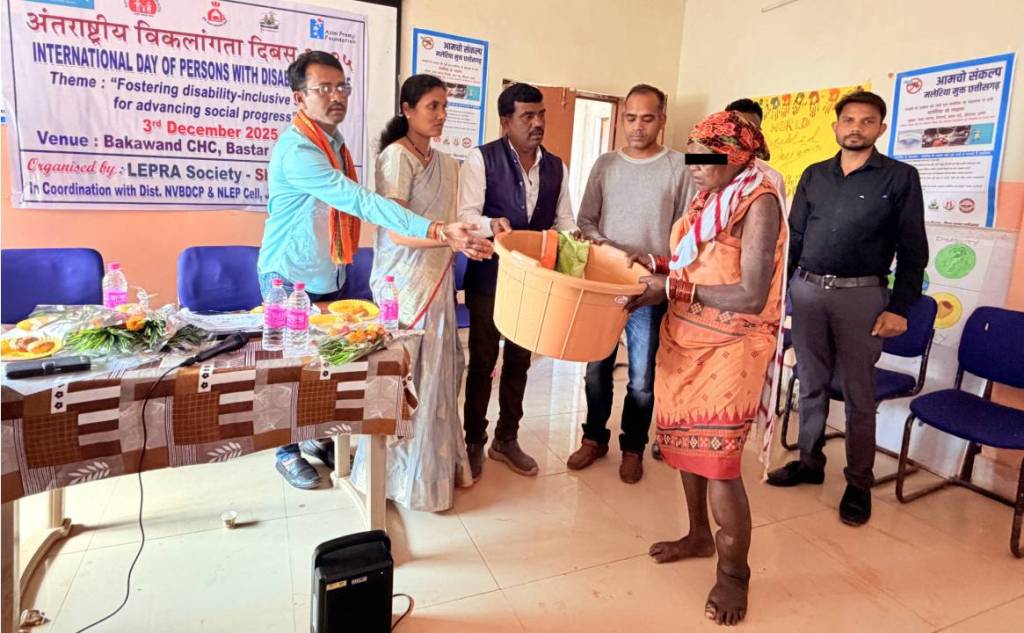
But the team continued to return, reinforcing the same guidance and demonstrating the practices repeatedly.
Gradually, some of these actions became part of her routine.
“Now my swelling and suffering have reduced. I feel healthier,” she said.
While the condition has not disappeared, its severity and frequency have reduced, improving her ability to manage daily life.
Bringing care closer to the community
A key shift in Bakawand has been the effort to connect early detection at the household level with continuous care at health facilities.
Earlier, even when conditions were identified, follow-up care was inconsistent. The CHC was often seen as distant—not only geographically, but also in terms of relevance to everyday health needs.
“Now my suffering has reduced. I feel much better,” he said. He has since returned to work, free from the discomfort that had persisted for years.
This gap is beginning to narrow with strengthened morbidity management services at the CHC—ensuring that individuals identified in the community are linked to the MMU for ongoing treatment, complication management, and follow-up care over time.
In Mangnar village, Ramdev Nag, a 40-year-old man, had been living with hydrocele for several years. Hydrocele is a painless swelling of the scrotum, commonly associated with LF, which can gradually increase in size and interfere with daily work.
Over time, he adjusted his life around the condition.
“Earlier, I was ignoring my condition,” he said.
Like many others, he did not initially consider visiting a health facility. Work pressures, lack of urgency, and uncertainty about treatment contributed to the delay.
Through repeated engagement by the SHAKTHI team, he learned about his condition and available treatment, including surgery. Even then, he hesitated.
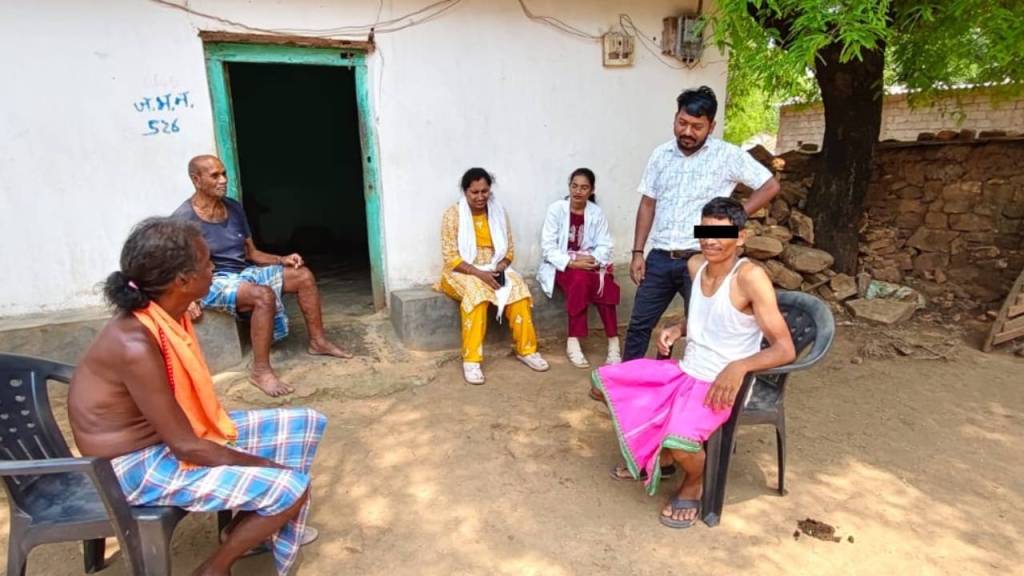
With continued reassurance, he eventually sought care and was referred to Government Dimrapal Medical College, where he underwent surgery.
“Now my suffering has reduced. I feel much better,” he said.
He has since returned to work, free from the discomfort that had persisted for years.
A gradual but visible shift
Across Bakawand, a slow but important change is visible in how NTDs are understood and managed.
The shift is visible in small but meaningful ways: fewer severe complications, reduced suffering, and a gradually increasing trust in the health system.
Conditions that were once normalised are now being recognised earlier. Community Health Workers are central to this change—not through one-time contact, but through sustained, repeated engagement.
At the same time, the establishment of morbidity management services at the CHC is creating a clearer pathway for treatment and follow-up care. People who would earlier avoid health facilities are beginning to use them—sometimes after multiple conversations, sometimes after seeing improvements in others.
The change is not uniform. Delays still exist, and not all identified cases move immediately into treatment.
But there is movement.
More people are recognising symptoms earlier. Some households are adopting self-care practices. A growing number are returning to health facilities when needed.
The shift is visible in small but meaningful ways: fewer severe complications, reduced suffering, and a gradually increasing trust in the health system.
From early detection to continued care, the process is still evolving. But in these communities, it is beginning to take root.