




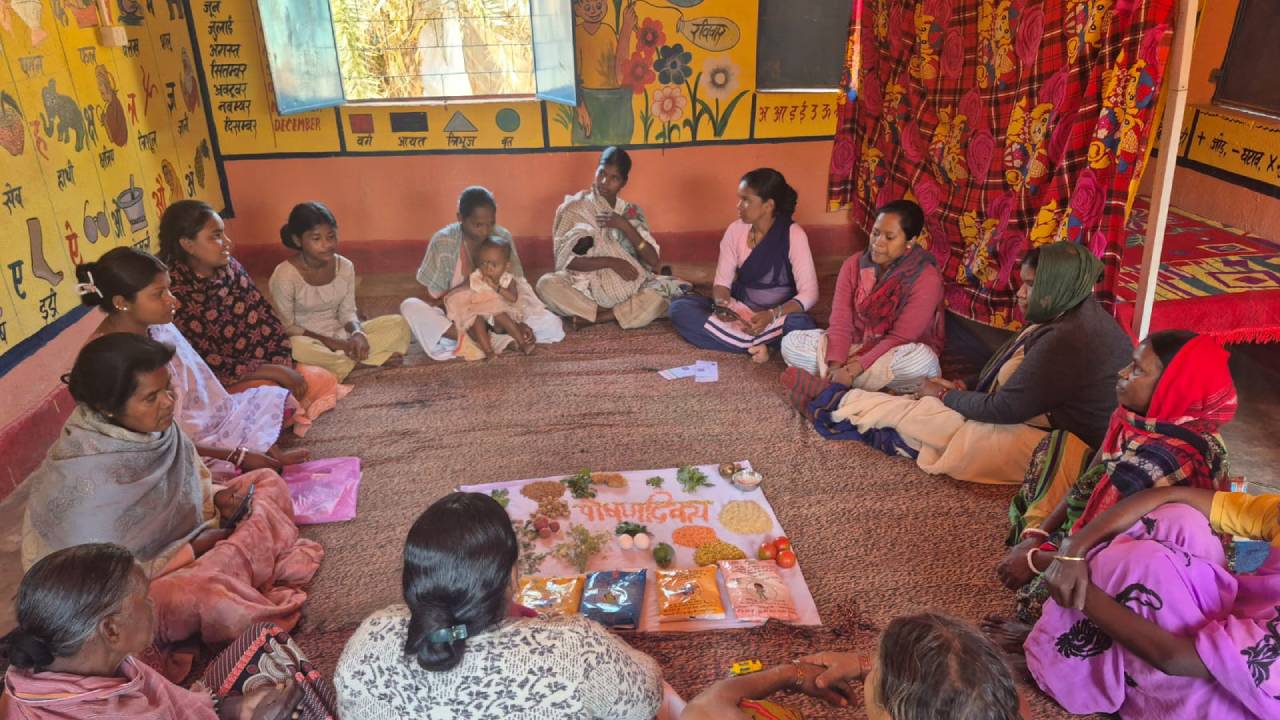
Public health systems are not supposed to be distant or complex structures. They are meant to be the first point of care for common and essential health needs. Yet, those who work closely with rural communities often see a different reality: the very people these systems are designed for are hesitant to access them.
Can outcomes improve if people have the right information, early identification of risk, and trusted health workers?
This hesitation arises from many factors, but one of the most visible gaps is information. If we look at the education system, the pathways are well understood. People know what primary school is, which grades follow, and how one moves on to college. If a village school is closed without notice or mid-day meals are not served, parents immediately take note.
In contrast, the roles and responsibilities of an Ayushman Arogya Mandir (Health and Wellness Centre), Primary Health Centre (PHC), and Community Health Centre (CHC) are often unclear to communities. As a result, health-related information and care tend to be associated only with district hospitals or large private facilities. This misunderstanding directly affects people’s health outcomes, expenses, and the time lost in seeking care.
This raises an important question: Can outcomes improve if people have the right information, early identification of risk, and trusted health workers? The answer lies in stories from the ground.
Anima Kujur: Early Detection Saves Lives
Anima Kujur (name changed) was around 26 years old and in her second trimester of pregnancy when the ASHA worker first learnt about her condition. She already had three daughters, aged 11, 7, and 4. For the first three to four months, her family had not shared news of the pregnancy, following a local practice where women do not consult health workers until the pregnancy is visibly confirmed.
Serious conditions often show no visible symptoms, and testing is the only way to detect them.
Once the ASHA became aware, she visited Anima’s home several times and spoke patiently with the family. Eventually, she persuaded them to bring Anima to the nearby Anganwadi centre during a Village Health Sanitation and Nutrition Day (VHSND), where pregnant women and children receive regular check-ups and access to nearly 17 health-related services each month.
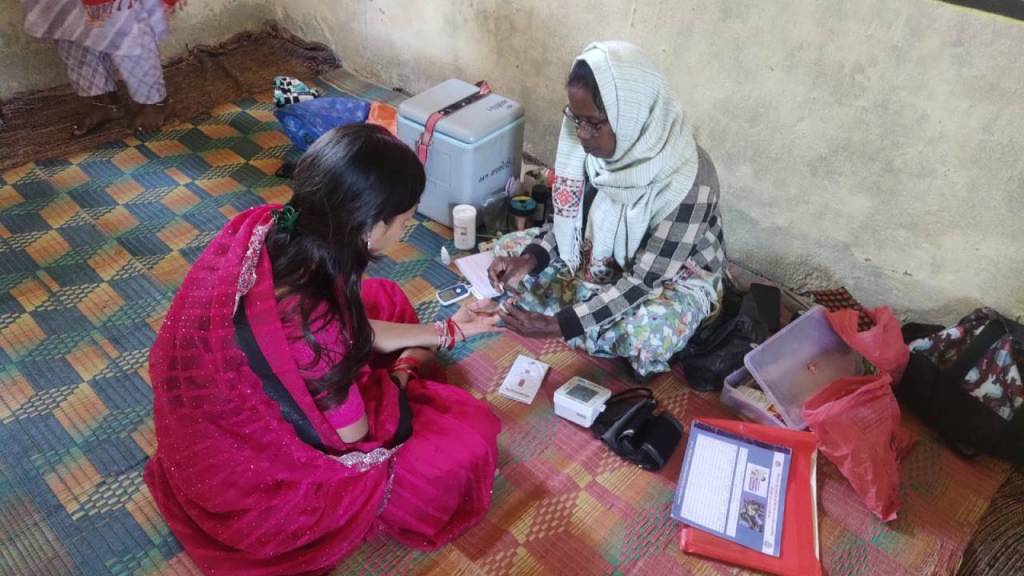
During the routine examination, the ANM conducted standard tests. The results were alarming—Anima’s haemoglobin level was only 4 g/dL, indicating severe anaemia. This condition can be life-threatening for both mother and unborn child if left untreated. What made this even more concerning was that Anima had walked to the Anganwadi on her own and returned home without assistance. Serious conditions often show no visible symptoms, and testing is the only way to detect them.
Recognising the urgency, the ASHA and ANM immediately referred Anima to the District Hospital in Ranchi for a blood transfusion. The family was understandably anxious. There had been no complications in her previous pregnancies, and travelling to the city meant financial strain and fear of a large hospital. Through calm and repeated conversations, the health workers explained the situation in simple terms. Finally, the family agreed.
Today, Anima is receiving treatment. Timely diagnosis and correct referral have significantly improved the chances of saving both her life and her child’s.
Shalu Tirkey: Timely Monitoring Prevents Long-Term Harm
Shalu Tirkey is three years old. Her parents migrate several times a year to work in brick kilns in other states. Sometimes Shalu travels with them; at other times, she stays back with her grandparents in the village.
For families and frontline health workers, NRC referrals are challenging. NRCs are often far from villages and require a child to stay admitted for two to three weeks.
Shalu was quieter than other children her age. Her parents noticed that she was often lethargic, cried frequently, and fell ill repeatedly. Although she was enrolled at the Anganwadi, frequent illness meant irregular attendance.
During a VHSND, when children’s height and weight were measured, health workers found that Shalu showed signs of Severe Acute Malnutrition (SAM). She needed immediate, centre-based care at a Nutrition Rehabilitation Centre (NRC).
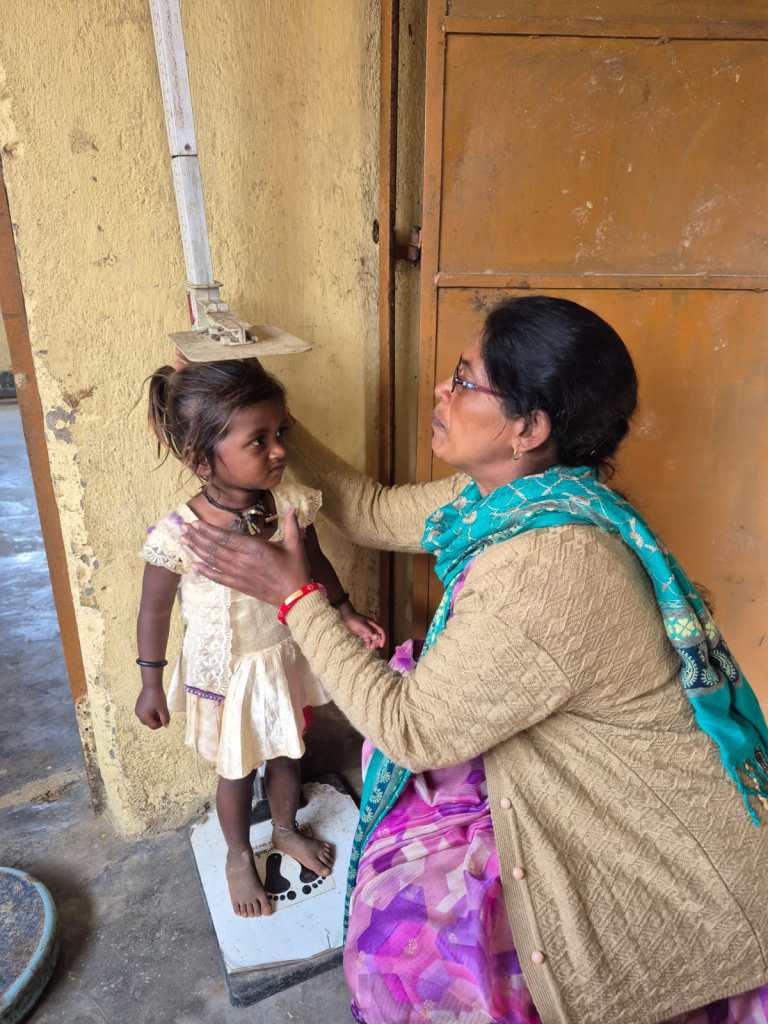
Today, Shalu is under close medical supervision. Her condition is improving steadily, and with continued care, she is expected to return to the Anganwadi and enjoy better health.
For families and frontline health workers, NRC referrals are challenging. NRCs are often far from villages and require a child to stay admitted for two to three weeks. This means lost wages and one parent being away from the family for an extended period. Shalu’s father initially hesitated for these very reasons.
The ASHA and Anganwadi worker spoke patiently with the family. They explained the treatment process and reassured them that Shalu would receive specialised care and nutrition. Eventually, the family agreed, and Shalu was admitted to the NRC with her mother.
Today, Shalu is under close medical supervision. Her condition is improving steadily, and with continued care, she is expected to return to the Anganwadi and enjoy better health.
Information Builds Trust, Trust Saves Lives
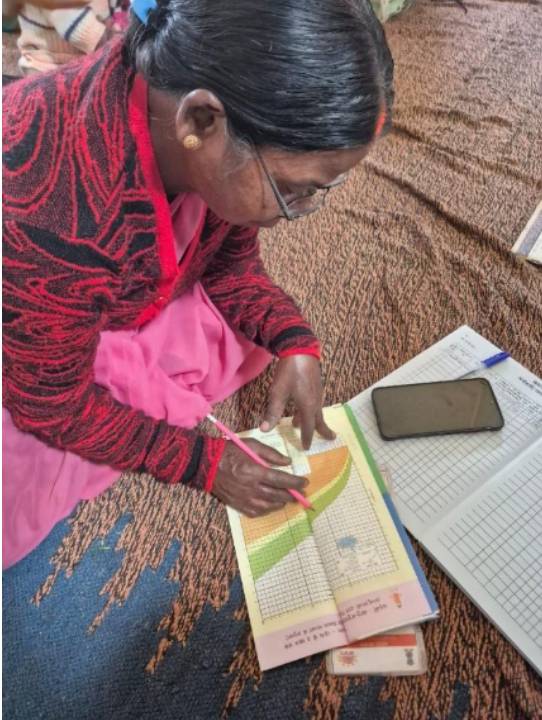
The stories of Anima and Shalu underline a simple truth: information and engagement save lives. When communities understand what services are available and trust the people delivering them, the public health system becomes a support system rather than a last resort.
There is an old saying: “The health centre must be in the village, and of the village.” Until health centres truly belong to the communities they serve, people will remain excluded from their benefits.
Bringing health systems closer to people—through information, trust, and consistent engagement—is essential to ensuring that no one is left behind.