




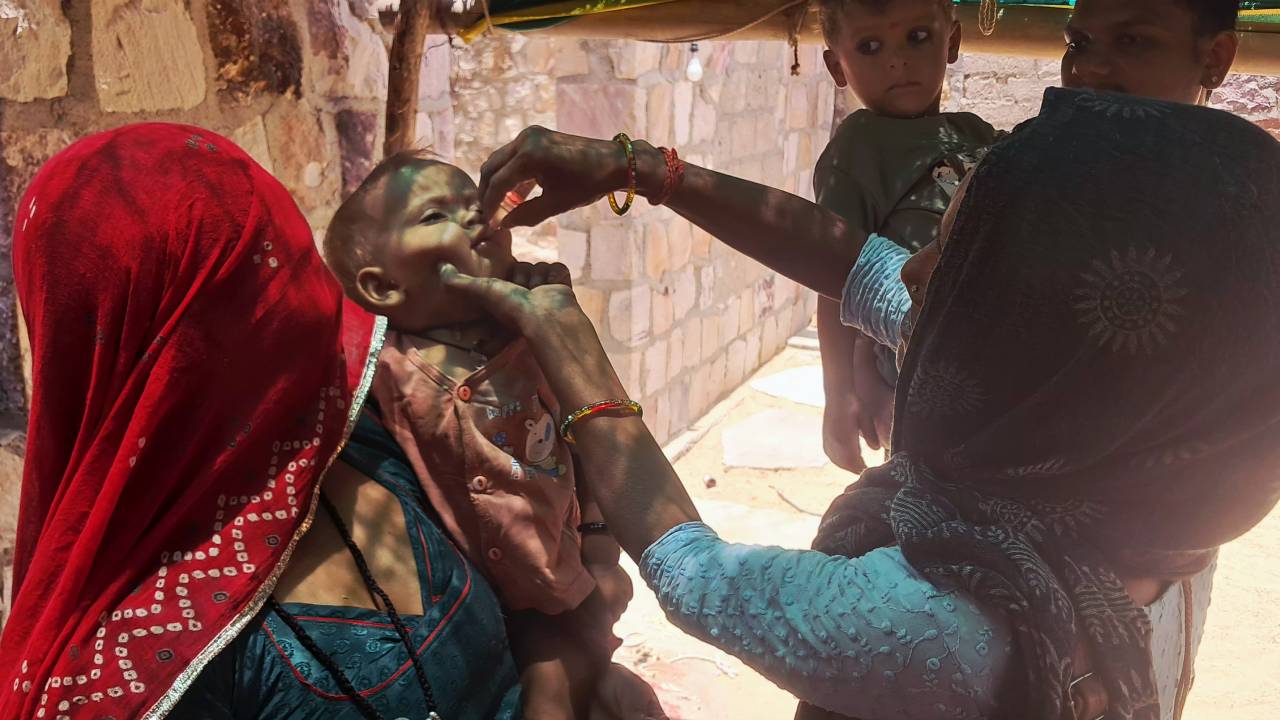
Growing up, I remember a nurse visiting our colony during Pulse Polio campaigns. She would go from house to house asking, “Kya aapke ghar mein chhote bacche hain?(Do you have little children in your house?)” She was always polite and greeted everyone with a warm smile. After administering the polio drops to the children, she would prepare to move to the next house. Before leaving, my mother would always offer her a cup of tea. She would politely refuse, saying, “Didi, humko aage aur gharon mein bhi jana hai.(Didi, I have to go to many more houses)” Then she would disappear into the cluster of houses, continuing her search for every child who needed the vaccine.
Life moved on, and years later I found myself sitting in a public health classroom. We were studying India’s Polio Eradication Programme. My classmates shared their experiences of working in the campaign, and I learned how extensively the health system had worked for decades to eliminate polio. Through the collective efforts of the health system, ICDS (Integrated Child Development Services), WHO, and countless frontline workers, India was declared polio-free in 2014.
India is polio-free, but our neighbouring countries — Pakistan and Afghanistan — still report cases of wild poliovirus. Since polio is a highly infectious viral disease, India remains vulnerable to the importation of the virus.
As I studied the programme, I assumed the story had come to an end. Strong policies, rigorous monitoring, and increased community awareness had successfully eliminated the disease from India. I believed that this was where India’s polio story ended.
But when I came to Barmer in Rajasthan to work in public health, polio returned to my life.
This time, not as a child.
Not as a student.
But as a public health professional.
And this chapter turned out to be a roller coaster ride.
The Pulse Polio campaign on 28th and 29th June completely changed my understanding of what it truly takes to keep a country polio-free.
Initially, one question kept bothering me: If India has already eradicated polio, why do we continue to conduct Pulse Polio campaigns?
The answer came from a Medical Officer. His explanation not only cleared my doubt but also motivated me to contribute wholeheartedly to the campaign.
India is polio-free, but our neighbouring countries — Pakistan and Afghanistan — still report cases of wild poliovirus. Since polio is a highly infectious viral disease, India remains vulnerable to the importation of the virus. The concern is even greater for Rajasthan, which shares India’s second-longest international border with Pakistan. Continuous surveillance and vaccination are therefore essential to protect every child.

The campaign began with planning at PHC Shivkar. The Medical Officer called me to help prepare the implementation plan. Together, we developed a structured deployment plan for every Sub-Centre. Two teams were assigned to each Sub-Centre: one consisting of an ANM and an Anganwadi Helper, and another comprising an Anganwadi Worker (AWW) and an ASHA worker.
Finally, the first day of the Pulse Polio campaign arrived, and I was excited to observe every aspect of it.
I reached the PHC early in the morning, hoping to witness the distribution of vaccines from the cold chain point. However, I was disappointed to learn that the vaccines had already been dispatched to the Sub-Centres at 6:00 a.m.
Without wasting any time, I headed to the field.
When I say “field,” I literally mean agricultural fields.
I parked my bike beside the road and started walking from house to house with the ANM and the Anganwadi Helper.
Initially, everything felt exciting. It was my first opportunity to observe Pulse Polio activities firsthand. I watched how they administered the vaccine, marked every vaccinated household, communicated with families, and maintained records. Although I had studied these procedures in textbooks, witnessing them in real-life settings was an entirely different learning experience.
I had managed to accompany the team to around 18–20 households, whereas the ANM and the Anganwadi Helper covered nearly 50 households that same day.
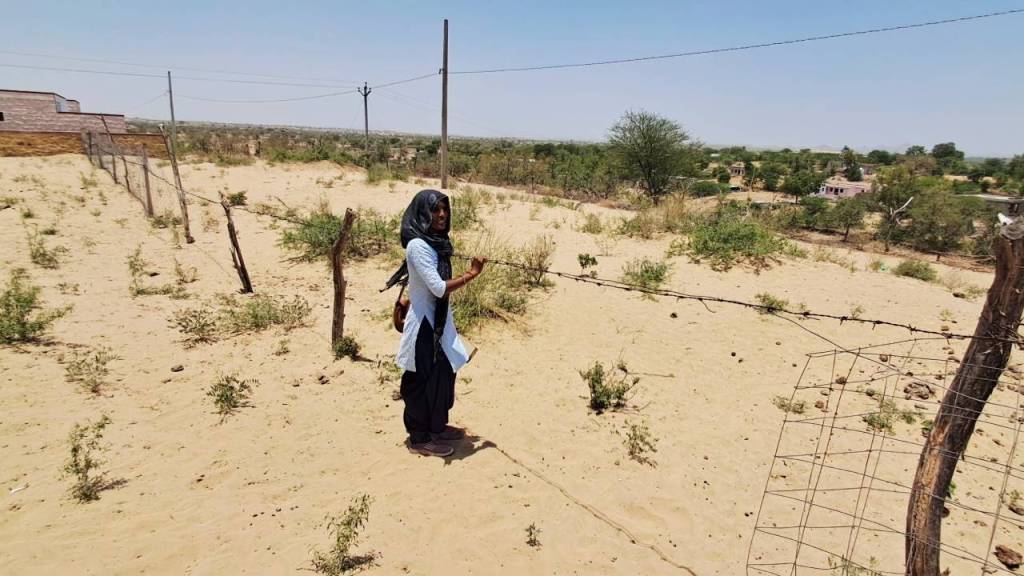
We walked nearly four to five kilometres through agricultural fields under the scorching sun. Every time I sat down beneath the shade of a tree to catch my breath, the ANM encouraged me to get up and continue. Her determination to ensure that no child was left behind was truly remarkable.
Eventually, however, I had to admit defeat. I simply could not take another step.
Before leaving, I thanked the ANM for allowing me to accompany her during the vaccination drive.
One interesting comparison stayed with me.
I had managed to accompany the team to around 18–20 households, whereas the ANM and the Anganwadi Helper covered nearly 50 households that same day.
I had barely recovered from the exhausting experience of the first day when the second day of the Pulse Polio campaign was already upon me.
The next morning, I called another ANM to accompany her in the field. Unsurprisingly, she had already started her work. I requested her live location on Google Maps and began following it.
What followed was a never-ending journey.
I rode my bike across roads, narrow trails, agricultural fields, and stretches of sand. It took nearly one and a half hours to finally reach her because she had already travelled deep into the interior villages to ensure that even the most remote children received the vaccine. When I finally caught up with her, I parked my bike at a nearby house.
Curious, I asked, “How many houses do we have to cover today?”
She smiled and replied,
“Bhaiya, aaj 30 ghar toh cover kar liye hain. Shaam tak aur 30 kar lenge. (Bhaiya, I have already covered 30 households. By evening, we will cover 30 more) “
“Bhaiya, main nahi aaungi toh yahan koi nhi aayega. (Bhaiya, if I don’t come here, nobody else will come to help them.)”
Soon we began climbing a sand dune in the blazing afternoon heat to reach a single house situated at the top.
To me, the dune looked endless.
But the ANM climbed it effortlessly, almost like a deer.
When we finally reached the house, we vaccinated just one child.
As we started walking back down, I asked,
“Didi, aap kse sirf ek bacche ko vaccinate karne ke liye etana effort karte ho? (Didi, just for vaccinating one child, how can you put in so much effort?)“
She replied,
“Bhaiya, main nahi aaungi toh yahan koi nhi aayega. (Bhaiya, if I don’t come here, nobody else will come to help them.)“
Her words left me completely speechless.
This experience also made me realise that refresher training on Pulse Polio activities should be organised at every PHC before each campaign.
That single sentence captured the true spirit of public health.
The journey continued across several more sand dunes and scattered houses. Along the way, I witnessed the difficult living conditions and the everyday struggles of rural communities.

During the visits, I supported the ANM and the accompanying ASHA worker by demonstrating correct vaccination practices, proper house-marking techniques, counselling families on immunisation, and discussing other essential health services.
This experience also made me realise that refresher training on Pulse Polio activities should be organised at every PHC before each campaign. Even experienced frontline workers can benefit from a revision to ensure uniform practices and high-quality implementation.
Looking back, I realise that my journey would never have been possible without the dedication of the ANMs, ASHAs, Anganwadi Workers, and Anganwadi Helpers.
Subscribe to stay connected
We will send you a monthly newsletter listing all the articles that were published in the month.
India may have achieved polio-free status through strong policies, effective governance, and robust programme management, but the contribution and dedication of frontline workers deserve equal recognition. They are the backbone of this remarkable public health achievement.
As a child, I remembered the smiling nurse who disappeared into the lanes of my colony in search of each and every child. Years later, I found myself walking alongside those very frontline workers across fields and sand dunes, witnessing the same commitment firsthand.
It is their determination to reach every last child – no matter how remote the household – that continues to keep India polio-free.