




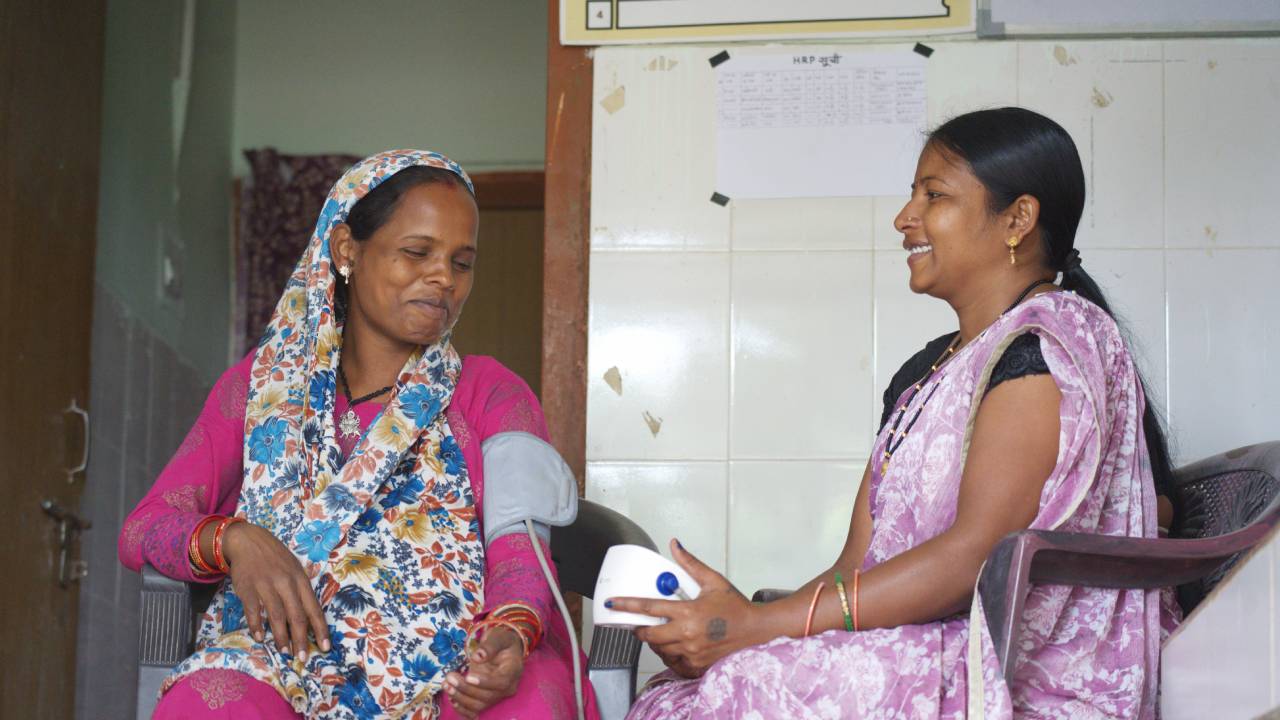
Universal Health Coverage (UHC) in India is often imagined as building more hospitals and clinics. Yet international evidence shows that health systems do better, and at lower cost, when they rely on strong community-based primary care. In many parts of India, where hypertension, diabetes, and maternal complications are common and hospitals are often hours away, this truth is evident. UHC cannot be achieved through buildings alone.
Strengthening primary care is too often equated with adding outpatient clinics or upgrading health centres. Such facilities matter, but they cannot by themselves ensure early detection, treatment adherence, or trust in medical advice. Effective primary care also requires outreach into homes, regular contact with families, and follow-up to ensure medicines are taken. Without these, clinics risk becoming just another link in an already fragmented chain.
Community health workers have long been part of this frontline. At first, they served as messengers, like ASHAs, or as physician extenders. Later, they were given specific tasks, such as treating neonatal sepsis in rural Maharashtra or supporting mental health in Nepal. These contributions were valuable but incomplete. They did not deliver on the core principles of primary care: population responsibility, comprehensive services, continuity, and accessibility.
Strengthening primary care is too often equated with adding outpatient clinics or upgrading health centres.
A new “fourth stage” of health workers is now possible. Evidence from Alaska and Iran shows that well-trained, locally recruited workers can manage a wide range of conditions, coordinate referrals, and ensure adherence to treatment. In India, initiatives such as Swasthya Swaraj in Kalahandi and Dvara Health’s “Sakhis” in Satara show the same potential. Success requires close supervision, clear referral pathways, proactive follow-up, and community empanelment, all guided by clinical protocols and adapted to local culture.
Even so, redesigning the health worker role is not enough. We must also recognise the plural reality of care. Fewer than half of patient visits occur in clinics, even when services are free. Pharmacies are often the first stop. Families provide most chronic care. Priests and spiritual leaders remain trusted, especially in mental health and end-of-life situations. Any model of primary care that ignores these actors will fall short.
Success requires close supervision, clear referral pathways, proactive follow-up, and community empanelment, all guided by clinical protocols and adapted to local culture.
The Circle of Care approach addresses this reality. It envisions a system where health workers act as anchors but work with pharmacists, families, and faith healers. Each plays a distinct role; none can replace the others. Technology makes this integration possible. Digital platforms can unify patient records, embed treatment protocols, and support training. Pharmacists can be guided to dispense responsibly. Priests can be trained to spot danger signs while continuing their spiritual role. Families can be supported to provide home-based care. In this system, the health worker is not only a provider but also a coordinator.
This is more than a theoretical idea. In states such as Odisha and Maharashtra, where villages are often far from district hospitals, the approach has already shown promise. A new clinic in a remote area may bring some benefit, but a trained community practitioner in the village, supported by protocols, digital tools, and links to pharmacies and families, can meet most needs without delays or travel. Outreach-based care, not facility expansion alone, must drive the next phase of primary care.
Subscribe to stay connected
We will send you a monthly newsletter listing all the articles that were published in the month.
The Circle of Care approach addresses this reality. It envisions a system where health workers act as anchors but work with pharmacists, families, and faith healers.
India’s path to universal coverage lies in redefining primary care as more than hospitals, more than clinics, and more than messengers. It requires health workers who can serve as comprehensive providers and coordinators of a Circle of Care that reflects how people actually seek care. By combining modern protocols and digital tools with cultural wisdom and family caregiving, India can build a primary care system that is rigorous, trusted, and sustainable.