




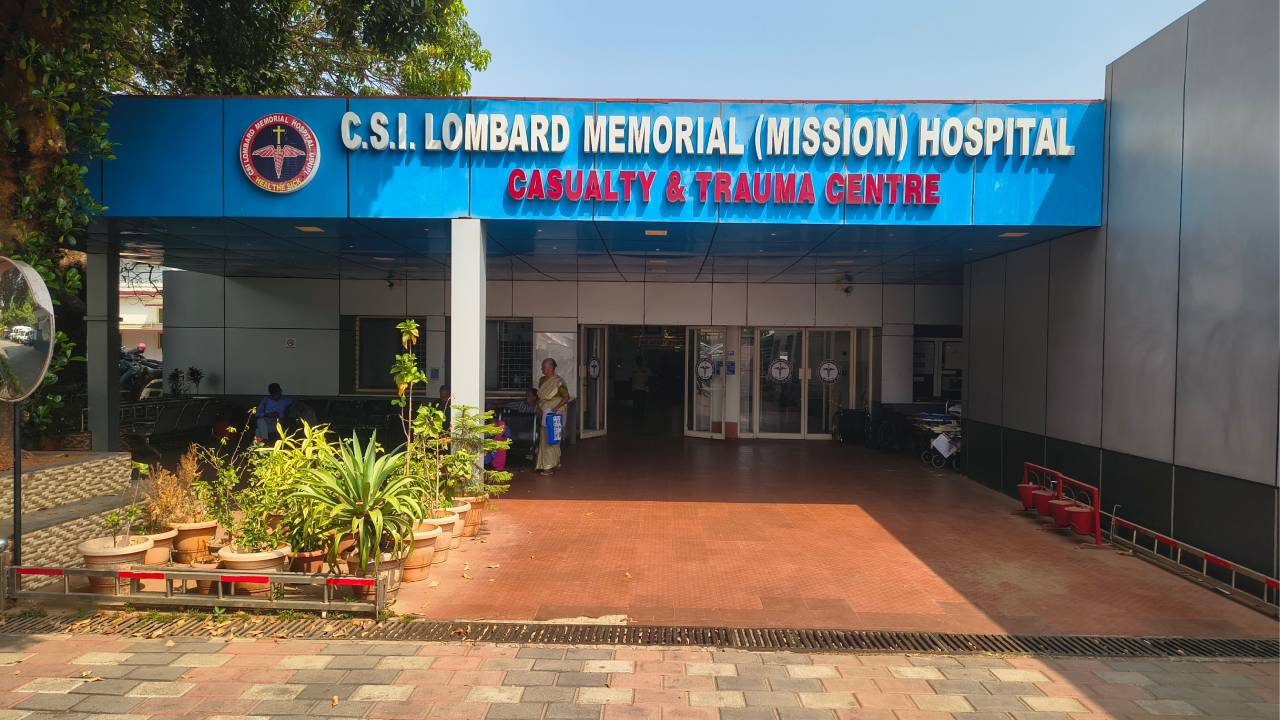
Old buildings with leaking roofs. Rusting equipment tucked away in forgotten corners. A once-famous mission hospital surviving largely on memories, goodwill, and prayers.
For many mission hospitals across India, especially in the South, this sounds familiar.
The reasons are painfully familiar, too. Medicine has changed rapidly. Healthcare has become corporatised, driven by expensive technology. Specialists are difficult to retain. Funding is uncertain. Young doctors prefer cities. Administrators often inherit systems already in decline. Somewhere along the way, many mission hospitals slowly stopped being the centre of the community, moving away from their original vision of care and compassion for the poor and needy.
But every now and then, a different story emerges.
This is one such story.
This is the story of — a mission hospital that decided it would not quietly fade into nostalgia. Instead, it chose the more difficult route: relevance.
Founded in 1923 by Miss Eva Lombard, in a story remarkably similar to that of Dr Ida Scudder, Founder of CMC, Vellore, the hospital grew through service, sacrifice, and a relationship with the local community. Ask anyone from the older generation in Udupi, and chances are they were either born at, treated at, or worked at Mission Hospital, or know someone who was.
The approach was surprisingly old-fashioned: fix systems, involve people, stay ethical, and think long term.
But Udupi is not an easy place for a secondary-care mission hospital to survive today.
In a region already saturated with medical colleges, tertiary-care centres, and private hospitals, LMH operates within one of India’s most healthcare-rich environments, serving a population facing the challenges of ageing and chronic disease, as well as rising patient expectations.
This is not exactly fertile ground for an old mission hospital trying to stay afloat.
And yet, something unusual happened.
Under the leadership of Dr. Sushil Jathanna, the hospital did not attempt to “out-corporate” corporate hospitals. Instead, the approach was surprisingly old-fashioned: fix systems, involve people, stay ethical, and think long term.
Dr. Sushil took over as Director in 2014, when the institution was struggling financially and structurally. Having trained at KMC, Manipal and later worked extensively in the UK in Internal Medicine, Public Health, and Hospital Administration, he brought not just experience but also perspective. He understood something many forget — hospitals are not merely buildings where healthcare happens; they are ecosystems.
Here are some of the things which have been done here.
One of the first important changes was governance.
Leadership with a clear and consistent vision is often overlooked, yet it is the yeast that allows the entire institution to rise.
Many mission hospitals function heroically but often depend heavily on a few overworked individuals making decisions in isolation. Quite often, young MBBS doctors who have arrived for service obligations suddenly discover that, apart from managing patients, they are expected to manage procurement, human resources, electricity issues, and occasionally, a leaking roof.
Good clinicians do not automatically become good administrators and need training.
At LMH, emphasis was placed on building a functional Executive Board as a first step, composed of both internal and external members. This created accountability, transparency, and, importantly, good disagreement. The kind that prevents expensive mistakes and forces organisations to think beyond the next month’s electricity bill.
Board meetings slowly stopped being ceremonial gatherings involving tea, biscuits, and prayers and became genuine strategic discussions. Leadership with a clear and consistent vision is often overlooked, yet it is the yeast that allows the entire institution to rise.
Mission hospitals traditionally survive because of loyal staff. But loyalty without participation eventually becomes frustration. Regular staff meetings and discussions helped reduce the distance between administration and problems, which were discussed earlier rather than becoming complaints passed down through generations. And when the vision is communicated well, staff stop feeling like employees and begin to see themselves as part of a shared journey.
Strengthening in-house laboratory and pharmacy services helped reduce costs and improve care.
In healthcare, good administration is often invisible — rather like oxygen. Nobody notices it until it is absent. Dr. Jathanna recognised early that clinicians alone cannot sustain institutions without strong systems behind them, and an administrative team was developed. Over time, these systematic improvements also contributed towards achieving NABH Accreditation.
Education became another central pillar of growth.
Knowledge, after all, is one of the resources that multiplies when shared. The Nursing College, which grew alongside Allied Health programmes and other academic activities, helped train healthcare workers from the local community, strengthening the institution’s workforce and deepening its connection with the community.
Then came the practical decisions — unglamorous, slow, requiring careful evaluation, but essential.

Strengthening in-house laboratory and pharmacy services helped reduce costs and improve care. Developing permanent in-house consultants rather than relying on visiting specialists improved patient trust and service stability.
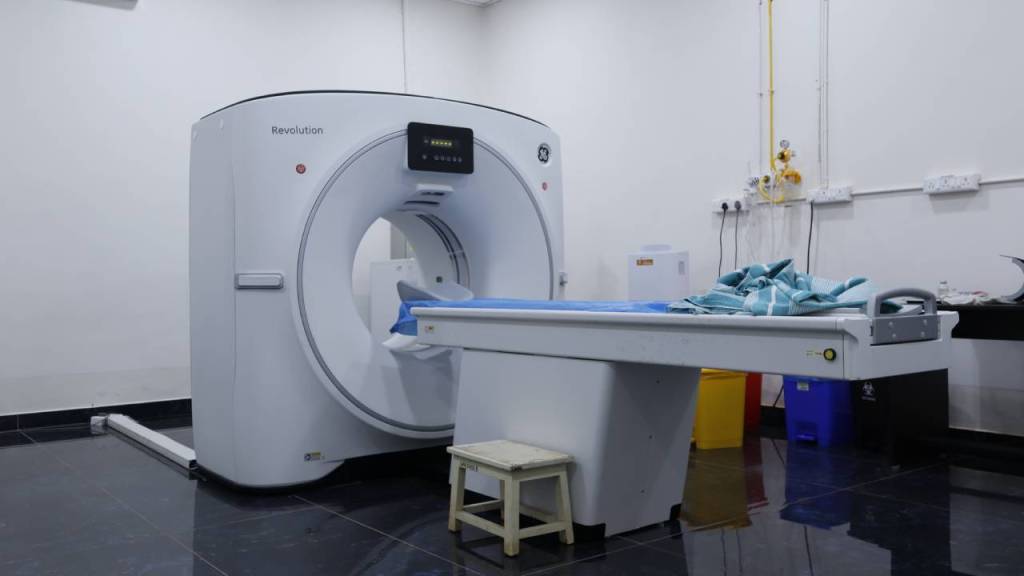
Most importantly, the administration understood the importance of patience.
Not every initiative was expected to generate profits, as with a stock-market investment. Sometimes a consultant or service is needed two years before the community begins to trust or utilise it.
Rather than blindly imitating tertiary-care centres, the hospital focused on services relevant to its population.
Marketing, too, was approached aggressively. Mission institutions are often hesitant about marketing, as though informing people about services is somehow morally suspicious. But the reality is simple: communities cannot utilise services they do not know exist. Learning to communicate its strengths was important. An active marketing team was gradually developed, involving physical outreach, pamphlets, social media, local newspaper coverage, a tie-up with local news channels and even a large digital information board in the reception and OPD areas.

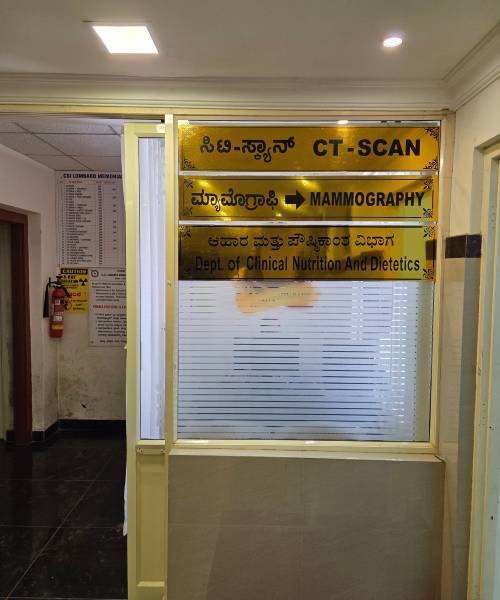
Patients also no longer approached a crumbling structure with faded paint and uncertain confidence. Instead, they arrive at a clean, polished campus with restored buildings, clear signage, and gold lettering. These superficial changes made by the in-house team gave the public confidence in the hospital as they entered it. This created a strong first impression.

Perhaps the most fascinating aspect, however, has been relevance.
Rather than blindly imitating tertiary-care centres, the hospital focused on services relevant to its population. With increasing lifestyle diseases and an ageing community, healthcare delivery must evolve accordingly.
One particularly important development was the establishment of Geriatric and Palliative Care Homes. These addressed a growing community need while simultaneously creating a sustainable care model that better utilised nursing services. Today, these facilities are full, with long waiting lists.
Similarly, an Obesity Clinic was started, with multidisciplinary integrated care. Having services clubbed together around a specific healthcare need as a package often attracted more patients.
Every expanding hospital eventually faces difficult decisions where compromise appears easier, faster, or more profitable.
One of the most innovative and forward-thinking initiatives, however, has been the INSPIRE Project.
Nearly 80% of healthcare in India occurs in smaller hospitals, and as climate change looms larger, sustainability in healthcare is becoming impossible to ignore. The INSPIRE Project was created for this — focused on waste management, water conservation, renewable energy, and sustainable campus development. Individually, many of these interventions appeared small. Together, they became transformative.
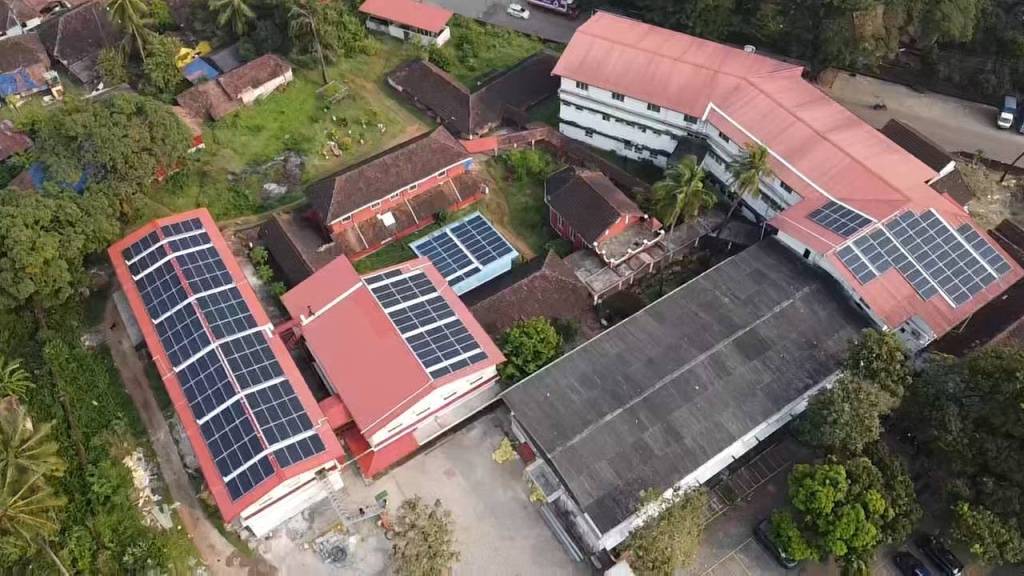
Solar power, coupled with heat-pump technology and energy-efficient appliances, ensures that about half of the hospital’s energy is from renewable sources, with a return on investment achieved in roughly 3 years. Rainwater harvesting, water recycling, and low-flow systems have eliminated the need for external tankers over the past three years. These improvements were made possible through the generous support of the Lombard family, whose continued partnership reflects the enduring legacy of the hospital’s founder.
Interestingly, sustainability also became financially sensible in the long run. The project expanded further to educate the community on sustainability. In many ways, it became an example of “Think Global, Act Local” applied to healthcare infrastructure. These initiatives led to the hospital being recognised in National Awards and Committees.
The “Matthew Effect,” often reflected in the Pareto Principle, reminds us how difficult it is to begin with limited resources and support and create sustained growth. Yet with persistence, gradual expansion, and a clear vision, growth eventually compounds.
And through all of this, one principle remained constant: Ethics.
Every expanding hospital eventually faces difficult decisions where compromise appears easier, faster, or more profitable. Ethical practice is rarely the shortest road. But mission hospitals carry a responsibility larger than balance sheets. Corporations cater to people’s demands, whilst we address the community. The journey demonstrates that ethics and sustainability need not be enemies. In fact, in the long run, ethics may be one of the few competitive advantages mission hospitals truly possess.
And the numbers tell a remarkable story of transformation. Since 2014, annual inpatient admissions have more than doubled—from 1,723 to 4,019 patients—while laboratory testing has nearly tripled and microbiology testing has expanded more than twenty-fold. Together, these advances have brought sophisticated diagnostic services once available only in larger centres closer to the community, helping the hospital attract over 10,000 new patients each year.
The “Matthew Effect,” often reflected in the Pareto Principle, reminds us how difficult it is to begin with limited resources and support and create sustained growth. Yet with persistence, gradual expansion, and a clear vision, growth eventually compounds. Donor support followed a similar pattern—initially cautious but growing steadily as tangible improvements and meaningful change became evident.
But slowly, we need to return to the original vision of why missionaries established the mission hospital in the first place: He cures, we care.
This is not a perfect picture. Politics still exists. Competition continues to increase. Every system has loopholes, frustrations, delays, and difficult days.
But perhaps that is precisely the point.
The story is not about perfection, but let’s not make perfection the enemy of progress.
Today, the hospital is not merely surviving on history. It is building new relevance while carrying forward the spirit with which it began nearly a century ago. Its story is not about becoming the biggest hospital. It is about becoming necessary again.
And perhaps that is the real future of mission healthcare in India — not competing blindly with every corporate giant but understanding communities deeply enough that they cannot imagine life without you.