



In 2017, on a bus journey in Bilaspur, Chhattisgarh, for a Medico Friends Circle meeting, I found myself in conversation with Dr. Anand Zachariah of CMC Vellore. What struck us both that day was the sight of young doctors — bright-eyed, restless, searching — drawn to this by a program called Nirman, run by SEARCH in Maharashtra. It was a program that was clearly touching something deep in these young minds. But it was conducted entirely in Marathi and Hindi, leaving an entire generation of medical students from southern India on the outside, looking in.
NIRMAN is a rural-centric youth initiative started in 2006 by Dr. Abhay and Dr. Rani Bang under SEARCH and MKCL. Operating from Shodhgram in Gadchiroli, it trains young change-makers through residential workshops to solve critical societal, scientific, and technological challenges specifically impacting India’s marginalized rural communities.
That observation planted a seed. What if there was a short, accessible program — open to all — that could expose medical students and young doctors to the ground realities of health in rural and tribal India? Not a lecture series. Not a workshop with certificates and agendas. Something raw, honest, and human. Something that could bridge the vast disconnect between urban medical education and the communities that needed doctors the most.
That conversation between Dr. Anand and myself became the Rural Sensitisation Program — the RSP.
An Uncertain Beginning
We — Tribal Health Initiative — held the first RSP in December 2017 and it began, as most good things do, with uncertainty. We reached out through Dr. Anand’s contacts in medical colleges, printed notices, and requested Community Health Departments to pin them on hostel boards and college corridors. We had about 40 applications — but applications are not people, and people don’t always show up.
Tribal Health Initiative (THI) is a non-profit organisation based in the tribal area of Sittilingi in Dharmapuri district of Tamil Nadu. Through extensive work in health and social determinants of health, the organisation has helped substantially enhance the quality of life of some of the most underserved communities over the last 34 years.
On the morning of the first RSP, I stood at the bus stop, waiting for the only bus coming from the Salem side, my heart doing what hearts do in moments of doubt. When the bus pulled in, I stepped aboard and asked, half-hoping: “Anybody here for RSP?”
The whole bus emptied out.
The relief was indescribable. That first program ran for just two days — we were still figuring out the format, feeling our way in the dark, doing something that had never quite been done this way before in the country. Today, the RSP runs for three days: three days of learning, laughter, honest conversation, and the making of unlikely friendships.
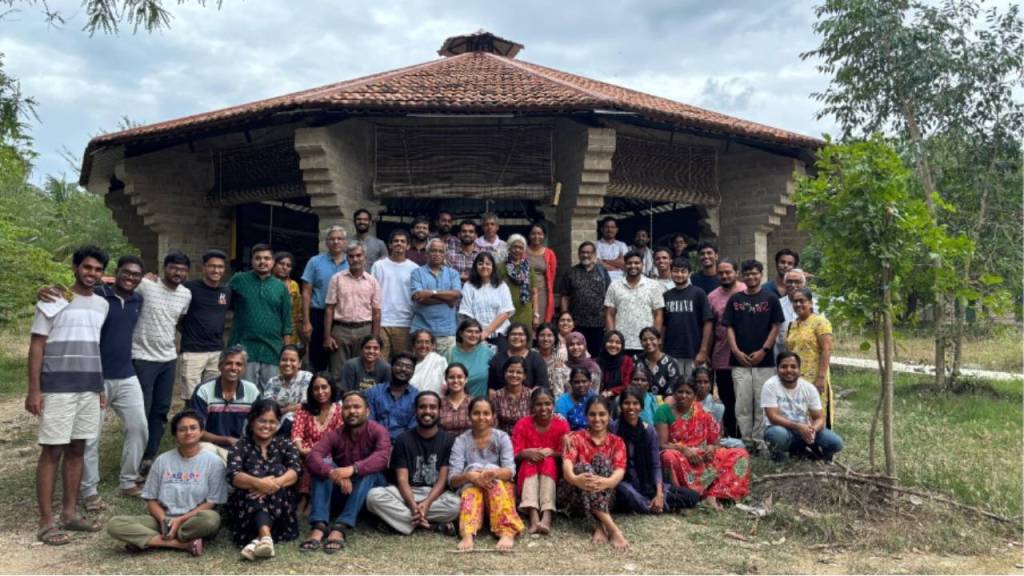
Students who would normally sit silently at the back of a lecture hall begin to speak. They question, they challenge, they imagine. Self-expression, constructive criticism, and creative thinking flourish when the weight of hierarchy is lifted.
Unlearning to learn
From the very beginning, we made one foundational decision: there would be no fixed agenda. This was not going to be another classroom. The participants would shape the discussions, raise the questions that burned in them, and take the program in whatever direction mattered most to them. It would be an un-conference — and from that spirit, a whole philosophy of “un” emerged. This was un-college education — filling in the silences that formal medical training cannot or will not address. There are no “sirs” or “madams” here. Everyone, regardless of age or grey hair, is addressed by their first name. It is a deliberate, quiet act of rebellion against the hierarchies that medical culture often takes for granted — and it works. In this atmosphere, something shifts. Students who would normally sit silently at the back of a lecture hall begin to speak. They question, they challenge, they imagine. Self-expression, constructive criticism, and creative thinking flourish when the weight of hierarchy is lifted.

What changes
The RSP was meant to show students the gaps in rural health. But we soon realised the gaps were closer home — in the very system they trained in. Dignified care, rational practice, honest conversations about what drives health, a space to voice their turmoil, real human bonds — these were missing too.
Dr. Pavithra, who conducts the RSP every year at BHS, Udaipur, has this to comment — “When people ask me what the RSP actually achieves, I find myself returning not to statistics, but to moments.”
A young medical student, after listening to a band of jail inmates perform at the concluding session of an RSP, turned to me and said: “We always thought that people in jail are criminals. We never thought that they could be such evolved souls.” Something had quietly rearranged itself inside her.
A final-year student once told me: “I always wanted to do residency in Paediatrics, because I love children. But my friends kept saying — do radiology, it’s less work, more money. After RSP, I realised I have to follow my heart.” She later came back to spend a full week at our centre for a deeper immersion.
Dr. Vasundhara, who has attended RSPs across India, perhaps captured it best: “The RSP was meant to show students the gaps in rural health. But we soon realised the gaps were closer home — in the very system they trained in. Dignified care, rational practice, honest conversations about what drives health, a space to voice their turmoil, real human bonds — these were missing too. The RSP, almost by accident, began offering all of this.”
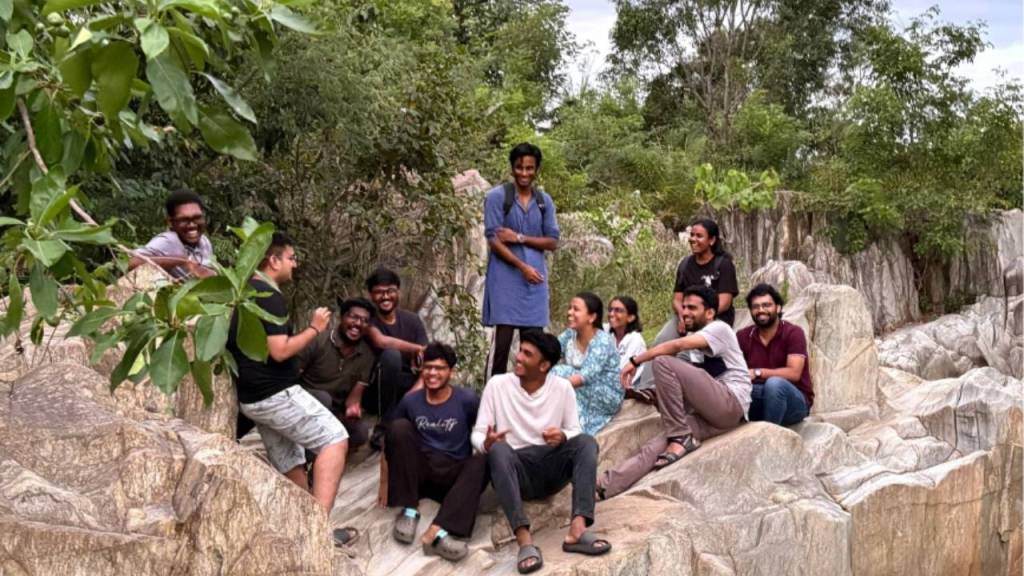
In these unguarded moments, students shed something — a kind of protective shell that medical training often requires them to grow. What emerges, more often than not, is something freer and more curious.
A Festival of learning
The RSP is also, in many ways, a festival. Each centre serves local food — at Sittilingi, millets take centre stage, giving participants a taste of what the community actually eats, not as an exercise in ethnography, but as an act of solidarity. There are local dances, impromptu live cooking, moonlight walks and forest treks, the occasional plunge into a jungle stream. Eager students gather around mentors not to take notes, but to listen — to understand how these doctors made the choices they did, what sustained them, what broke them, what rebuilt them.
In these unguarded moments, students shed something — a kind of protective shell that medical training often requires them to grow. What emerges, more often than not, is something freer and more curious.

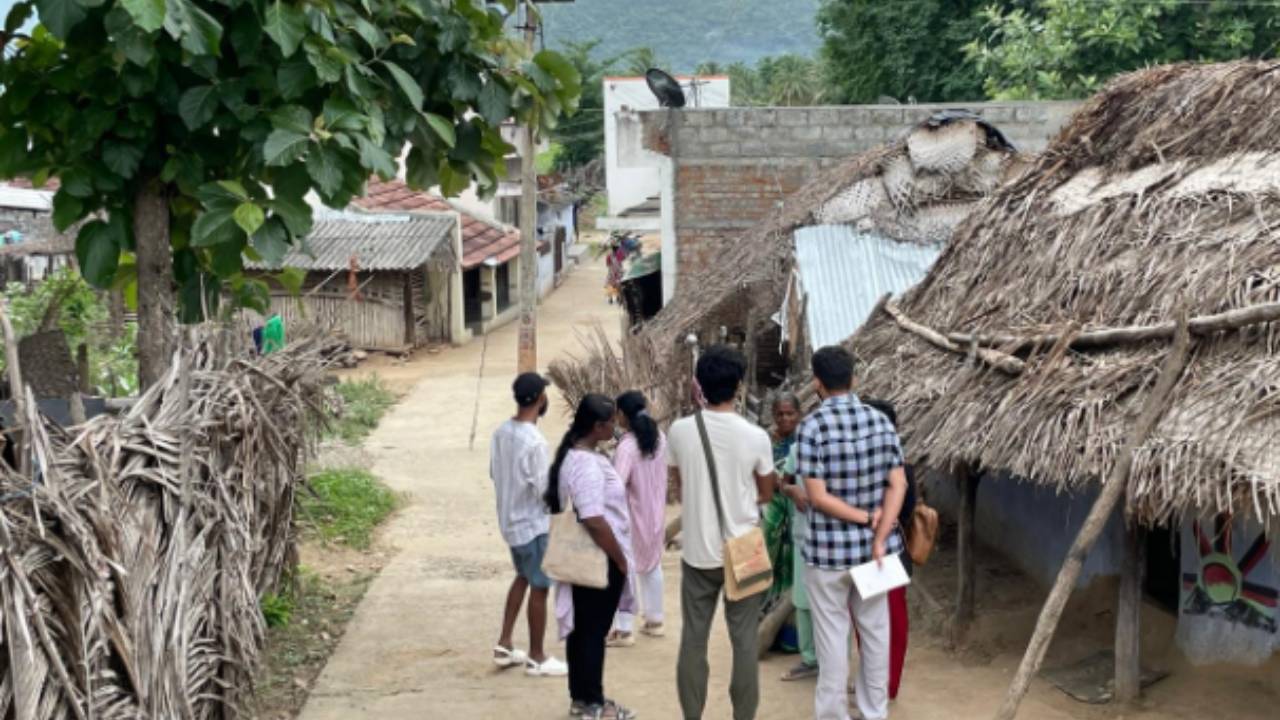
While each centre brings its own flavour, the formats follow a shared spirit: visits to secondary care hospitals to see how ethical, low-cost care is actually managed; field visits to understand the challenges of peripheral healthcare; and open discussions on what it means to practice medicine honestly — and how caste, gender, poverty, and geography shape health in ways that no textbook adequately captures.
Growing roots
The RSP has no official sanction. It offers no certificate. Participants must arrange their own transport, pay a small fee to cover food, and — perhaps the truest test of commitment — bunk classes to attend. And yet, the moment it is announced on social media, seats fill within days. Waiting lists run long. The program sustains itself entirely on word of mouth and the energy of those it has touched.
What began in one small corner of Tamil Nadu has since spread. RSPs and similar programs now run in ASHWINI – Gudalur, Basic Health Services Udaipur, Jan Swasthya Sahyog – Ganiyari, IDO – Bhadradri, Bhansali Trust – Dangs, and Jan Chetna Manch – Bokaro. While each centre brings its own flavour, the formats follow a shared spirit: visits to secondary care hospitals to see how ethical, low-cost care is actually managed; field visits to understand the challenges of peripheral healthcare; and open discussions on what it means to practice medicine honestly — and how caste, gender, poverty, and geography shape health in ways that no textbook adequately captures.

Since 2017, roughly 200 or more medical students pass through RSPs across all centres every year. Some return for the Travel Fellowship.
The journey continues
A natural extension of the RSP has been the Travel Fellowship — a year-long program in which young doctors travel across 21 organisations in India, spending two to three months at each, immersing themselves in different geographies, cultures, and approaches to care. Currently, five fellows participate each year.
Dr. Hasitha, in the current batch of Travel Fellows, describes what led her here: “Attending the RSP at Sittilingi, months after graduating, was a turning point. Medical school had taught me the importance of community work — but those three days, seeing doctors address the social determinants of health alongside rich discussions with like-minded peers and mentors, transformed that understanding into conviction. The Travel Fellowship feels like the natural next step: to explore what health truly means across diverse communities and contexts in India.”
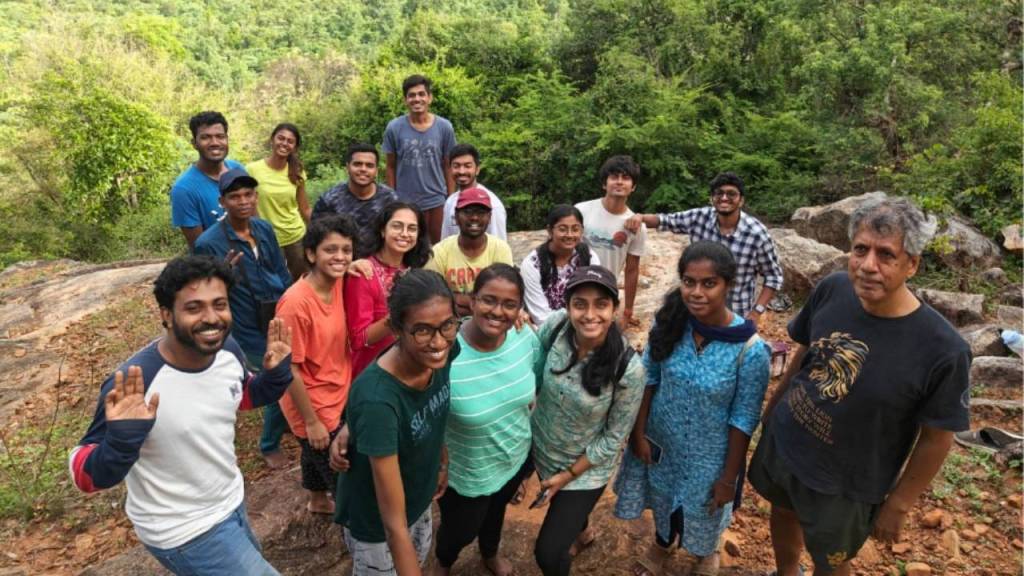
At the end of RSP as a teacher, I consistently get the ‘aha’ experience. Something magical happened, both for the participants and mentors. What it was, is not quite possible to capture in words. RSP shows that good education can happen in unplanned ways.
Since 2017, roughly 200 or more medical students pass through RSPs across all centres every year. Some return for the Travel Fellowship. Many have gone on to work with rural NGOs, served as junior doctors in underserved areas, and then pursued postgraduate training. Others have gone into hospitals in cities. But that, we believe, is not the point.
The point is the seed.
We plant it in the folds of a young doctor’s mind — the understanding that a patient is a person, not a diagnosis; that compassion is not soft, but essential; that health does not exist in isolation but is woven into the larger fabric of community, history, and society. One day, in a crowded clinic or a quiet ward, that seed will stir. And something — however small — will be different.
The reflection of Prof. Anand Zachariah of CMC Vellore captures something rare and profound about the RSP experience — the idea that the most meaningful educational moments often resist neat documentation or replication. “At the end of RSP as a teacher, I consistently get the ‘aha’ experience. Something magical happened, both for the participants and mentors. What it was, is not quite possible to capture in words. RSP shows that good education can happen in unplanned ways.”
We hold no copyright on any of this. Anyone who wants to copy this model, adapt it, grow it in their own soil — our hands are yours.