




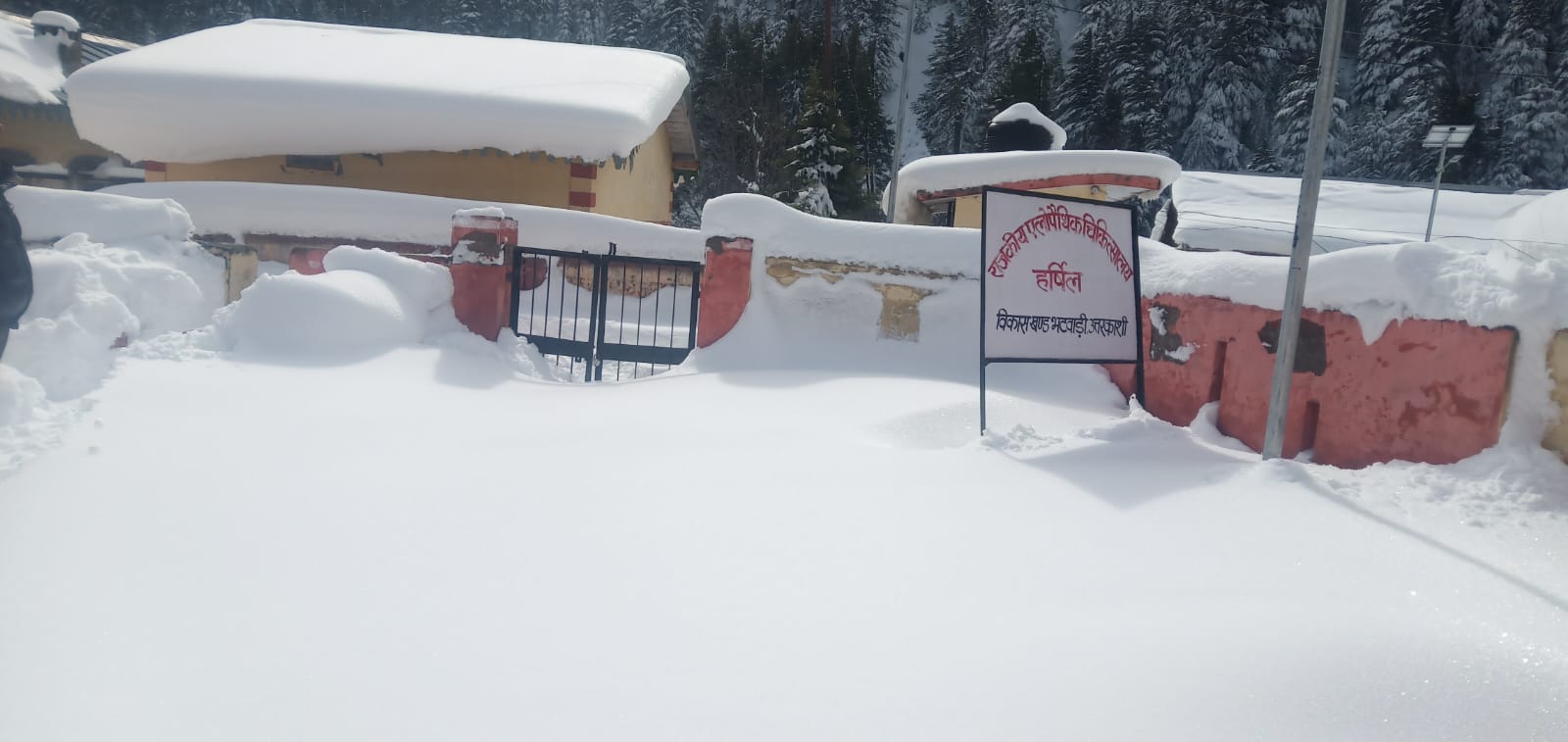
A patient was struggling to breathe. Two staff members at the Primary Health Centre were trying to administer oxygen using an Ambu bag (a hand-operated device that helps a person breathe). Outside, knee-deep snow had blocked all the roads in this remote Himalayan region near the China border. An ambulance had somehow managed to get through and depart to bring back an oxygen cylinder, but no one was sure if it would return.
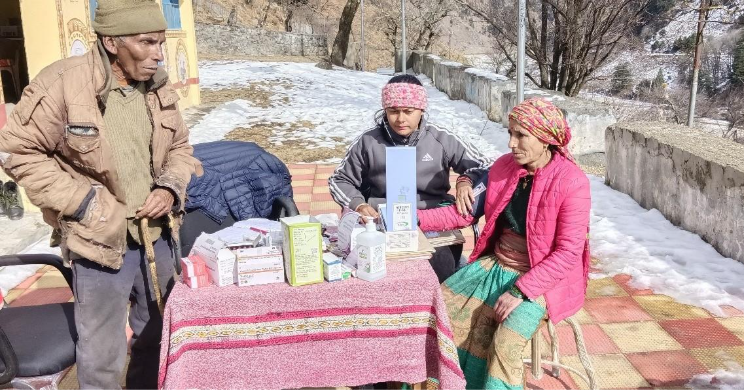
Inside the hospital, the fight to keep the patient alive continued. The generator kept stopping. The health workers ran barefoot to restart it again and again, but each time, after working for a few minutes, it would shut down. And once more, the same sound filled the room —
“Ambu… Ambu… Ambu…”, as the staff manually worked the Ambu bag.
If there had been electricity, an oxygen concentrator (an electrically powered device that supplies oxygen from the air) could have provided continuous support. But there was no power. And the generator kept failing.
After a long struggle, one staff member noticed a phone number written on the generator. They decided to call for help. Someone answered. The response was formal:
“Please send an application. Then we will see what can be done.”
And so it continued —
“Ambu… Ambu… Ambu…”
After some time, the ambulance returned empty-handed. The road to the district hospital was blocked. Finally, an alternate plan was made. The patient was carried to the point where the road was blocked, taken across on foot, and then transferred to another ambulance that took him to the hospital.
The patient survived.
But Tanuja, the Community Health Officer who narrates this incident, still cannot forget that day — the day when every breath depended on human hands. That day illustrates the stark reality of delivering health care in these remote regions.
Tanuja has been working at a sub-centre of this Primary Health Centre for the past two years. She lives in the government accommodation provided by the PHC. In emergency situations, she goes beyond her formal work responsibility and supports the PHC team, fulfilling her professional and moral responsibility with commitment.

The area is about 80 kilometres from the district headquarters. There is a national highway, but landslides and snowfall often block it. Transport options within the villages are very limited. Most days, Tanuja begins walking with the hope of getting a lift; otherwise, the journey continues on foot. The roads pass through forested stretches where stories of bear and leopard attacks are not uncommon. Still, those who must travel, keep moving.
Mobile connectivity is unreliable. Tanuja keeps SIM cards from three different operators because there is no certainty about which network will work — or whether any will work at all.
While studying nursing at a reputed institution, Tanuja had planned to pursue a master’s degree and move into teaching. She had filled the form for the Community Health Officer position almost as an afterthought. By the time the results were announced, she was already married. She wanted her husband to continue his studies, so she decided to take up the job.
In her early days of work, she once saw a group of children walking 4–5 kilometres through knee-deep snow to reach school. It did not take her long to realise that the mountains, rivers and snow — which people travel long distances to admire — are huge challenges for day-to-day living.
But that moment was a turning point: her work began to feel meaningful.
Every morning, she leaves her room with a bag full of medicines. The sub-centre is five kilometres away. Rather than waiting, she starts walking along the quiet road, hoping to get a lift from an occasional vehicle that could be passing by. The sub-centre serves four villages, and she visits them one by one, almost every day.
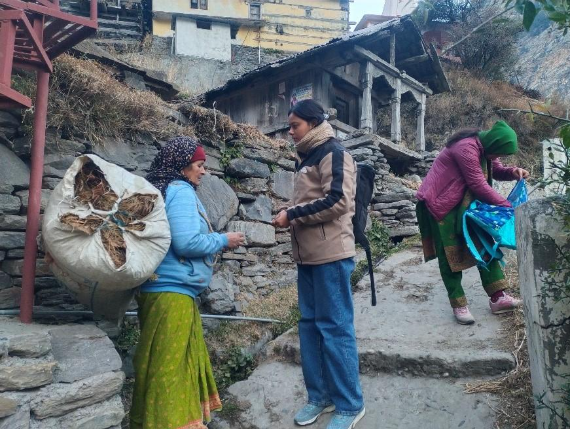
On the way, people call out to her from their courtyards:
“Tanu, can you check my BP?”
“My medicines are over — please bring them.”
Sometimes they tease her with a smile:
“Why didn’t you come for tea yesterday?”
Tanuja listens to everyone. She gives medicines and explains the treatment patiently until the person feels satisfied.
Being part of people’s worries and happiness, following up on illnesses, and giving health advice — this has now become part of her daily routine.
The villagers care for her too. If she is late, someone says,
“It’s getting dark, I’ll drop you.”
Sometimes they even hand over their vehicle:
“Take it today, return it tomorrow.”
But it was not like this in the beginning. It took time for her to earn trust and become part of the community. Regular follow-ups when someone was ill, making an effort to understand local customs — these small steps slowly helped her connect with people. She also joined the local youth group in their morning cleanliness drives.
In the early months of her posting, Tanuja rented a room in the same village where the sub-centre is located. The village is largely from the Rajput community. In the region, there is a religious belief that Brahmins do not eat cooked rice prepared by Rajputs. So, during religious ceremonies, visiting Brahmins would cook their own food.
Tanuja is also a Brahmin. Once villagers learned this, they began asking for her help during such occasions. She willingly prepared food during rituals.
By participating in these social and religious practices, she gradually became more connected to the village. Over time, she also began following some long-standing customs — such as not visiting homes or temples during menstruation.
For someone who grew up in a city, these practices were new. She had a choice — continue as she was or adapt to the local culture.
She realised that her job was delivering holistic healthcare, and not just dispensing medicines or services. Doing this effectively requires understanding people’s beliefs, respecting their culture, and adapting with sensitivity. Service and empathy must go together. That understanding helped her truly become part of the community and hence to be effective at her job.

As time passed, she slowly began to feel like she belonged there. Today, no one would guess that she spent 22 years studying in a city before coming here. The woman who once rode scooters and cars in cities, now walks confidently and without fear on narrow mountain paths.
As a woman, she sometimes faces uncomfortable situations — whistles from young men, late-night phone calls, unwanted attention. But she keeps her focus on her work and continues.

In these mountains, where migration has left many elderly people behind, the Community Health Officer is no less than a lifeline. Those who can walk come to the sub-centre for medicines and check-ups. Those who cannot are visited at home. Checking blood pressure and sugar levels, delivering medicines, asking about their well-being — Tanuja carries out these responsibilities with care.
She gives her personal phone number to pregnant women because she feels that explaining everything on the 108-emergency line can take time and increase risk. Often, she speaks directly to 108 herself, providing details and ensuring that services are arranged quickly.
One day, Tanuja saw a boy outside the sub-centre rubbing cannabis leaves. That day she realised that treatment alone was not enough.
Since then, she has started visiting schools regularly. She speaks with girls about adolescent health and with boys about the harmful effects of substance use.
But none of this is easy.

For the past five months, Tanuja has not received her salary. She is managing her expenses with the support of her family. The officials above are unable to give clear answers — yet the work continues. The system only demands data and reports, regardless of ground realities.
On one occasion, a pregnant woman called the 108-emergency service, but the network dropped during the call. The family somehow arranged a vehicle on their own, but the baby was delivered on the way to the hospital. The mother and child were safe. Yet the question raised later was: why did the delivery not happen in a hospital?
The truth is that childbirth does not wait for rules or procedures. But systems often look for fixed explanations without fully understanding ground realities. In such situations, practical challenges like poor network connectivity are ignored, and the entire pressure falls on health workers. This affects not only their work but also their mental health.
As Tanuja says, “Our only mistake was that there was no system standing with us at that moment — one that understood the situation.”
In such geographical conditions, many staff members prefer to stay in town and travel to their workplace only when required. Lack of basic facilities and concerns about family safety in remote areas make this choice understandable. Health workers, therefore, end up fighting on two fronts — one at home and one at work.
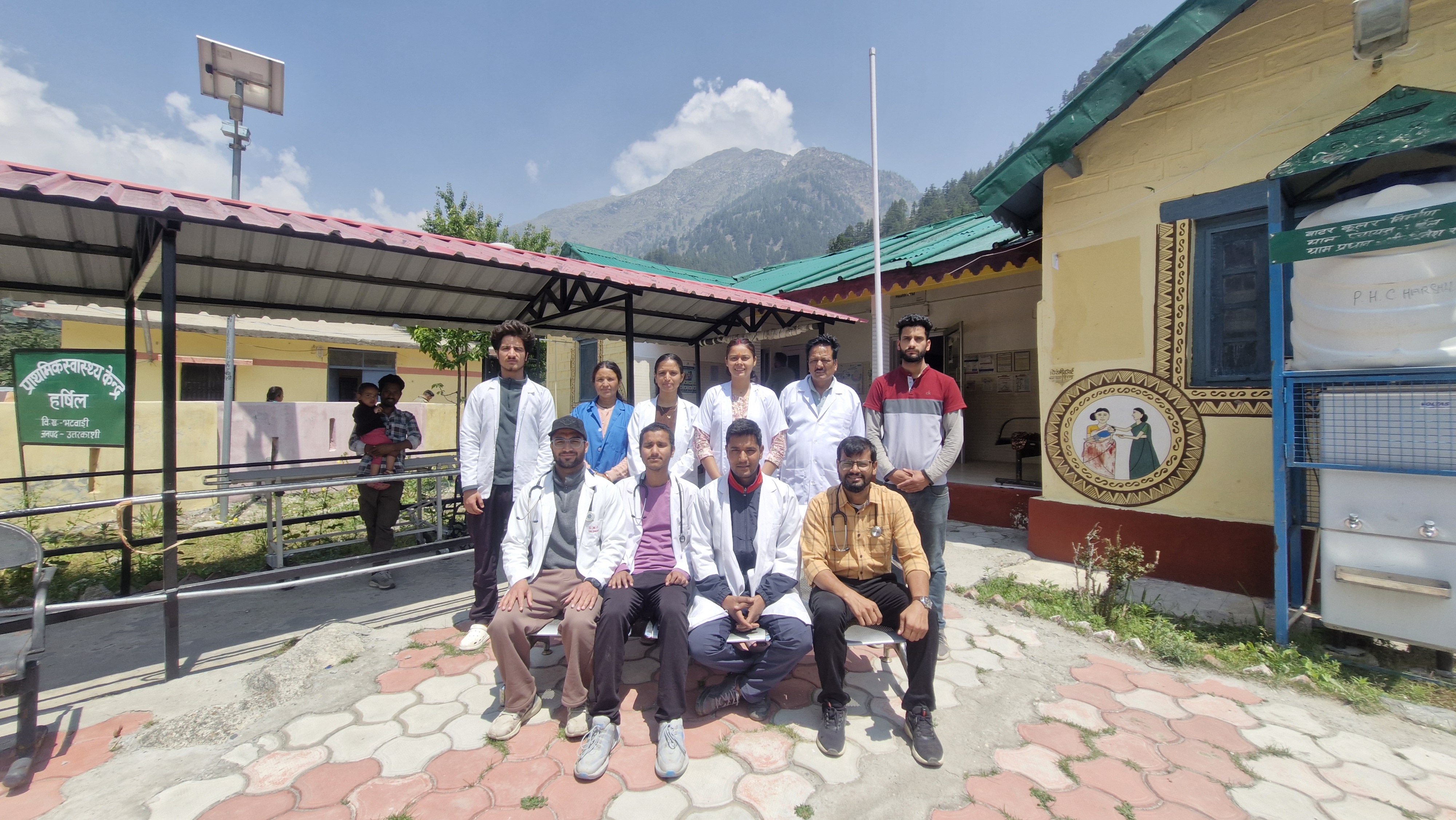
Today, Tanuja faces every challenge — snow, forest paths, mountains, poor network, and mental pressure. It is her inner drive that has kept her here so far. But this story pushes us to confront a larger truth: while passion is necessary in difficult conditions, it cannot replace basic facilities.
The success of a health system cannot depend only on the willpower of individual workers. We cannot expect every employee to make extraordinary sacrifices like Tanuja. A strong health system is one where even an ordinary worker can perform effectively because clear processes and reliable support are in place. Service can continue only when the system stands behind it. If there is no electricity, no salary, and no network, even the strongest personal motivation begins to weaken.
The real question in mountain healthcare is not only how hard a frontline worker works. The question is whether our system is responsible enough not to wait for someone to become a “superhero” every time there is a gap. People like Tanuja deserve appreciation. But instead of hiding behind individual courage, the system must strengthen the processes that make service possible. In the end, healthcare becomes sustainable not when it depends on one person’s commitment, but when it rests on a strong and sensitive system.