




A Personal Lens into a Systemic Blind Spot
Some time ago, as I personally struggled with daily episodes of severe anxiety, a friend confided in me her challenges with episodes of palpitations associated with restlessness and chest discomfort. Both of us were experiencing hormonal fluctuations due to peri-menopausal changes in our bodies, affecting our physical and mental states differently.
The experience evoked memories of similar stories heard during my hundreds of interactions with women across geographies and socio-economic groups in clinical and community settings, as a physician and public health practitioner for 25 years.
When Medical Training Fell Short
My training as a medical doctor prepared me to manage most of what public health considers the biggest health challenge that women face — those related to maternity and childbirth. But, I found myself lacking while trying to manage the ailments of mid-life women, leading to deep frustrations.
These women regularly presented in clinics with odd and seemingly unconnected symptoms. They presented with ‘ghabrahat’ episodes, complained of chronic bone pain, joint pain, fatigue, mental slowness or repeated urinary tract infections. I turned to symptomatically managing their ailments while advising them to adjust to these ailments as a part of ‘normal’ ageing process.
It is only much later – in the past 5-6 years – when global conversations around menopause started, and I started reading about it, that I brought it all together. These odd symptoms were not imaginary, they were peri-menopause and menopause related.
Menopause-related symptoms are primarily caused by the natural decline in oestrogen and progesterone production as ovaries stop releasing eggs, a transition known as perimenopause. Typically this happens in the late 40s and early 50s. These hormonal shifts affect the body’s thermostat, tissues, and mood. Some of the symptoms include hot flashes, night sweats, sleep disturbances, mood changes (anxiety, irritability), cognitive issues (brain fog/memory loss), weight gain, body ache, urinary tract infection, and hair thinning.
I was not alone in my frustrations, surveys across far more evolved health systems as compared to India show that even today, barely 30% of medical practitioners in the USA are formally trained to recognise and manage menopause (The Menopause Society, 2023).
The Invisible Burden of Mid-Life Symptoms
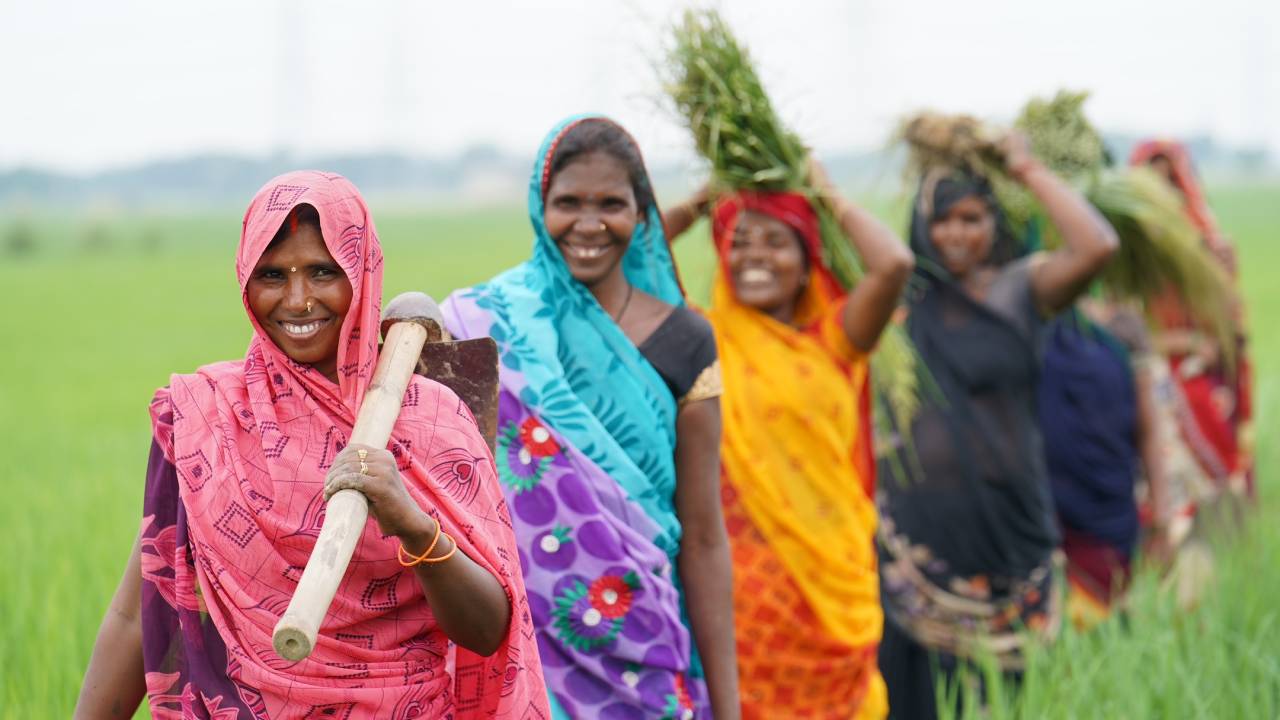
It is high time we prepare our systems and communities to address this issue. This year, 140 million women in India will undergo menopause. As life expectancy rises to 73.6 years, Indian women live almost 1/3rd of their life beyond the reproductive phase. They spend these years caring for families and contributing to the economy through paid and unpaid labour.
The cohort of women undergoing menopause and living a post-menopausal life is very large. Yet, their health needs remain largely ignored.
The International Labour Organisation estimates that more than 76% of household caregiving burden falls on women and despite their own health challenges, they continue to provide care to others.
Niti Aayog report cites that women who work contribute 18% to India’s GDP through paid labour. Menopausal women represent a large and growing portion of this group, holding substantial purchasing power that spans a wide range of industries, from health and wellness to fashion, beauty, and travel. The contribution of unpaid women’s labour to the economy remains undocumented.
The cohort of women undergoing menopause and living a post-menopausal life is very large. Yet, their health needs remain largely ignored. Indian rural poor rely heavily on government health programs. Not only is there reliance for treatment but also for information and guidance provided to them by the lakhs of field health workers spread across the country. But, mid-life women fall through a policy gap.
Women Ageing Out of the Health System
Women’s health is traditionally equated with pregnancy and child-bearing. Hence, programmes to address women’s health issues are designed for the age group between 15 and 49 years, addressing pregnancy, childbirth, and family planning. A quick glance at women’s health indicators will confirm this approach.
Once a woman crosses the reproductive threshold, structured health attention declines. Women above the age of 45 find themselves beyond the focus of health programmes, even though their health needs are rapidly changing. The absence of a structured health systems approach impacts this cohort in the below ways.

Global conversations around menopause started only recently, in the past 5-10 years. National conversations are yet to begin.
The Evidence Gap in India
While researching on how to handle the cases of joint pains and other similar menopausal symptoms posed to me, I found substantial data gaps. There is a dearth of reliable large-scale Indian data on patterns of symptoms or body parameters that change during this phase and little dialogue on how women negotiate these changes.
Public demand sparked through open conversations about menopause should multiply, moving out of closed social media groups into the mainstream.
Clinical treatment protocols endorsed by the Federation of Obstetric and Gynaecological Societies of India (FOGSI) are suitable for well-equipped health facilities, not for the rural context, at primary healthcare level. The data gaps indicate that the pathway to fill the policy gap and develop a full-fledged health program is long.
A useful starting point to identify the problem as a first step of policy change would be to listen to women themselves. Personal narratives of perimenopausal and menopausal women can help build a deeper understanding of how symptoms are experienced and managed within everyday life.
Alongside these qualitative narratives, systematic quantitative data generation is essential. Lessons may be drawn from global best practices such as longitudinal large studies – SWAN (Study of Women’s Health Across the Nation) study conducted in the USA, learnings of the Menopausal Advisory Group of UK or Australia.
Public demand sparked through open conversations about menopause should multiply, moving out of closed social media groups into the mainstream. Creating community platforms where urban and rural women can discuss their experiences while involving men in these discussions early can build a healthy momentum towards setting the issue as a government or systemic agenda.
Whether in urban or rural contexts, women navigate complex physical, emotional, and social transitions largely on their own, with minimal support from families, communities, or health systems.
Lessons can also be drawn from States like Kerala and Maharashtra that have already launched Menopause clinics within public health systems. Study of similar clinics and outreach programs from around the world will be beneficial in devising policy and programs.
Small practice models that can generate possible solutions to the problem will support in identifying policy options.
From Silence to Public Demand
Over two decades as a public health practitioner, my most striking learning is not what has changed, but what has not. Despite gains in life expectancy, largely driven by improvements in maternal and child health, the health and wellbeing of mid-life women remain largely unaddressed.
Through sustained engagement with women across diverse geographies, I have learnt that mid-life is consistently experienced as a period of silent negotiation. Whether in urban or rural contexts, women navigate complex physical, emotional, and social transitions largely on their own, with minimal support from families, communities, or health systems.
A critical insight from these interactions is that women’s deeply internalised caregiving roles shape their response to illness, they tend to normalise discomfort, defer care, and endure symptoms without articulation or demand for support.

A Lifecycle Approach for a Viksit Bharat
This has led me to a clear conclusion: addressing the health of mid-life women is not a peripheral concern, it is central to strengthening societal and economic resilience. It requires a fundamental shift in how the Indian health system conceptualises women’s health, moving from a narrow reproductive focus to a lifecycle approach.
Subscribe to stay connected
We will send you a monthly newsletter listing all the articles that were published in the month.
The first step in this shift is to identify the problem and generate evidence systematically. Without this, policy will continue to overlook a critical phase of women’s lives.
If India is to realise its vision of a Viksit Bharat by 2045, it cannot afford to marginalise the health needs of women beyond their reproductive years. The imperative is both developmental and structural.