




My name’s Aalok, MBBS, DTM&H, DGH. I’m 27 years old, and got diagnosed with autism at age 24. This article is about my experiences as an autistic clinician and may not reflect the experiences of other autistic doctors.
I am writing this article because I want to share with the world what being an autistic doctor means.
I have been working as a primary care doctor for the last four years. I have worked in non-profits in the tribal-majority districts of Kalahandi (Odisha), Salumbar (Rajasthan), and Surguja (Chhatisgarh). I have also worked in a rural PHC in Maharashtra, and as an academic surgical resident at a hospital in Mumbai. I’ve worked in dense forests, mountains, coastal villages, semi-arid deserts, and densely populated cities.
There are four things that unite this diverse work experience:
- My inability to remain sustainably employed at a workplace without adequate accommodation (which I will explain in this article)
- The challenges that I have faced because of the lack of awareness amongst my colleagues regarding autism
- The lack of substantial workplace modifications for my autistic needs;
- My desire to provide good care to patients despite all of these factors.
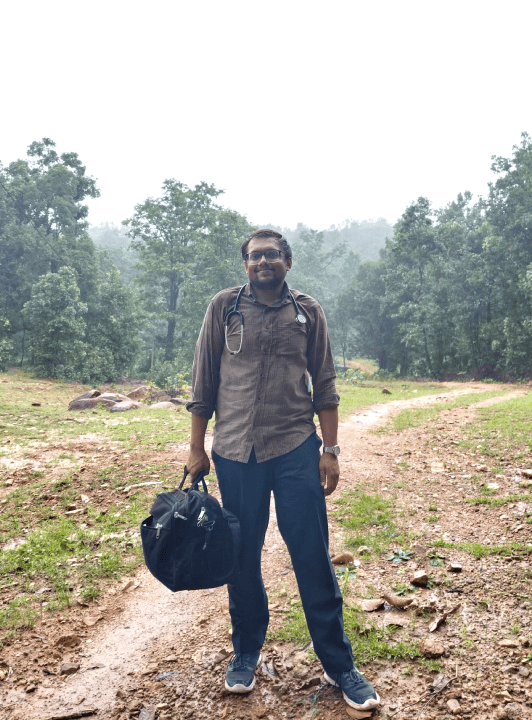
I am writing this article because I want to share with the world what being an autistic doctor means. There is little understanding amongst even healthcare providers regarding autism. There is remarkably little research regarding the experiences of autistic doctors during various stages of their educational and professional lives.
I want to advocate for the rights of autistic healthcare providers, given that their challenges are unique and poorly addressed. I have been unable to identify qualitative research examining the experiences of autistic doctors in India. I hope that this article will be read by enough people that some researchers may consider pursuing this line of enquiry.
There are many unanswered questions, some of which are pressing. We need to know how many autistic doctors are studying medicine, how many disclose their diagnosis, what happens to them during residency, why some leave training, why some repeatedly change jobs, and why others thrive at the workplace. Most importantly, we need to understand which accommodations work.
I have divided this article into five major themes: an introduction to autism, the effects that autism has upon medical education, training, and employment, and workplace rights.
- What is Autism?
Autism spectrum disorder is a lifelong neurodevelopmental condition that influences social communication, behaviour and sensory experiences. The spectrum encompasses diverse strengths, challenges and support needs.
Autism is not synonymous with intellectual disability. Many autistic people have no intellectual disability and can study, work, form relationships and live independently, although their support needs may remain unrecognised.
The DSM-5-TR identifies two broad diagnostic domains.1 The first involves persistent differences in social communication and interaction, including social-emotional reciprocity, nonverbal communication and navigating relationships. The second involves restricted or repetitive behaviours, interests or activities, including a preference for routine and sameness, intense interests, repetitive movements and differences in sensory reactivity.
Characteristics must originate in the early developmental period and cause clinically significant impairment in important areas of functioning. However, individual abilities and support needs vary considerably. Understanding this diversity is essential when considering autistic people in medicine.
Many autistic people resort to masking, consciously or unconsciously suppressing autistic traits to conform to societal expectations. Although masking may help someone fit in, sustaining it can be emotionally exhausting and contribute to significant psychological strain.
- Autism and Medical Education2,3
Being a medical student in India is difficult enough, with an academically intensive curriculum, frequent exams, social pressures, and fierce competition. Imagine, then, what it must feel like to navigate this environment as an autistic student with sensory sensitivities and differences in social communication!
Autistic medical students may experience social isolation, bullying and insensitive behaviour. Disclosing an autism diagnosis can be frightening because students may fear stigma, discrimination, or doubts about their suitability for a medical career.
Many autistic people resort to masking, consciously or unconsciously suppressing autistic traits to conform to societal expectations. Although masking may help someone fit in, sustaining it can be emotionally exhausting and contribute to significant psychological strain.
Support at medical colleges is often limited. Even highly qualified doctors may have poor understanding of autism, and some faculty members dismiss or ridicule students’ diagnoses.
Autistic medical students deserve support at their colleges. This requires educating staff about autism, providing reasonable academic and sensory adjustments, offering autism-informed psychological support, fostering inclusive peer relationships and rigorously enforcing anti-bullying policies.3,4
Medical colleges should enable autistic students to participate in education without having to continually conceal their needs or expend unnecessary energy navigating an unsupportive environment.
- Autism and Medical Training4,5
Many doctors in training experience burnout, depression, anxiety, social isolation, and suicidal thoughts. Imagine, then, just how taxing this period must be for a doctor who has autism in addition.
Specialist doctors in India undergo a 3-year-long training programme, which is called ‘residency’. Residency is an intensely exhausting stage of training. Doctors work inhumanly long hours, with many being forced to work extremely long shifts. They perform cognitively intense tasks, and are often a part of intensely overwhelming clinical settings.
Imagine what it must feel like to have one’s phone ring almost non-stop almost all the time, to have to constantly speak to patients, their relatives, and other staff members and colleagues, to perform complex tasks requiring meticulous attention and intense hand-eye coordination, and to navigate the complex social world of friendships and relationships. Now think about what it must be like for an autistic person — with all the challenges I described earler — to do all these things!
Many doctors in training experience burnout, depression, anxiety, social isolation, and suicidal thoughts. Imagine, then, just how taxing this period must be for a doctor who has autism in addition. It is often difficult to seek accommodations, given the sheer volume of the patients to be seen, and the poor understanding amongst colleagues, seniors, and administrators regarding the challenges faced.
It is a well-established fact that Indian resident doctors suffer physically, mentally, socially, and spiritually during their training, with many committing suicide. No robust evidence currently exists regarding autistic doctors’ experiences during residency. For me, residency was the bleakest period in my life, and I am grateful that I found the courage to quit training eight months into my first year.
Autistic doctors may need reasonable accommodations to be able to complete training. This may be in the form of: acknowledging autistic needs, better working hours, more inclusive workplaces, more support from peers and administrators, and addressing sensory problems.
- Autism and Medical Employment6,7
Being a practicing autistic doctor has been greatly rewarding for me, but it has had its own challenges.
It is difficult to find a job. Disclosing one’s diagnosis during recruitment can feel risky because of the fear of being stereotyped or rejected, whereas revealing one’s needs for accommodation after gaining employment leads to some employers feeling resentment for being kept in the dark at the time of hiring that such needs existed in the first place.
Additionally, it is difficult to communicate with colleagues, and interpersonal conflicts with non-autistic peers and colleagues are common. The perception amongst most staff members tends to be that I am direct about many things, and this is often misunderstood as rudeness.
At previous workplaces, I felt overwhelmed by sensory stimuli such as the constant chatter of patients in the waiting room, the sound of the consultation taking place next door, the beeping sounds of machines and instruments, the interruption of consultations because of a nurse walking into the room due to some reason, and the constant vibration of the cabin floor because of the way in which the clinic was designed (this last experience being unique to my recent workplace, which was actually a makeshift clinic in a tin container).
When I say that I feel overwhelmed by these sensations, I mean that I feel so frustrated and exhausted that it significantly affects my capacity to work, and I feel significantly drained at the end of the working day. It is difficult to see 60-70 complexly ill patients every day in such an environment, and yet, this is what I do! When one is constantly trying to filter out noise and other unpleasant sensations, it often becomes quite difficult to focus. It feels to me like there is less cognitive space for the task at hand, because of how much energy goes into keeping the noise out.
Additionally, it is difficult to communicate with colleagues, and interpersonal conflicts with non-autistic peers and colleagues are common. The perception amongst most staff members tends to be that I am direct about many things, and this is often misunderstood as rudeness. I also struggle with non-verbal communication, and my body language is often perceived by others as being unsuitable to the workplace.
It is difficult to fit in socially and to navigate the complexities of having friendships with colleagues. To add to all this, the working culture in Indian healthcare tends to be quite chaotic, with poor scheduling being the norm. This can be distressing for an autistic person who strongly prefers set routines.
The consequence of all this is that, like most autistic clinicians the world over, I often suffer from burnout, and it is not unusual for me to feel drained of all energy at the end of a clinic day.
Reasonable adjustments, however, make a huge difference in the professional lives of autistic healthcare providers! These are simple, sustainable, inexpensive measures that do not have a negative effect upon other colleagues, but which lead to substantial improvements in the quality of life of autistic doctors, thereby leading to an improvement in patient outcomes and healthcare systems as a whole. Some reasonable adjustments can be in the form of:
- Acknowledging that a staff member has autism, and providing a safe, non-judgemental environment for disclosure of the same
- Actively working with that staff member in identifying their needs at the workplace
- Actively implementing reasonable measures to address those needs and ensuring that these measures remain in place in the long run. (For example, if I say that I would like to have a cabin of my own where I’d like to see patients, so that there is as little noise in the room as possible, and for there to be no more than two people inside the room, the employer may try to see if there’s an empty room somewhere that can be repurposed as a cabin, and for it to have a self-closing door, as long as this is reasonably within the budget of the workplace, and does not harm other staff members or patients. It is important to ensure that this adjustment is sustained over the entire course of the autistic employee’s tenure)
- Actively sensitising and psycho-educating staff. This helps foster inclusivity, and prevents misinterpretations and misunderstandings (often the source of most workplace conflicts)
- Providing written instructions and communicating via email and text as much as possible.
- Autism and Rights8
Autistic people have rights. The Rights of Persons with Disabilities (RPwD) Act, 2016, which is India’s primary disability legislation, formally identifies autism as a disability, and mandates non-discrimination and accessibility. It also mandates the right to reasonable accommodations for all autistic people at schools and at workplaces.
Additionally, under the RPwD Act, those on the autistic spectrum with benchmark disability ≥40% are entitled to governmental reservations in education and in jobs. This distinction is important because some of the Act’s specific entitlements (such as certain reservation provisions), apply specifically to persons with benchmark disabilities.
Conclusion
Autism is an incurable lifelong neurodevelopmental condition. Autistic healthcare workers face specific challenges during education, training, and employment. These challenges are due to sensory sensitivities, social and communication differences, poor understanding of autism amongst colleagues, poor access to reasonable and sustainable environmental modifications, and exhaustion arising from masking and overwhelm.
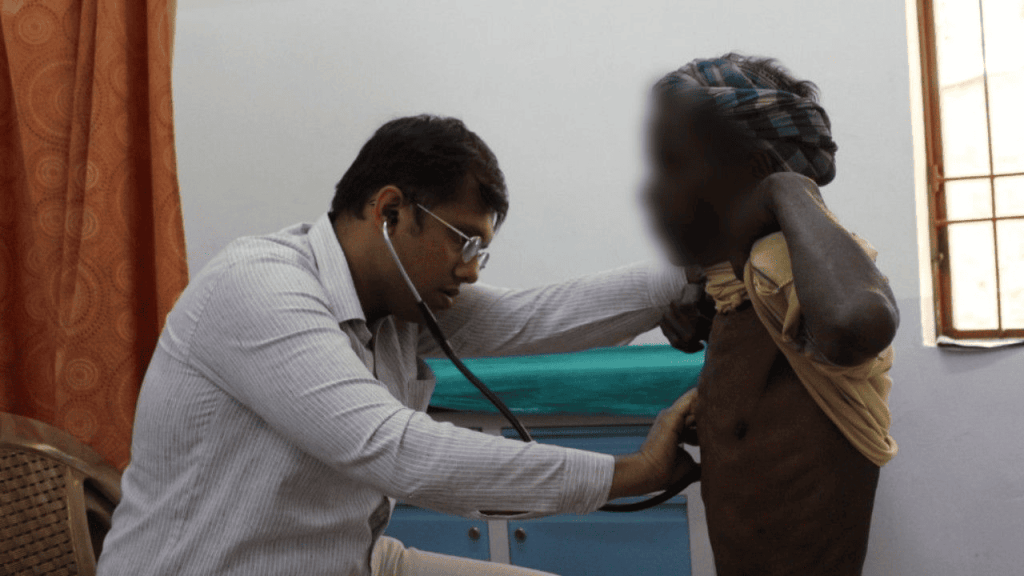
Being autistic does not mean that someone is incapable of communicating with patients, or of providing good clinical care.
These challenges should be acknowledged and addressed by teachers, professors, and employers. The lack of support in these domains leads to increased mental health challenges, including substantial increase in suicide risk. It is important that all autistic people be offered a comprehensive, high-quality, compassionate support system. It is their right.
For some autistic people, occupational therapy may be useful; for others, speech and language support may be useful; psychotherapy or psychiatric care may also be necessary for those with mental health needs. Autistic people have disability rights and are entitled to welfare.
Being autistic does not mean that someone is incapable of communicating with patients, or of providing good clinical care. I am living proof of that, and I believe that autistic healthcare providers can sustainably add tremendous value to their workplaces if they are provided with long-term adjustments.
Subscribe to stay connected
We will send you a monthly newsletter listing all the articles that were published in the month.
To my future employers, and the employers of autistic healthcare workers, I would like to say: autistic people tend to have many desirable traits; with appropriate support, they can truly make a positive impact at your workplace.
To my autistic colleagues, I have only one parting statement: know that you are not alone!
References:
- American Psychiatric Association. Diagnostic and Statistical Manual of Mental Disorders, Fifth Edition, Text Revision (DSM-5-TR).
- Shaw SC, Doherty M, Anderson J, et al. The experiences of autistic medical students: a phenomenological study.
- Aitken D, Hodge G, Page M, Lastmann E, Hiller S, George RE. Navigating medical school with autism: a systematic review exploring student experiences & support provision in the United Kingdom.
- Grover S, Sahoo S, Bhalla A, Avasthi A. Psychological problems and burnout among medical professionals of a tertiary care hospital of North India: A cross-sectional study.
- Dhusia AH, Dhaimade PA, Jain AA, Shemna SS, Dubey PN. Prevalence of Occupational Burnout among Resident Doctors Working in Public Sector Hospitals in Mumbai.
- Doherty M, et al. The experiences of autistic doctors: a cross-sectional study. 2023.
- Smith H, Shaw SCK, Doherty M, Ives J. Reasonable adjustments for autistic clinicians: A qualitative study.
- Government of India. The Rights of Persons with Disabilities Act, 2016.